
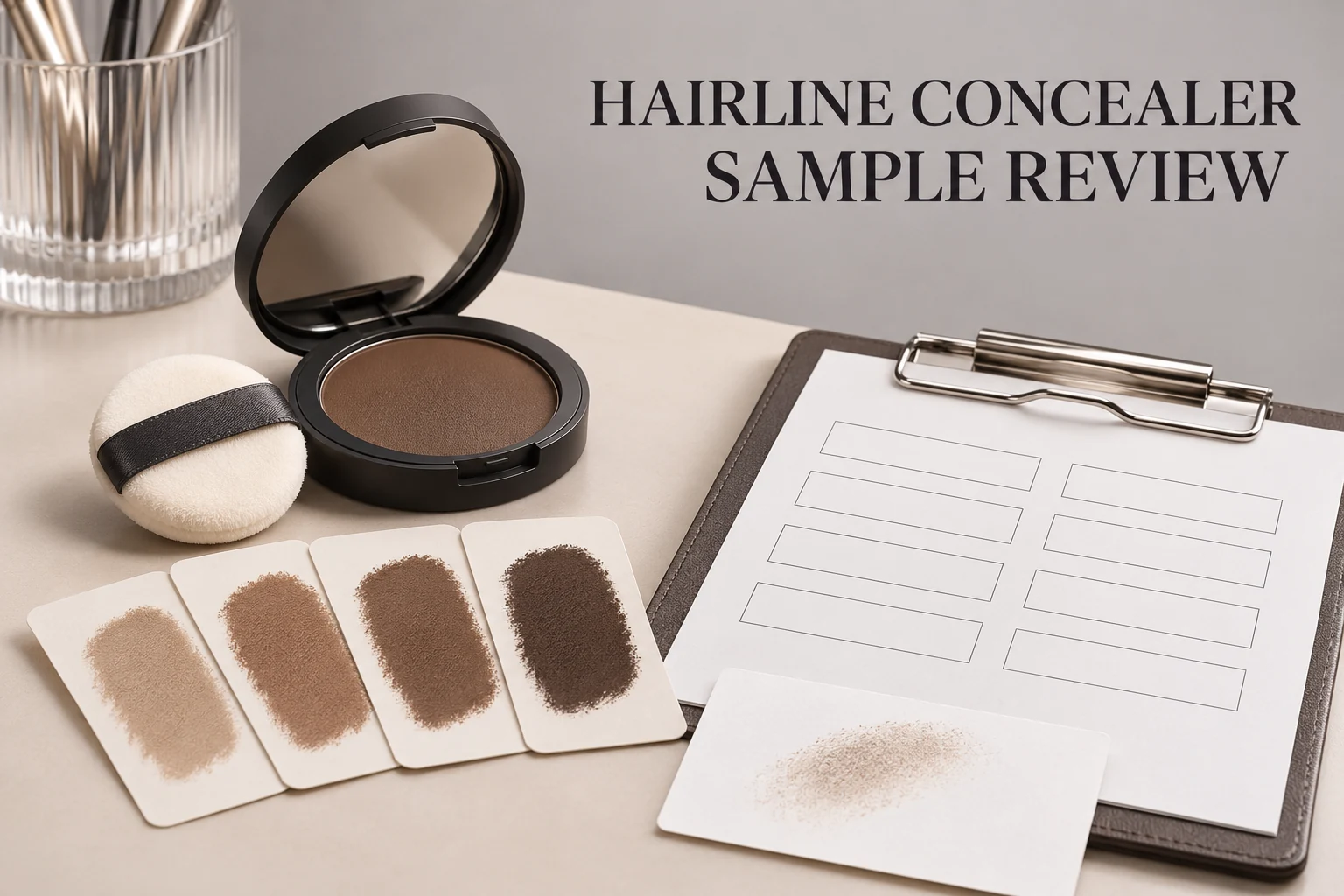
In this guide
A private-label buyer should evaluate a hairline concealer with one controlled matrix that separates shade appearance, edge blending, application control, transfer observations and removal. The product page confirms the format but does not publish shades, ingredients, directions, wear evidence or package details. Therefore, buyers should identify every sample and test condition before approving a shade range, applicator, transfer statement or artwork.
LANTHOME lists Hairline Concealer, reference 1601602461542 as a hairline concealer format with Private Label / OEM / ODM customization. The page states that a model is not specified and asks buyers to review the selected sample, current ingredient information, application instructions and packaging before confirming the specification. It does not publish available shades, shade codes, a complete INCI, fill, applicator, directions, transfer or wear evidence, removal method, MOQ, price, capacity or lead time.
The correct sourcing task is to design an evaluation that produces comparable records without turning internal observations into consumer claims. A useful matrix links sample identity, viewing conditions, application area, amount method, transfer contact and removal process. It also keeps shade-range planning separate from proof that any shade is currently available.
Product Facts and Confirmation Points
- Catalog identity: LANTHOME Hairline Concealer, reference 1601602461542.
- Model: The current page states that a model is not specified.
- Format: Hairline concealer.
- Customization: Private Label / OEM / ODM is listed.
- Shade gap: The page does not publish shade names, codes, undertones or a current shade count.
- Formula gap: Complete INCI, formula revision, colorant information and current specification are not published.
- Use gap: Application area, amount, blending method, set time, reapplication, storage and removal directions require confirmation.
- Evidence gap: Coverage, wear, water resistance and transfer performance are not established by the page.
- Package gap: Fill, compact or container, closure, applicator, dimensions, materials and compatibility require confirmation.
- Commercial gap: MOQ, price, capacity and lead time require a current quotation for the confirmed configuration.
Mark the first four rows as catalog-stated. Keep the remaining rows pending until linked documentation is received. This prevents the visual impression of a product image from becoming an assumed shade range, pack specification or performance promise.
Which Review Route Fits the First Round?
These routes describe evaluation plans, not confirmed product availability. Compare them using the same dimensions: purpose, sample requirement, viewing control, decision output and limitation.
Route A: Characterize One Identified Reference Shade
- Purpose: Understand application, edge blending, visible finish, transfer behavior and removal for one confirmed sample.
- Sample requirement: One shade code or supplier identifier, formula revision, sample code and applicator record.
- Viewing control: Review the same application under agreed lighting and background conditions.
- Decision output: A proceed, revise or hold decision for that sample’s behavior and documentation.
- Limitation: One reference shade cannot establish a complete commercial shade range or the availability of neighboring shades.
This route is efficient when the buyer first needs to understand the format. It should not be described as a “universal” shade test. Record the hair or test substrate used, the visible contrast, the amount method and the applicator. The result belongs to that configuration only.
Route B: Build a Controlled Multi-Shade Matrix
- Purpose: Compare confirmed shade samples for differentiation, overlap and proposed range roles.
- Sample requirement: A separate supplier identifier, formula revision and sample code for every confirmed shade.
- Viewing control: Apply each sample using the same method and review it under the same conditions.
- Decision output: A documented range proposal with retained swatches or images and unresolved gaps.
- Limitation: The matrix does not prove market fit, wear claims or ongoing availability; each conclusion needs its own evidence.
Use this route only after the supplier confirms multiple shade samples. Do not invent light, medium or dark shade names from photographs. Assign temporary internal codes until official shade identity and proposed artwork are approved.
How to Build the Shade and Transfer Matrix
1. Lock sample identity before swatching
Create one row for product reference 1601602461542, supplier shade identifier, formula revision, sample code, received date, container and applicator. Because the page has no model, do not create one. If a supplier sends several shades, give each row a distinct sample identity.
Photograph the label and sample as received. A swatch without an identity record cannot support range approval. If the same color appears in two packages, confirm whether the formula and applicator are actually identical before combining results.
2. Define the application question
State whether the review concerns the hairline edge, a part-line appearance, another specified styling area or a neutral test substrate. These contexts can expose different questions about precision, visible contrast and blend boundaries. Do not assume the product is approved for every area.
Ask for current supplier directions and limitations. Record the intended amount method, applicator, stroke or press technique, set time if specified and cleanup process. If directions are missing, pause performance conclusions and request clarification.
3. Standardize viewing conditions
Choose controlled lighting positions and neutral backgrounds for internal comparison. Record the camera, exposure or viewing setup when images are used. Do not rely on one edited photograph, because white balance, glare and compression can change apparent shade and finish.
Review close detail and normal viewing distance. Note the context rather than declaring a perfect match. If an image is color-corrected, preserve the original and document the correction so later reviewers know which file is evidence and which is presentation material.
4. Separate shade from finish
Record apparent depth, warmth or coolness, edge visibility and contrast as descriptive observations. In a different field, record visible finish such as more matte, more luminous or powdery relative to another identified sample. Do not let finish differences masquerade as shade differences.
Avoid market-facing shade names until the range and artwork are approved. Internal descriptive terms are useful for sorting, but they do not prove undertone, consumer suitability or compatibility with a named hair color.
5. Evaluate application control
Observe pickup, fallout, placement precision, edge control, build-up, blending effort and residue on the applicator. Record the number of passes only as part of the internal method, not as a public promise. Change one variable at a time when comparing applicators.
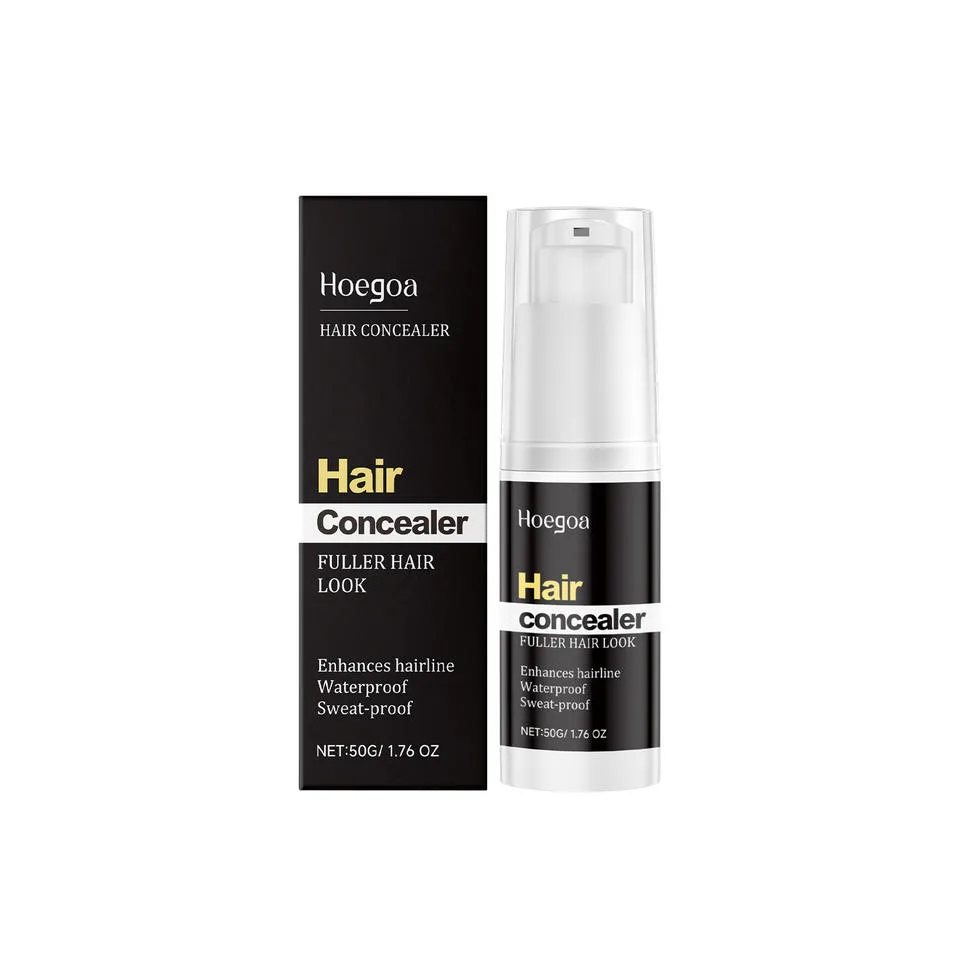
The package image does not confirm the final applicator. Ask whether the proposed compact, puff, sponge, brush or other tool is included and compatible with the formula. A temporary tool should be labeled as nonfinal in the evaluation record.
6. Design a bounded transfer check
Define the contact material, pressure method, contact duration and time after application before observing transfer. Use the same setup for all samples. Record what is visible on both the application area and contact material. Do not label the product transfer-proof from a single internal check.
Transfer behavior can vary with amount, setting, surface, moisture and contact. The record should describe the exact conditions, deviations and limitations. Any proposed transfer statement needs a separate evidence and market review.
7. Record wear observations without overclaiming
If the project includes a timed observation, document the starting condition, environment, contact events and check times supplied by the evaluation plan. Avoid a generic all-day or waterproof conclusion. The public page provides no wear duration or resistance evidence.
Use descriptive change fields: edge definition, visible contrast, patchiness, fallout and transfer after specified contact. A project reviewer should decide whether further controlled evidence is required before any customer-facing wording is considered.
8. Confirm removal and cleanup
Request the current recommended removal method for the exact sample. Observe the steps, residue, transfer to the removal material and cleanup of the applicator or package. Do not improvise a removal promise or recommend a product that the supplier has not specified.
Removal is part of the customer experience and the internal safety review. Record whether the direction on the proposed label agrees with the tested method. If the formula changes, repeat the relevant removal observations.
9. Translate results into a range decision
For each sample, issue proceed, revise or hold. “Proceed” identifies a proposed role and the next confirmation needed. “Revise” identifies shade, finish, applicator or package changes. “Hold” lists missing identity, directions, evidence or compatibility information.
When multiple samples overlap, do not remove one only by visual preference. Review the intended customer choice, channel presentation, inventory implications and evidence needs. These are planning decisions, not proof that a shade will suit every user.
10. Reconcile artwork and digital color
Check the approved shade identifier, formula revision, package, applicator, label, product page and sales sheet. Digital swatches should be presented as guidance unless a controlled color-management process supports more precise representation. Preserve disclaimers appropriate to the target channel.
Set reopening triggers: formula change, colorant change, shade code change, applicator change, package change, new image workflow, new market or new performance wording. A shade decision remains valid only while its configuration is unchanged.
Keep Shade Approval Separate From Performance Claims
Before the final review meeting, ask every evaluator to submit the same completed record rather than a free-form message. The record should identify the sample, viewing condition, application area, quantity approach, observation time, contact material and removal method. This discipline makes disagreements traceable: the team can see whether a difference came from the shade itself, the application method or the evaluation condition.
A shade matrix answers whether confirmed samples are distinct and how they appear under defined conditions. A transfer or wear claim asks a different question and needs its own method, evidence and wording review. Do not use shade approval photographs as proof of durability.
The Private Label Hair Color Stick shade approval guide offers a related record-control approach for another format. Its shades, applicator behavior and removal details cannot be transferred to this hairline concealer. The Hair Fibers first-use support guide can inform instruction planning, but it concerns a different product and application method.
Hypothetical Buyer Review
Consider a hypothetical buyer who receives three unlabeled compacts and photographs them under different room lights. The team chooses a three-shade range and writes “transfer-proof coverage” after touching one sample with tissue. No formula revisions, shade codes, applicators or contact conditions are recorded.
The buyer should pause. Each sample receives an identity request, and the team repeats application, viewing and transfer observations under one controlled matrix. Shade selection and transfer wording are reviewed separately. This scenario is a planning example, not an actual customer case, shade offer, test result or performance claim.
Buyer FAQ
How many hairline concealer shades are available?
The current page does not publish a shade count or shade codes. Ask the supplier for the current shade options linked to formula revisions and sample identifiers. Do not infer availability from product photographs, generated cover imagery or a temporary sample set.
Can a photograph approve a shade match?
A photograph can document a controlled review, but it should not be the only approval evidence. Lighting, camera settings, display calibration and editing affect apparent color. Retain physical or controlled reference records where appropriate and document how each image was made.
Does an internal tissue check prove the product is transfer-proof?
No. It records only the defined contact conditions used in that check. A transfer-proof statement is broader and requires relevant substantiation and target-market review. Keep the observation descriptive until the evidence and exact wording are approved.
Should the applicator be evaluated with every shade?
If the proposed applicator and formula relationship may affect pickup, placement or blending, include it in the configuration review. Confirm whether all shades use the same formula base and components rather than assuming one applicator result applies to every sample.
What must match before shade artwork is released?
The reference, shade code, formula revision, sample, component, applicator, ingredient declaration, directions, warnings and approved digital or printed color references should point to the same configuration. Reopen review when any linked field changes.
What to Send in Your Inquiry
- Product reference 1601602461542 and the Hairline Concealer catalog identity.
- Target country, channel, label language and intended application context.
- Request for current shade codes, formula revisions and identified samples.
- Request for complete INCI, product specification, directions, storage and removal information.
- Desired applicator and package configuration, or a request for current options.
- Planned shade-viewing, application, transfer and removal evaluation conditions.
- Proposed public wording that needs evidence and market review.
- Photography and digital-swatch requirements for the target channel.
- Request for current quantities, pricing and timing for confirmed configurations.
Send the matrix through the LANTHOME contact form or use the sample request form to request identified shade samples. Review How It Works before choosing a development pathway.
Related Links
- Hairline Concealer - Review the exact product reference and current confirmation points.
- Hair Styling Collection - Compare styling formats without transferring shade or performance facts.
- Private Label Hair Color Stick: Build a Shade Approval Record - Review shade-record controls for another color styling format.
- Private Label Hair Fibers: Plan First-Use Customer Support - Consider instruction questions for a different application format.
- How It Works - Review private-label, semi-custom and custom pathways.
- Request Haircare Samples - Request identified samples and package configurations.
- Contact LANTHOME - Send shade, formula, applicator and commercial questions.