
In this guide
- Decide which routine question the product should answer
- Confirm the offered version before comparing formats
- Write the proposed role without assuming the sequence
- Separate the word scrub from a mechanism claim
- Request the complete application and rinse directions
- Build a rinse-review plan around observable questions
- Distinguish a sample observation from a collection decision
- Review packaging as part of the washing task
- Make the fragrance discussion specific to the proposal
- Compare alternatives using the same commercial question
- Translate the brief into a clear retail explanation
- Keep decisions connected when the proposal changes
- Send a focused sample enquiry
- Frequently Asked Questions
- Related Links
A private label scalp scrub brief should explain the role your brand wants to explore in a washing routine before it describes a finished retail story. A buyer needs to understand which step is being discussed, what directions apply to the proposed version and what the sample review is intended to clarify. Without those distinctions, a promising product concept can collect conflicting assumptions about application, rinsing and its relationship with other wash-care products.
LANTHOME lists Rosemary Scalp Scrub, model SWX-216, in its Shampoo collection. The page identifies a Scalp Scrub format and invites Private Label / OEM / ODM enquiries. It asks buyers to discuss formula, product specifications, packaging and branding requirements before confirming a project. Reference 1601661948710 identifies the catalog starting point for your enquiry.
The page also asks buyers to compare the intended washing routine, rinse experience, fragrance, format and presentation. It does not establish final ingredients, use frequency, application amount or approved directions for your project. Rosemary wording in a catalog name does not replace a current ingredient list. This guide turns the page's development questions into a practical wash-day brief without claiming an unverified treatment or exfoliation result.
Decide which routine question the product should answer
Begin with a short description of the proposed routine. State who the collection is intended for, where it will be sold and which customer question your brand wants to explore. The commercial starting point might concern a distinct wash-day step, a salon conversation or a retail collection that needs clearer product roles. These are possible planning directions, rather than confirmed properties of the catalog reference.
Choose the most important decision your sample review should support. For example, your team may need to understand how the offered product is intended to fit alongside a shampoo, or whether the confirmed directions explain its place clearly enough for retail customers. Write that decision explicitly. A broad objective such as better scalp care leaves too much room for reviewers to assess unrelated things.
Keep a separate list of secondary questions. Fragrance preferences, packaging presentation and the wording of a routine description may matter, but they should not obscure the main decision. A focused brief helps the supplier understand what information you need first and prevents every comment from becoming an equally important development target.
Confirm the offered version before comparing formats
Use the catalog name, model and reference when requesting current information. Ask the team to identify the formula and package combination represented by the sample being offered. Request the applicable specification and ingredient information before developing ingredient-led positioning or making assumptions about how the product works.
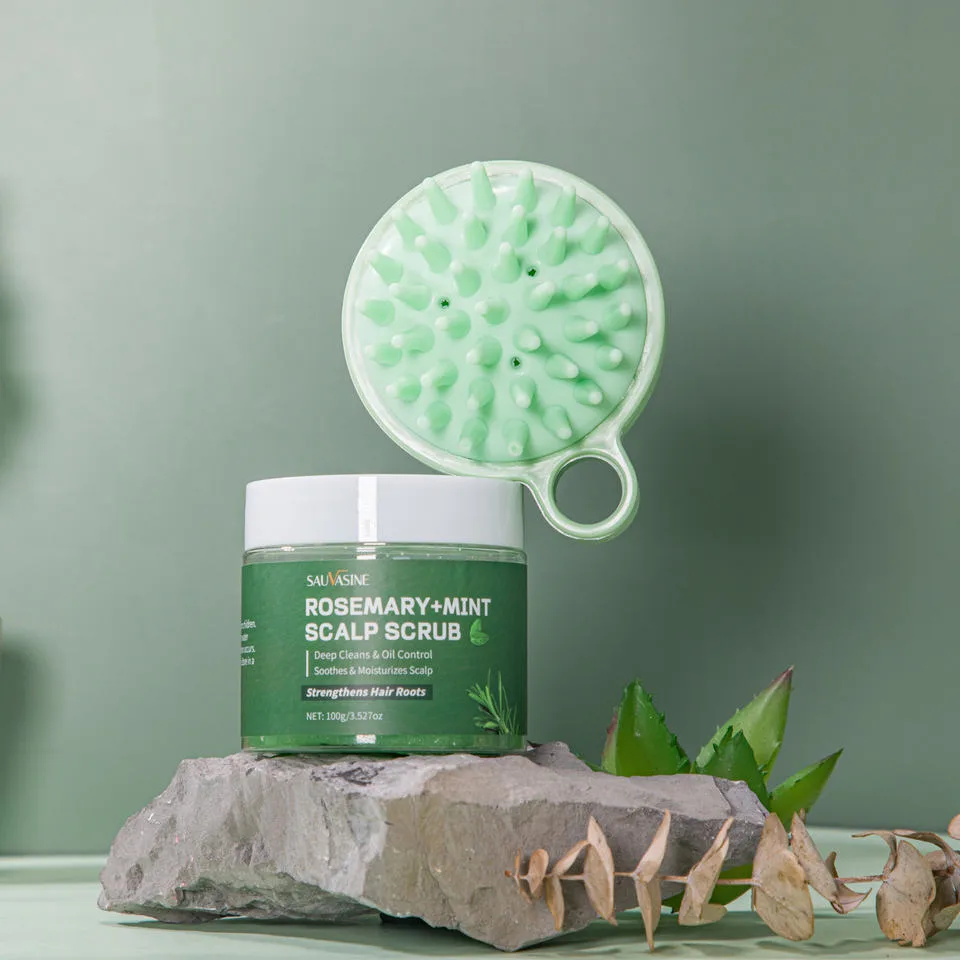
Keep the page's product identification separate from a customized proposal. A catalog picture can show a presentation for discussion, but it does not confirm every pictured item, ingredient cue or printed statement for your project. Ask whether any accessory shown is part of the actual offer and which package details the supplier is proposing. Do not convert props or label wording into agreed contents.
If you are comparing more than one proposed format, create a separate record for each. The source page's invitation to discuss presentation does not guarantee that a particular container or alternative format is available. Ask what the supplier can actually offer, then compare those confirmed proposals against the routine question your brand needs to answer.
Write the proposed role without assuming the sequence
Describe the relationship you want to discuss between the scrub reference and the rest of the collection. Ask whether the offered version has a confirmed role before, during or after another washing step, and request the current directions that support that description. Do not invent an order because another brand presents a product with similar naming in that way.
Keep the desired collection architecture distinct from the supplied instructions. Your brand might want a simple routine, but that preference does not establish that a proposed step can replace another product. If a retail concept depends on replacement, combination or a particular sequence, mark that dependency as an unresolved question until the responsible team confirms it.
Use clear provisional language in the development record. A note such as proposed additional wash-day step identifies an idea to review; it does not claim the catalog product is approved for that use. The distinction helps your team revise the concept without leaving earlier assumptions embedded in artwork or a retailer presentation.
Separate the word scrub from a mechanism claim
The source identifies the product format as Scalp Scrub. That identification does not by itself establish a particular particle material, ingredient level, action or performance outcome. Ask for current formula information and the supplier's explanation of the offered version rather than adding a mechanism to the brief from the name alone.
Where texture matters to your retail concept, describe the questions the review should answer. Your team may want to understand the supplied sample's presentation, handling or distribution when following confirmed directions. Record those as observations about the identified sample. Do not turn them into claims about cleansing, renewal, scalp conditions or universal suitability without a proper factual basis.
Avoid importing technical descriptions from a different scrub category. A body-care reference, a general ingredient article or an unrelated product photograph does not establish the composition or instructions of this haircare proposal. Keep questions specific to SWX-216 and the current sample version so that the supplier can answer them accurately.
Request the complete application and rinse directions
Ask for the operating, application and rinse information that applies to the proposed formula and package. Check whether the directions identify the relevant routine stage and explain the intended sequence. If a step is missing, seek clarification instead of filling the gap with what seems customary for a scalp scrub.
Do not prescribe an amount, a massage method, a waiting period, a water temperature or a frequency without confirmation for the offered version. Those details can materially affect what a reviewer is doing. A comparison that starts with different invented instructions is difficult to interpret, even when everyone is reviewing the same catalog reference.
Record the directions you received with their version or date where available. If the supplier revises them, identify which review notes were made under the earlier wording. This gives later discussion a useful context and prevents an observation from one instruction sequence being applied automatically to a different one.
Build a rinse-review plan around observable questions
A rinse-review plan should state what the buyer is trying to understand and which confirmed instructions the reviewer will follow. Ask the responsible team which observations are appropriate for the proposed version and what review method they recommend. A buyer review is a way to organize questions and preferences; it should not be presented as a validated technical test.
Keep the context visible when documenting an observation. Record the sample identity, the directions followed and the relevant routine steps. Note any deviations or unresolved instructions rather than hiding them in a general comment. If the team cannot tell what happened during the review, it cannot confidently connect the feedback to a supplier question.
Use plain descriptions of what was observed. A reviewer can identify an unclear transition in the directions or describe a preference about the experience without claiming a measured cleansing effect. Avoid inventing a pass threshold, a required rinse duration or a universal sensory standard. Agree any formal measurements and acceptance criteria with the responsible technical team.
Distinguish a sample observation from a collection decision
Organize the review so it produces an understandable next step. The same observation can lead to different actions: clarify the directions, request more information, discuss a packaging question or revisit the proposed retail role. Do not label every issue as a formula change before understanding what the review actually showed.
This record can help separate those decisions:
| Review area | What to document | Possible next question |
|---|---|---|
| Routine role | Proposed role and supplier-confirmed sequence | Does the collection description match the instructions? |
| Sample identity | Formula, package and document references | Does this sample represent the offered version? |
| Application | Directions followed and any unclear transition | Which step needs clarification? |
| Rinse review | Relevant conditions and descriptive observations | What further review or information is appropriate? |
| Presentation | Actual package and handling questions | Which packaging options can be discussed? |
| Retail communication | Provisional wording and unresolved points | Which statements are ready for responsible review? |
Keep the observation field separate from the decision field. A concise decision record is more useful than a long list of impressions with no indication of what the supplier is being asked to address.
Review packaging as part of the washing task
Ask how the proposed package is intended to be opened, used and closed when following the current directions. Confirm the actual container and closure being offered. Do not assume that the presentation in a photograph establishes the final package, included tools or the operating method for a customized version.
Consider which handling questions your team's review should explore in the intended routine context. A buyer may need to clarify access to the product, the clarity of the operating steps or how the package is presented between uses. These are questions for review, not claims that the package has been tested for a particular environment or has a specific resistance property.
If an accessory is being discussed, identify it separately from the cosmetic product. Ask whether it is included, how it is specified and which instructions apply to it. A brush visible in a catalog image is not a sufficient basis for listing an accessory as part of the retail offer. Keep the final contents description tied to the supplier's confirmed proposal.
Make the fragrance discussion specific to the proposal
The source page includes fragrance among the topics for comparison. If fragrance matters to your brand concept, ask the supplier to identify the proposed version and provide the relevant current information. Keep desired sensory language separate from confirmed composition and approved marketing descriptions.
Do not infer a fragrance profile or an ingredient benefit from rosemary naming or botanical props in a photograph. Ask what the actual proposed formula contains and which wording the responsible team can support. Your brand can explain the direction it wants to explore without claiming the current catalog reference already satisfies it.
When recording feedback, identify which sample the reviewer assessed. A general statement that the team preferred a fragrance is difficult to use if several samples were discussed without clear identifiers. Keep the response practical: the preference, the version reviewed and the specific follow-up requested from the supplier.
Compare alternatives using the same commercial question
When comparing this scalp scrub reference with other wash-care concepts, keep the reason for the comparison consistent. A product intended for a different role may not answer the same retail question. Start by identifying the confirmed role and directions of each offered option before deciding what kind of comparison is useful.
Do not create a performance ranking from unrelated sample comments. If the review methods or directions differed, preserve that difference in the record. Ask the responsible team whether further evaluation is needed before drawing a conclusion. An honest comparison can identify what remains unknown rather than forcing an early winner.
Separate confirmed differences from brand preferences. The team may prefer a collection with fewer steps or a different presentation, but those are commercial choices to discuss. They do not prove that one formula is better for every customer. Explain which option best fits the agreed project direction and what information still needs confirmation.
Translate the brief into a clear retail explanation
Once the proposed role and directions have been confirmed, review the customer-facing explanation against them. The product page, package wording and any routine guide should describe the same offered version. Avoid adding an extra step in a blog, retailer presentation or support reply that is absent from the approved product information.
Keep the explanation focused on what the customer needs to understand. Identify the product, its confirmed role and where to find its current directions. Do not add a treatment claim, a frequency recommendation or an implied suitability statement simply because a short marketing paragraph feels incomplete without one.
Ask the responsible team to review the final wording for the intended market and channel. This article does not prescribe regulatory text or labeling requirements. Its purpose is to help buyers bring coherent, current product information into that review instead of relying on a catalog image or a familiar category description.
Keep decisions connected when the proposal changes
Ask how revisions to the formula, package or instructions will be identified during the project discussion. A changed proposal may require your team to review connected materials, even when the catalog starting reference stays the same. Make that review decision visible rather than assuming that a prior sample discussion approves every later version.
Keep a current summary of the agreed role, applicable documents and open questions. Preserve earlier notes for context while distinguishing them from the current proposal. A purchasing colleague should be able to understand the status without reading an entire message history or interpreting an unlabelled sample photograph.
Before moving to final artwork or ordering discussions, check that the proposed contents, directions and retail description align with the current specification. Confirm quantities and timing with the team. The catalog page invites that conversation; it does not establish a fixed commercial offer, a delivery commitment or a confirmed production schedule for your project.
Send a focused sample enquiry
Use the sample request page to identify Rosemary Scalp Scrub, SWX-216 and reference 1601661948710. State the wash-day role you want to explore, your intended channel and the key decision the sample review should support. List the documents and directions needed before that review begins.
You can also contact the LANTHOME team to clarify the current proposal and discuss formula, packaging, quantity and timing questions. Separate requirements that your brand has already defined from preferences that you want to evaluate. This gives the supplier a clearer basis for responding without turning unknown details into assumptions.
The Shampoo collection can provide additional catalog starting points for a wash-care discussion. Review each reference on its own confirmed information. A useful scalp scrub brief should make the proposed routine easier to understand while keeping the product's actual specification, directions and claims within the evidence available for that version.
Frequently Asked Questions
Which LANTHOME scalp scrub reference should I use?
Use Rosemary Scalp Scrub, model SWX-216 and reference 1601661948710. The current page identifies a Scalp Scrub format in the Shampoo collection and invites Private Label / OEM / ODM enquiries. Request the current sample and specification for the proposed project.
Does the rosemary name establish the ingredient list?
The catalog name does not replace a current ingredient list. Ask the team to confirm the proposed formula and relevant ingredient information before developing ingredient-led copy. Do not infer ingredient levels or benefits from the name or botanical imagery.
Can the catalog picture confirm the package and accessory?
A catalog photograph is a discussion reference. Ask which container, quantity and any accessory are included in the actual offered version. Confirm the contents and instructions separately before using them in artwork or a retail description.
Should I set the amount and frequency in the buyer brief?
Ask for the current directions that apply to the proposed product. You can identify the information your brand needs, but do not invent an amount, frequency or routine sequence. Keep any proposed direction open until the responsible team has confirmed it.
What should a rinse review prove?
A structured buyer review can document observations, preferences and questions about the identified sample under confirmed directions. It does not automatically substantiate a public performance claim. Agree any formal evaluation and acceptance evidence with the responsible team before treating the review as proof of a specific outcome.
Related Links
- Rosemary Scalp Scrub — SWX-216- Identify the scalp scrub catalog reference and request current project information.
- Private Label Haircare- Discuss the requirements and positioning of your proposed haircare brand.
- Shampoo Collection- Explore current wash-care catalog references for your product discussion.
- Haircare Products- Browse the site's current product categories and individual references.
- How It Works- Review the project development overview before preparing your enquiry.
- Request Samples- Organize your sample request and the questions to resolve before review.
- About LANTHOME- Read the current company and service information.