
In this guide
- Start with a precise product reference
- Give the two-in-one concept a defined role
- Write a brief that leads to decisions
- Use a repeatable rinse-off review
- Separate texture from the finished hair experience
- Use a scorecard with clear observation fields
- Evaluate jar and tube dispensing as separate options
- Ask for the information your specification needs
- Turn feedback into an approval record
- Frequently asked questions
- Related Links
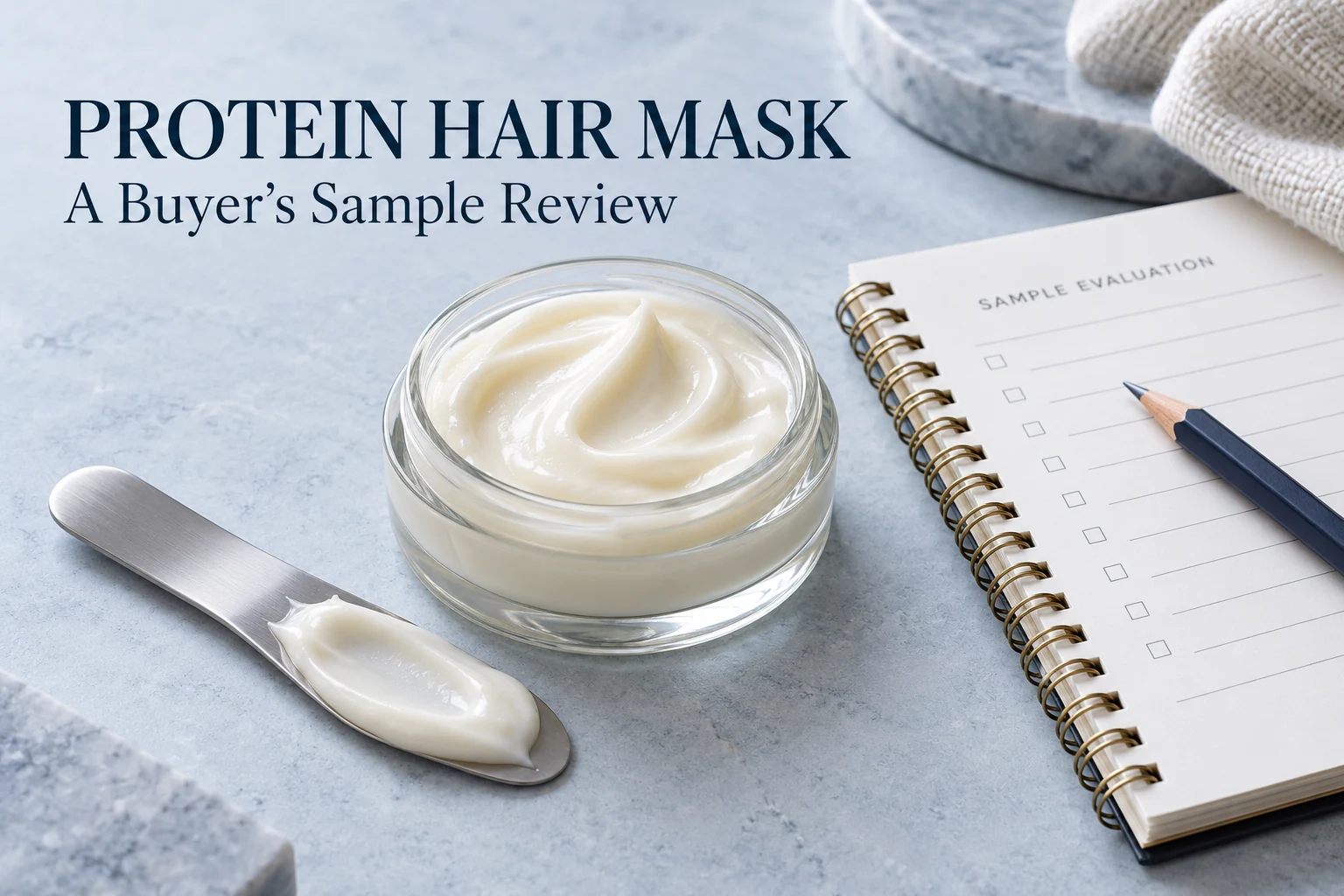
A private label protein hair mask needs a clear job in the customer's routine. Before choosing a name, jar or campaign headline, a brand should decide how the product will be used and what a useful sample should demonstrate. A rich texture can create an appealing first impression, but a purchase decision also depends on dispensing, spreading, rinsing and the feel of the hair after drying. Those observations become much more useful when reviewers follow the same instructions and record the same details.
The LANTHOME Protein Hair Mask & Conditioner is a starting reference for this discussion. Its current page presents a rich cream in a two-in-one hair mask and conditioner format, identifies model FAI-6480A and invites private label, OEM and ODM inquiries. This guide uses those visible details to develop a practical sample review. It offers buyer planning advice rather than a claim that a particular formula, package or commercial arrangement has already been approved.

Start with a precise product reference
The visible product reference is 1601955862451. Include that number and model FAI-6480A in your initial request so everyone can identify the same item. The product page describes a protein-focused conditioning treatment, rich cream texture and a two-in-one mask and conditioner format. It also encourages buyers to compare application time, rinse behavior, texture and jar or tube dispensing during sample review. These are concrete starting points for a development brief.
The page does not provide a complete ingredient list, identify a particular protein ingredient, state its concentration or specify a fixed application time. It also does not confirm a final packaging capacity or a price. Treat those as questions for the selected project. A category name such as protein hair mask should not become an assumption about hydrolyzed keratin, collagen, a molecular size or a particular ingredient origin. Request the current information for the actual sample version before making those statements in your own materials.
Keep a small reference record with the source URL, the date you reviewed it, the sample identifier and any agreed changes. Product pages introduce a discussion; a written project record identifies what your team eventually evaluates and approves. If you request a different fragrance or container, record it as a requested change until the team confirms feasibility. This prevents an early idea from being mistaken for a finished specification when the brief reaches purchasing or design.
Give the two-in-one concept a defined role
A two-in-one mask and conditioner creates several possible merchandising directions. Your brand might want one rinse-off step with a richer sensory character, or it might want to present an occasional treatment alongside an existing daily conditioner. The product page establishes the format but does not decide which positioning fits your audience. Start by describing the routine in plain language: when the person applies it, which other products they use and what decision the product is meant to simplify.
Choose one primary use situation for the first review. For example, a brand could evaluate a rinse-off conditioning step for customers who prefer a richer texture. That is an evaluation brief, not a claim that the reference suits every hair type. Write down the hair profiles you plan to include and ask whether the proposed sample is appropriate for that evaluation. Avoid treating a few positive comments as proof of universal suitability or as evidence for a repair claim.
Discuss the relationship between the mask name and the directions. If a buyer expects a longer application because the label says mask, but the intended routine is a short conditioning step, the wording may create confusion. Confirm the recommended directions for the agreed sample and use them consistently during review. Commercial positioning, instructions and customer expectations should describe the same experience rather than promising different routines on the front label and product page.
Write a brief that leads to decisions
A useful brief separates preferences from questions. Preferences might include a rich cream feel, a particular fragrance direction or a pack that customers can use in a shower. Questions might include which dispensing options are available, what the complete ingredient information shows and how the sample should be applied. This separation helps the manufacturer respond with confirmed options rather than a broad interpretation of a phrase such as premium protein treatment.
Include your target audience, intended sales market, proposed product role, preferred packaging direction and the current reference number. Explain whether you are evaluating this item as a stand-alone product or as part of a shampoo and conditioner range. If you provide a benchmark, describe the features you want to compare instead of asking for an identical copy. An example of a useful request is to compare spreading and rinse behavior while discussing a less noticeable fragrance. Any requested adjustment remains subject to confirmation.
Identify who can approve the result. A founder may own positioning, a product lead may coordinate samples and a designer may check label space. Give each person a decision to make and decide how conflicting feedback will be resolved. A final approval should not depend on whichever opinion arrived last in a group chat. The sample request page can start the conversation, while your internal brief keeps the review focused on agreed questions.
Use a repeatable rinse-off review
Follow the confirmed directions supplied with the sample. Within those directions, keep the evaluation routine as consistent as practical. Record the shampoo used, whether other products were applied, how much sample was used and how the reviewer rinsed it. You do not need to turn a buyer review into a laboratory study, but you do need enough context to understand why two people report different experiences. A comment without context rarely gives a clear next action.
Observe the experience in stages. First note how the cream comes out of its test container and whether it is easy to portion. Next record spreading, distribution and the perceived feel during application. Then describe rinsing and any difference the reviewer notices after drying. Use ordinary descriptions rather than technical claims that the review cannot demonstrate. A panel comment such as easier to distribute in this routine is more useful than an unsupported statement about changes inside the hair fiber.
Avoid changing several conditions at the same time. If one reviewer changes shampoo, uses a different sample amount and adds an oil afterward, the resulting comment does not isolate the mask experience. Where possible, compare samples under matching conditions and retain each version's identifier. If a routine change is unavoidable, note it. The aim is a fair purchasing decision, not an artificially favorable comparison or a claim that a casual trial establishes a measured benefit.
Separate texture from the finished hair experience
Texture deserves its own review because it influences portioning and customer expectations. A rich cream may look substantial in a jar, but appearance alone does not tell you how it spreads through damp hair or rinses away. Ask reviewers to describe what they observe: whether the sample holds its shape, spreads easily or is difficult to dispense from the test pack. Do not convert those descriptions into a statement about viscosity unless an appropriate measurement has actually been provided.
Keep finished-hair feedback separate from in-use feedback. A reviewer may enjoy the feel during application yet prefer a different result after drying. Another person may value a particular finish more than the sensory richness of the cream. Record both observations rather than combining them into one positive or negative score. This makes it easier to identify whether the next discussion should concern application directions, texture preferences or the intended audience.
Fragrance also needs a separate decision. Ask how noticeable it is during application and whether the reviewer notices it later in the routine. Confirm the fragrance information and available options for the project instead of assuming that the reference is fragrance-free or that a particular scent can be supplied. If reviewers disagree, revisit the target customer and sales channel. The purpose of the review is to choose a coherent product direction, not to satisfy every personal preference simultaneously.
Use a scorecard with clear observation fields
A short scorecard reduces vague feedback and helps you compare versions. Keep the same questions across reviewers, record the sample identifier and include space for an explanation. A number without a comment can hide a misunderstanding: one person may rate a rich texture highly while another uses the same number to describe easy rinsing. Define the criterion before collecting scores, and distinguish a personal preference from a potential usability concern.
| Review area | What to record | Decision it supports |
|---|---|---|
| Sample identity | Reference, model and version received | Confirms which sample is under review |
| Dispensing | Ease of portioning from the test container | Helps compare packaging directions |
| Application | Spreading and distribution in the recorded routine | Identifies instructions or texture questions |
| Rinsing | Reviewer description under consistent conditions | Clarifies the desired use experience |
| After drying | Perceived finish and feel, with hair profile noted | Supports audience and positioning discussions |
| Fragrance | Perception during and after use | Guides the fragrance preference brief |
| Follow-up | Requested clarification and responsible person | Converts feedback into an actionable next step |
Use the scorecard as an internal comparison tool. It is not clinical evidence and should not be presented as a performance study. Summarize the observations honestly, including disagreement and the limits of the review. If one sample receives better comments, ask which characteristics explain that preference before approving it. That conversation can reveal whether the team is choosing the formula experience, a fragrance direction or simply the convenience of the temporary test container.
Evaluate jar and tube dispensing as separate options
The product page suggests comparing jar or tube dispensing; it does not guarantee that a particular container is available for your project. Ask which options can be reviewed with the selected sample. If both are feasible, consider how customers will open, portion and close the pack in their intended routine. A container that photographs well can still create difficulty during use, so include packaging handling in the review rather than leaving it entirely to the design team.
For a jar direction, consider grip, opening, closure and the amount of space available for clear instructions. For a tube direction, consider controlled dispensing, cap handling and whether reviewers can access the product comfortably. These are questions to evaluate with actual packaging samples, not assumptions about which pack is inherently better. The cream, container and dispensing components should be reviewed together when the team is ready to confirm a proposed configuration.
Keep packaging compatibility and presentation approval distinct. A print proof can confirm wording and layout; it cannot replace a check of the formula in the intended pack. Request the relevant project information about storage, handling and any compatibility evaluation available for the agreed combination. Do not assume a test has been completed because a pack resembles a catalog photograph. Your approval record should identify the sample and packaging versions that were actually reviewed.
Ask for the information your specification needs
Before approving a protein hair mask project, request the current ingredient information and confirmed directions for the selected version. Ask how the product, packaging and label versions will be identified in future correspondence. Your specification should help another person recognize what was approved without relying on memory. It can include the reference, model, agreed presentation, packaging details and documents provided, with dates and version identifiers where available.
Discuss which quality documents and supporting information are available for the actual project. Ask the appropriate technical or qualified market specialist to review what is needed for your intended destination and claims. Avoid assuming that a document for a related item applies to your sample or that a broad company statement establishes the status of a finished product. Where information is missing, record the open question and owner rather than filling the gap with a generic assurance.
Commercial details belong in the same controlled record but require separate confirmation. The reference page provides no fixed quantity, price or delivery promise. Ask for project-specific terms based on the chosen formula version, container, artwork and requested scope. Distinguish an initial estimate from an agreed arrangement, and revisit it if the specification changes. A fragrance adjustment or packaging change can create a different discussion even when the product category remains the same.
Turn feedback into an approval record
After the review, summarize the decision in a short approval note. Identify the accepted sample, explain the intended routine and list any unresolved items. If the team requests a revision, specify which observation prompted it and how the revised version will be evaluated. A request to make it better is difficult to act on; a request to discuss easier portioning or a different fragrance direction gives the next conversation a defined purpose.
Keep a reference sample and the related documentation according to your own project process. Before moving ahead, check that the name, instructions, ingredient information and packaging proof refer to the same agreed version. Confirm who approves each part and what happens if something changes. The value of this record is continuity: a purchasing colleague, designer or customer service team should be able to understand the product without reconstructing weeks of messages.
A decision may also be to pause or choose another product direction. If the sample does not fit the intended routine, that is useful information. Return to the audience brief and explain what the review revealed. Explore the hair mask collection or discuss a different format rather than stretching the product description to fit an unsuitable concept. A focused range is easier to explain when every item has a clear purpose.
Frequently asked questions
Which product is this guide based on?
It uses the current LANTHOME Protein Hair Mask & Conditioner reference 1601955862451, model FAI-6480A. The page describes a rich cream and a two-in-one mask and conditioner format. Confirm the current sample and specification with the team before treating catalog information as your final project agreement.
Does protein hair mask identify the complete formula?
No. The visible page does not list the full formula or specify a particular protein ingredient and concentration. Request the current ingredient information for the version you want to evaluate. Avoid writing a specific ingredient, percentage or mechanism into your label or marketing material without support.
Should the sample be used as a daily conditioner or an occasional mask?
Agree on the intended routine and confirm the directions supplied for the selected sample. The two-in-one format does not establish one universal application time or frequency. Keep the routine consistent during review and make sure the final name, positioning and directions describe the same use experience.
Can I choose a jar, tube or different fragrance?
The product page invites discussion of formula, packaging and project preferences. Share the options you want to explore, then ask which are available and appropriate for the selected version. Review actual samples and packaging proposals before approving changes; a request is not a confirmed customization.
What should I include in an inquiry?
Include reference 1601955862451, model FAI-6480A, your target audience and market, proposed product role, packaging direction and the sample questions you want answered. Share a planning quantity and launch window if useful, while requesting separate confirmation of commercial terms. Use the contact form to begin that discussion.
Related Links
- Protein Hair Mask & Conditioner- Review the rich cream two-in-one product reference used in this guide.
- Hair Mask Collection- Compare hair mask references for your intended treatment routine.
- Haircare Products- Explore the site's current private label haircare catalog.
- Private Label Pathway- Discuss a private label project direction for your brand.
- How It Works- Review the site's development process and prepare project questions.
- Request Samples- Send a sample brief with the selected product reference and evaluation priorities.
- About LANTHOME- Read the company's published background and contact context.