
In this guide
- Identify the sample you are actually discussing
- Define the styling result in observable language
- Review hold and finish as two different attributes
- Explain the customer and sales setting
- Set priorities before requesting revisions
- Put the brief into one working sheet
- Use benchmark products to explain attributes
- Compare samples using the supplied application directions
- Build a matte hair clay sample scorecard
- Make feedback specific enough to act on
- Ask for the ingredient information instead of guessing from the name
- Review jar use before choosing decoration
- Connect fill size to the presentation and quotation
- Develop a label that explains the styling direction
- Prepare an application explanation for the product page
- Keep quality questions tied to the selected version
- Make commercial comparisons use the same assumptions
- Approve a complete version, then brief the launch team
- Frequently asked questions
- Related Links
A private label matte hair clay project begins with a styling brief: the look your brand wants to describe, the application experience you want evaluated, and the finish and hold that need review. A useful brief treats those as separate decisions. It helps a buyer explain why a sample is suitable for the intended grooming routine, rather than selecting a jar simply because the words “strong hold” and “matte” appear on the label.
This guide uses the LANTHOME Strong-Hold Matte Hair Clay as its product reference. The page presents a styling clay for men's grooming with strong hold and a natural matte finish. The following development questions help organize a private-label conversation. They do not supply a formula recipe, test result, universal styling promise, fixed MOQ, or production schedule.

Identify the sample you are actually discussing
The visible page identifies product reference 1601919820345, model FAI-DZ D-0323, and the format “Styling clay.” Its description and highlights focus on strong hold, a natural matte finish, and textured styling for men's grooming. Keep those identifiers in the sample request so that your brief is linked to a specific candidate.
Request the current formula information, intended directions, and sample version. The reference page does not provide a complete ingredient list, clay type, ingredient percentages, or confirmed jar capacity. Treat those as information to obtain. A catalog name can help you shortlist a product, but it cannot replace the specification your team needs for sample evaluation, label development, and production approval.
Define the styling result in observable language
Describe the intended look in terms that reviewers can discuss: the degree of visible texture, the preferred amount of shine, and the application experience that suits your customer routine. If you use photographs as visual references, explain which aspect matters. A photograph alone does not establish how much product was used, the hair condition, or the technique behind the look.
Separate your styling goal from a guaranteed customer outcome. You may want to explore a textured everyday grooming direction, but the selected formula and instructions still need review. Write down the observation that would support a sample decision. This might be a preference for a less glossy appearance under the agreed review conditions, rather than an unsupported promise that every user will achieve the same finish.
Review hold and finish as two different attributes
Hold describes a styling objective, while finish describes an appearance objective. The current reference uses strong-hold and natural-matte wording. Those statements identify its positioning; your project should still assess the selected version within an appropriate review process and determine which wording can be supported for the final product.
Do not let one preferred attribute hide a question about the other. If reviewers like the finish but disagree about application, record both observations. If a sample's styling result depends on the method used, include that context. Ask the team which product or instruction changes can be discussed. A single overall score can conceal useful information that separate hold, finish, and application notes would make visible.
Explain the customer and sales setting
A barbershop range, a retail grooming collection, and an online brand may need different ways to explain the same product direction. Describe your actual first channel and who will demonstrate or recommend the product. A customer receiving advice in a grooming setting may have different information needs from someone reading a product page without a demonstration.
Prepare the story your sales team should be able to tell in a few sentences. Name the product format, the confirmed styling direction, and the reviewed application method. Keep the story tied to the selected version. If you plan to extend the range later with another styling product, explain how the first clay should be distinguished without making claims about an item that has not been selected or reviewed.
Set priorities before requesting revisions
Choose the attributes that matter most for your brand. Possible review priorities include application effort, finish preference, styling feel, fragrance, pack handling, and the experience of removing the product under its supplied instructions. These are evaluation questions, not established properties of the reference beyond the claims visible on its page.
Rank the priorities so the product team can understand a trade-off. For example, if your main objective is a particular matte appearance, state that preference alongside the application direction you want to explore. Avoid sending a list of equally urgent changes after every review. Decide which observation requires clarification first, then ask for a revision plan tied to that decision and the selected sample version.
Put the brief into one working sheet
The first sheet should connect your brand goal to the product reference and the questions that need answering. Include the intended market and channel so that technical information and proposed wording can be reviewed in context. Keep the current facts distinct from the preferences you want to discuss.
| Brief field | Buyer input | Question for the project team |
|---|---|---|
| Reference | 1601919820345, model FAI-DZ D-0323 | Which current sample version will be supplied? |
| Styling direction | Your intended textured grooming look | Which directions apply to the selected clay? |
| Finish | Your preferred appearance and reference context | How should the matte direction be evaluated? |
| Hold | The styling objective you want reviewed | Which wording and support apply to this version? |
| Formula preferences | Ingredients or fragrance directions to discuss | Which changes are feasible and need a new sample? |
| Pack | Proposed jar and handling preferences | Which formula and pack checks are appropriate? |
Use the sample request page to send the reference and priorities together. Confirm sample arrangements and commercial terms separately.
Use benchmark products to explain attributes
If you supply a benchmark, describe the qualities you want to compare rather than using “same as this” as the entire instruction. Explain whether your preference concerns the finish, the way the product spreads, the jar handling, or another specific observation. Different attributes may lead to different sample questions.
Record the benchmark name, version if available, and the context in which you reviewed it. It is a comparison aid, not proof that a proposed product should have an identical formula or result. Keep the selected LANTHOME sample as its own product record. Your final brief should describe the product direction you want your brand to own, along with the information and review needed to approve that direction.
Compare samples using the supplied application directions
Ask for the intended directions before beginning a review. Agree on the review questions and record the method used within that scope. Application amount, hair preparation, and technique can affect an observation, so note the relevant context instead of treating an unexplained comment as a formula conclusion.
Give each sample a unique code and keep notes organized by version. Do not mix comments about an earlier sample with the current candidate. Internal evaluation can help identify your team's preferences, but it does not create a substantiated performance claim. When you want to use a specific promise in marketing, ask what product-specific support and review are required for the selected formula and wording.
Build a matte hair clay sample scorecard
Use a scorecard that preserves the reason behind each rating. It should help the team understand what to keep and what to discuss next. The following areas give the review structure without pretending to provide a formal testing protocol.
| Area | What to observe under the agreed directions | How to report it |
|---|---|---|
| Access from the jar | Ease of taking the intended amount | Note the pack and sample version |
| Application | How the product distributes during the routine | Describe the method and observation |
| Finish | The appearance at the chosen review stage | Keep the lighting and context in the note |
| Styling feel | Your preference after application | State the desired change in plain language |
| Fragrance | Your team's preference in the reviewed routine | Separate preference from any safety claim |
| Removal | Experience under the supplied directions | Ask whether instructions need clarification |
Keep photographs or notes attached to the relevant sample code. A scorecard should support a decision, not create a pile of ratings with no explanation of what the brand wants next.
Make feedback specific enough to act on
Use a consistent sequence: observation, context, requested direction, and priority. A clearly labeled example could read: “In our agreed application review, sample B required more spreading effort than our chosen reference; please discuss an easier application direction while retaining the finish we preferred; high priority.” This demonstrates a feedback format and does not describe the actual reference product.
Consolidate comments before sending them. If one reviewer prefers a firmer styling feel and another prefers a softer direction, identify which preference represents the brand's intended audience. Ask the project team to explain the implications of a proposed change. Record what has been agreed for the next version so your review can tell whether the revision answers the original question.
Ask for the ingredient information instead of guessing from the name
The word “clay” identifies the catalog format but does not supply the complete formula or establish a particular clay ingredient. Request the full current ingredient information for the selected version. If your brand wants to explore a named ingredient, a fragrance preference, or an exclusion, record it as a requirement for feasibility review.
Keep formula facts and creative copy in separate stages. The designer may develop a visual concept while the product team reviews the specification, but the label ingredient declaration and factual product description need the confirmed documents. If a formula change is agreed, update the sample record and ask what else requires review. Do not carry an old ingredient story onto a revised version without checking it.
Review jar use before choosing decoration
Explain the customer setting and the handling experience you want. Ask which jar dimensions, closure designs, and presentation options can be discussed for the selected formula. The product page does not confirm a jar capacity, so treat fill size and pack dimensions as questions to resolve rather than details to invent for artwork.
Review the pack with the product. Ask about access to the intended amount, closure operation, formula contact, filling, and the checks appropriate to the combination. A lid finish or label color can be chosen as part of the visual brief, but it should not replace the working pack review. Record the formula and packaging versions evaluated together, especially if either changes after the initial sample decision.
Connect fill size to the presentation and quotation
Choose a proposed fill direction based on your own range plan, then ask what can be confirmed. Explain whether the product is intended as a single grooming item, a companion to another product, or part of a set you want discussed. Each proposed configuration changes the questions your team must answer about packaging and customer information.
Do not build final dielines around an assumed jar. Obtain the confirmed dimensions and decoration scope before approving artwork. Ask how the proposed pack affects the quote and the review process. If you revise the fill size later, check the label, container, directions, commercial record, and product photographs for consistency. The launch materials should describe the actual configuration your project has selected.
Develop a label that explains the styling direction
Make the format name and reviewed styling description easy to identify. A clear front label can help distinguish a matte clay from another grooming product in the same collection. Use the final confirmed fill details and approved product information, while keeping longer instructions and ingredient information in the appropriate reviewed layout.
Check the label at actual size and on the selected pack. Compare the wording with the sample record and supporting documents. If the design introduces an extra hold duration, a broad resistance claim, or a universal suitability statement, identify that wording for review before printing. A confident visual identity does not require adding promises that the selected product information has not established.
Prepare an application explanation for the product page
Collect the supplied directions and turn them into an understandable page structure without changing their meaning. Your copy should identify the product, the confirmed styling direction, and the reviewed method of use. Ask the appropriate project contact to check the explanation before using it in a demonstration script or customer-facing listing.
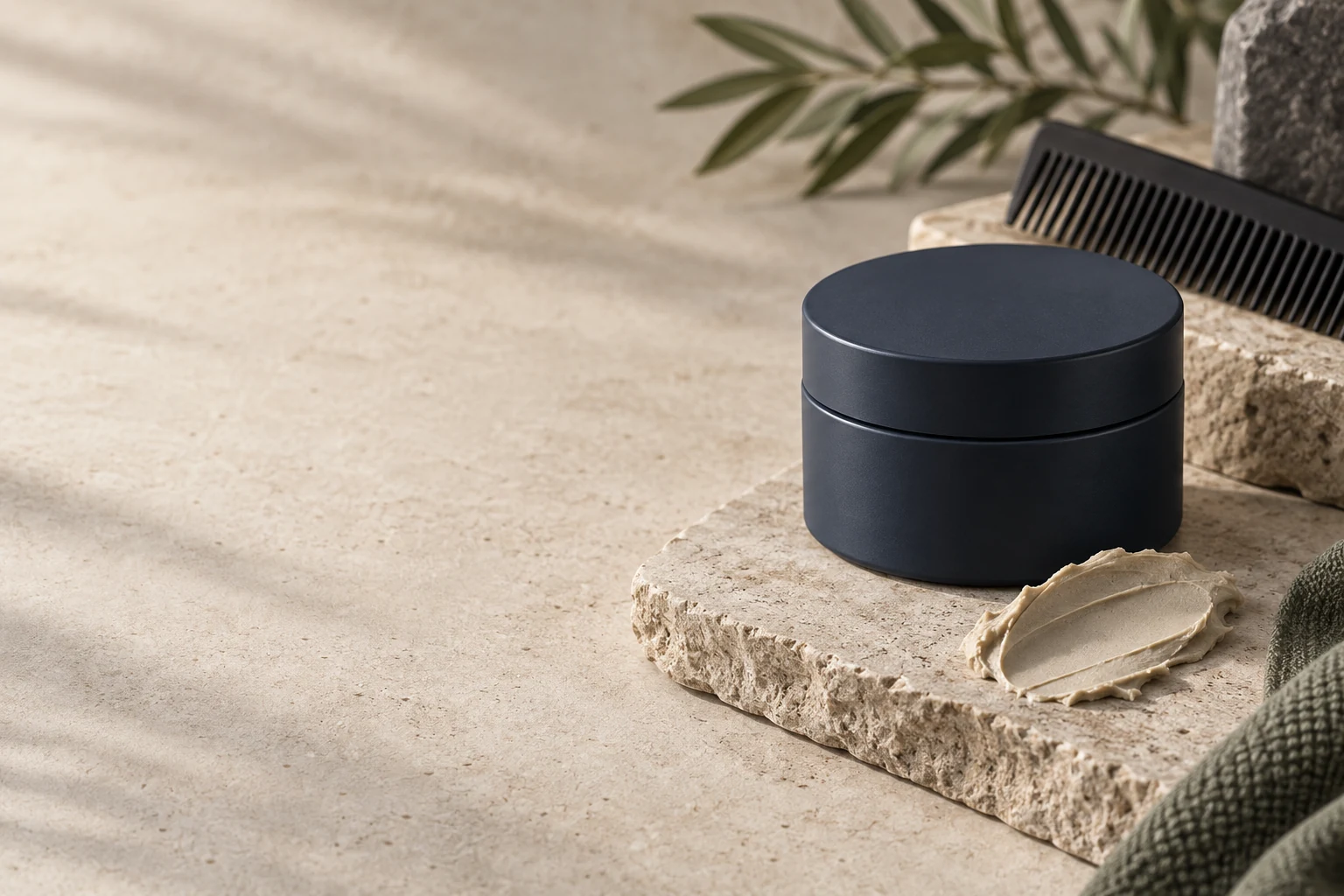
Plan photography around the final product and its approved presentation. The guide cover is a styling-pack concept, rather than a final jar specification. For your own launch, photograph the actual pack, label, and closure. Keep demonstration material connected to the confirmed directions and avoid implying that a posed image establishes a performance result for every user or setting.
Keep quality questions tied to the selected version
Ask for the current product specification, complete ingredient information, directions, and available supporting records. Explain your destination market and the claims you want reviewed. Identify which information is needed for the formula and which is needed for the formula and packaging combination. The appropriate scope depends on the project; a general catalog description does not settle it.
Maintain a document tracker showing the supplied record, version, review owner, open question, and decision. Ask for clarification if the record describes a different sample or pack. When a revision is made, check whether the supporting information and review scope also change. This keeps the quality discussion attached to the product you intend to approve rather than to an earlier reference that happens to share its name.
Make commercial comparisons use the same assumptions
Supply the selected sample identifier, proposed jar, fill direction, decoration, artwork status, destination, and planning quantity when requesting a quote. Ask what is included, what remains provisional, and which next decisions are required. This guide does not state a fixed unit price, minimum quantity, sample policy, or production lead time for the hair clay.
Compare quotations only after identifying differences in scope. One proposal may describe a different container, decoration process, or included service from another. Write down those differences and clarify them before comparing totals. If the sample or pack changes, request an updated commercial record. An initial quote should not silently become an agreement for a revised product configuration.
Approve a complete version, then brief the launch team
Create one approval record containing the formula identifier, sample code, final pack specification, ingredient information, directions, artwork proof, reviewed claims, and agreed commercial scope. Add the date and responsible person for each decision. Before approving, check that these items describe the same version and presentation.
Use that record to brief sales, photography, and website teams. Explain which assets are final and which were development references. Check the live-ready product description against the approved wording rather than copying a benchmark description. If a later revision is needed, record what changed and which materials need updating. A clear handoff helps preserve the product decision as it moves from sample review into customer-facing presentation.
Frequently asked questions
What does the current matte hair clay reference confirm?
It identifies a styling clay under reference 1601919820345 and model FAI-DZ D-0323. The visible copy positions it around strong hold, a natural matte finish, and textured men's grooming. Request the current sample specification, complete ingredient information, and directions for the version you want to evaluate.
Does the name confirm a particular clay ingredient?
The catalog format does not establish a complete formula or a specific clay type. Ask for the selected version's ingredient information. If your brand wants a particular ingredient direction, discuss it as a requirement for review and obtain updated documentation for any agreed revision before preparing the label.
Can I use a benchmark to explain the finish I want?
Yes, a benchmark can help you describe a specific preference. Identify whether the comparison concerns application, appearance, styling feel, fragrance, or handling, and include the review context. Keep the selected product as its own formula and sample record, with its own confirmed directions and supporting information.
What pack size and MOQ are available?
The current page does not establish a jar capacity, MOQ, price, or production timeline. Share your proposed fill direction and planning quantity, then request project-specific confirmation. Keep the confirmed packaging and commercial details together so the quotation, artwork, and approval record describe the same scope.
What should I send before asking for samples?
Include the product reference and model, target market, first sales channel, styling direction, finish and application priorities, and proposed jar presentation. Explain what the sample review should help you decide. Start with the LANTHOME sample form and agree separately on the next review and commercial steps.
Related Links
- Strong-Hold Matte Hair Clay- Review the styling clay reference used in this development guide.
- Private Label Hair Styling Products- Compare styling product formats for your grooming collection.
- Private Label Beard Care- Explore references for a broader grooming range.
- Private Label Haircare- Discuss a ready-to-brand product starting point.
- Custom Haircare Development- Prepare the requirements for an original product direction.
- Request Haircare Samples- Send product references and evaluation priorities.
- About LANTHOME- Find the company identity and project contact.