
In this guide
- Understand what the reference confirms
- Define the audience without assuming an age claim
- Give shampoo and conditioner different jobs
- Choose the first sales channel before extending the range
- Make the ingredient discussion precise
- Use a two-product brief
- Set up a review that respects the supplied directions
- Evaluate the shampoo before combining feedback
- Evaluate the conditioner as its own product
- Review the paired routine after the individual products
- Design packaging around adult handling and clear identification
- Ask about the complete set presentation
- Keep age, eye-contact, and skin claims out of guesswork
- Prepare label text as two separate records
- Request documentation tied to the intended audience
- Compare quotes at the same set scope
- Build a handoff checklist for the launch team
- Frequently asked questions
- Related Links
A private label kids shampoo and conditioner set needs two clear product roles, an intended audience, and instructions that the adult purchaser can understand. Start with the washing routine you want the range to support. Then evaluate the shampoo and conditioner separately before reviewing how they work as a coordinated presentation. Matching bottles can explain a collection, but they do not establish the suitability of either formula.
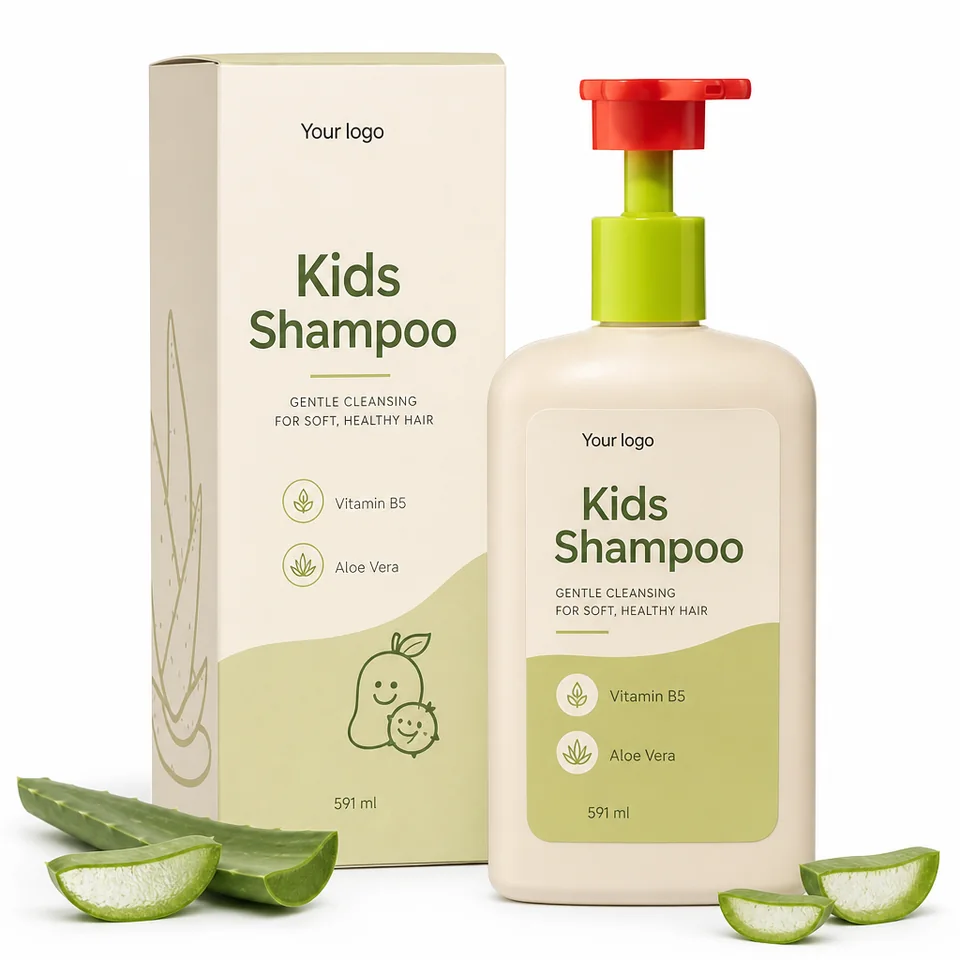
The LANTHOME Vitamin B5 Kids Shampoo & Conditioner Set provides a reference for this discussion. Its page identifies a children's shampoo and conditioner format built around vitamin B5, aloe vera, and shea butter, with branding and packaging options to discuss. This guide turns those visible details into a buyer brief without inventing an age range, formula percentages, testing result, or commercial commitment.
Understand what the reference confirms
The catalog identifies product reference 1601955981121 and model FAI-6514A. It describes a shampoo and conditioner set and mentions vitamin B5, aloe vera, and shea butter. Those facts are useful when requesting the current sample and product information. They should not be expanded into a complete ingredient declaration or a promise that every proposed formula change is available.
Ask for the separate specification and complete ingredient information for each product. A set-level description does not establish which named ingredient appears in which formula or at what concentration. Record the shampoo and conditioner versions independently. This prevents the information for one bottle from being copied onto the other when your team prepares labels, comparison sheets, or customer-facing product pages.
Define the audience without assuming an age claim
Describe who will purchase the set, who will apply it, and the routine your brand intends to explain. If an intended age range matters to your project, write it as a requirement for review. The current reference page does not establish an approved age range. Avoid filling that gap with an assumption based on the word “kids” or on a colorful packaging concept.
Your brief can explain a parent-led washing routine, a coordinated family range, or another clearly defined use context. The suitability and directions for the selected formulas still need confirmation. Ask the appropriate product and market reviewers which information is required for the intended audience. Keep that review separate from decisions about bottle color, fragrance preference, or the tone of your advertising.
Give shampoo and conditioner different jobs
Write one sentence for the role of the shampoo and another for the role of the conditioner. These sentences should describe the product direction you want evaluated, not promise a result that has not been reviewed. A buyer might ask to assess the shampoo's wash and rinse experience and the conditioner's application and after-rinse feel under their supplied directions.
Use those roles to decide what belongs on the front label. The category name should be easy to identify, even when the packs share a visual identity. If customers need to distinguish two steps quickly, repeat the step names clearly across the product page, box, and bottle. Do not assume that color alone explains which bottle should be used first or how it should be used.
Choose the first sales channel before extending the range
A set sold online needs understandable images, clear directions, and a product page that explains what is included. A retail presentation may need the product roles to be understood from a shelf or outer box. A salon-related project may depend more on an explanation from the person recommending it. Describe your actual first channel so the project team can discuss the appropriate presentation.
Avoid using the first brief to design every future extension. Decide whether your initial offer is a paired set, individually available products, or both, and ask which configurations can be discussed. Confirm any outer packaging or combined presentation separately. A first set can provide a clear brand starting point without requiring an unconfirmed travel size, refill, gift box, and additional treatment at the same time.
Make the ingredient discussion precise
Vitamin B5, aloe vera, and shea butter are mentioned on the current page. Keep the ingredient conversation tied to the documents supplied for the selected shampoo and conditioner. If your brand wants to explain those ingredients in consumer copy, ask what can accurately be said about their presence and role in the approved formulas.
List any ingredient preferences or exclusions as project requirements to review. A requested exclusion is not a confirmed attribute until the selected formula and supporting information establish it. Similarly, do not use a botanical ingredient name to imply that a product is suitable for everyone. The useful buyer question is which formula information and review support the proposed audience and wording for the actual finished products.
Use a two-product brief
Give both products a place in the same brief, while keeping their technical and sensory questions separate. This makes it easier to compare a coordinated range without losing the identity of each item. Include the shared brand requirements only once and identify where an individual product needs different information.
| Brief area | Shampoo question | Conditioner question |
|---|---|---|
| Reference | Which shampoo sample version is supplied? | Which conditioner sample version accompanies it? |
| Directions | What washing and rinsing instructions apply? | What application and rinsing instructions apply? |
| Experience | What wash and rinse observations should be recorded? | What application and after-rinse observations matter? |
| Formula information | Which complete ingredient list describes this version? | Which complete ingredient list describes this version? |
| Packaging | Which closure and bottle fit the shampoo? | Which closure and bottle fit the conditioner? |
| Label | Which product-specific directions belong here? | Which distinct directions belong here? |
Share this structure through the sample request form, together with your market, channel, audience requirements, and planning scope.
Set up a review that respects the supplied directions
Ask for the intended directions and appropriate evaluation process before reviewing samples. Define what your team needs to learn from each product. Keep the review method and questions consistent within the agreed scope. Internal sample observations help choose a direction; they do not establish safety for a particular age group or replace product-specific technical assessment.
Do not introduce unsupported user trials as a shortcut to an audience claim. Identify who is responsible for reviewing suitability, instructions, and any testing needs for the project. If your team receives several versions, give each a distinct code and keep the original labels. A clearly controlled review is more useful than a collection of informal comments that cannot be linked to the formula version being discussed.
Evaluate the shampoo before combining feedback
Create a shampoo review sheet with the sample identifier, supplied directions, observation context, and reviewer comments. Ask reviewers to describe the dispensing, application, and rinse experience in plain language within the agreed review process. If the observation depends on the amount or method used, include that context in the note.
Avoid converting a preferred wash experience into a broad claim. For example, an evaluator's liking for the rinse feel does not establish a promise about every customer or every hair type. Use the feedback to ask which product direction can be discussed. If several reviewers disagree, identify whether the difference reflects a brand preference or an unresolved instruction, rather than averaging their comments into an unexplained approval score.
Evaluate the conditioner as its own product
The conditioner needs a separate review because its role and directions differ from the shampoo. Record how the sample dispenses, applies, and feels after the agreed routine. Ask the team to clarify whether the reviewed version is intended to be rinsed out or used in another confirmed way. The current set-level reference should not be treated as a substitute for those instructions.
Keep feedback specific to the conditioner. If the pack makes the amount difficult to control, record that as a packaging question alongside the formula observation. If your brand wants a different fragrance or texture direction, identify what should stay the same and what you want to explore. Then ask which changes would require new samples, documentation, or a renewed packaging review.
Review the paired routine after the individual products
Once the product roles and sample directions are understood, review how the set is explained as a whole. Check that the names, step order, and product page make the relationship between the two items clear. Your set-level review should reveal whether the customer can understand the intended routine without confusing the products.
Keep compatibility or outcome claims separate from an attractive presentation. If your brand wants to state a particular combined benefit, ask what product-specific support and review are needed. Record the claim wording and the formula versions to which it refers. A coordinated design or a paired sample review does not by itself substantiate a broader performance statement for the finished set.
Design packaging around adult handling and clear identification
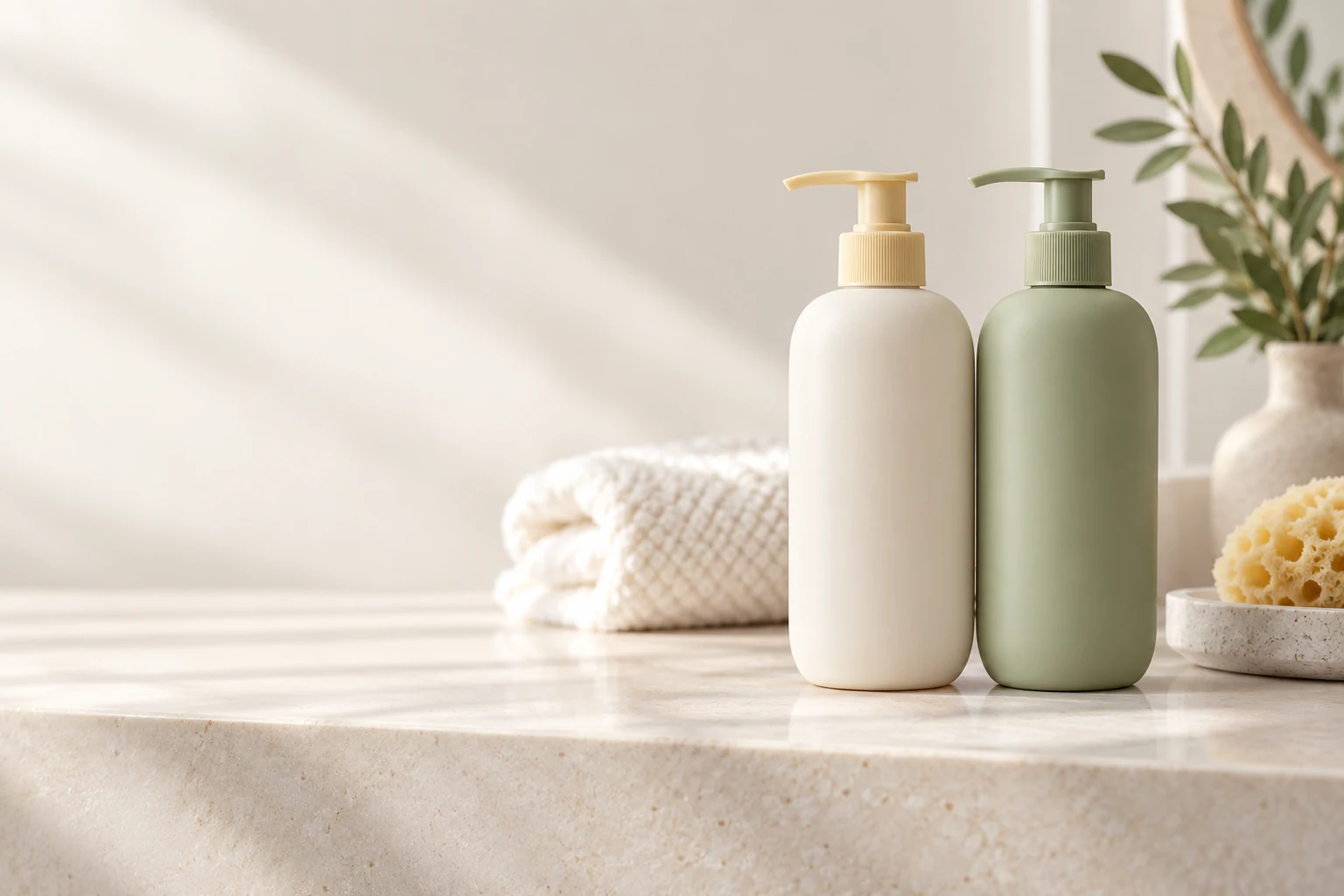
Explain who will handle the bottles and where they will be used. Ask how the proposed containers and closures fit the selected formulas and dispensing needs. Pump, cap, bottle material, fill size, and decoration choices require confirmation; the illustrations in this guide represent a design direction rather than an available packaging specification.
Create a clear distinction between shampoo and conditioner. Repeat the category name in a readable position and use a second visual cue if it helps. Review the label at its actual printed size, not only on an enlarged screen. Consider what remains readable when the bottle is turned or partly obscured. The purpose is straightforward identification, rather than relying on a playful visual theme to explain the routine.
Ask about the complete set presentation
If you intend to sell the products together, explain whether the presentation includes an outer sleeve, carton, tray, or another format you want reviewed. Ask which set configurations are feasible, how the packs will be identified, and how the selected combination will be evaluated for transport and handling. Do not assume the reference includes an outer box unless the current specification confirms it.
Check the relationship between the individual labels and the outer presentation. A box should not introduce a different name, age statement, ingredient story, or direction from the reviewed bottles. Maintain the artwork versions together. If one formula or bottle changes, review whether the set copy, layout, photography, and commercial scope also need updating.
Keep age, eye-contact, and skin claims out of guesswork
The visible reference does not establish tear-free status, an age-specific safety assessment, hypoallergenic positioning, or suitability for particular skin conditions. If your brand wants to explore any such wording, identify it early and ask which product-specific information, evidence, and market review are needed. Do not infer it from a children's category name, a mild fragrance preference, or the presence of a botanical ingredient.
Use clear reviewed directions and warnings for the actual formulas. Marketing copy should remain aligned with the selected product information. When a requested claim cannot yet be supported, keep it out of approved artwork and customer-facing copy. This allows the creative team to develop an appealing identity while the product review resolves the statements that require evidence.
Prepare label text as two separate records
Collect the product name, complete ingredient information, confirmed fill details, directions, warnings, and any other information needed for the intended market. Have the appropriate project reviewers check the actual copy and layout. This guide does not supply market-specific labeling requirements or establish that a particular label is compliant.
Create a shampoo label record and a conditioner label record, even when both use the same design system. Check for accidental carryover between files. A common mistake during artwork development is to duplicate a layout and forget to replace the ingredient list or instructions. Use explicit filenames and version dates, and compare the final proofs against the approved product documents before authorizing printing.
Request documentation tied to the intended audience
Describe the intended market and audience requirements when asking for product information. Request the separate formula specifications, ingredient information, supplied directions, and available supporting records for the versions being considered. Ask which additional review is needed for the product positioning you propose. The answer should concern the selected formulas, rather than a general statement about a company or product category.
Use a document tracker with the requested item, supplied version, reviewer, open question, and next decision. If a record describes an older sample or a different product, flag the mismatch. Keep commercial approval distinct from technical review. Agreeing a price or a packaging style does not resolve an unanswered question about the information needed for the intended audience and market.
Compare quotes at the same set scope
Identify both product versions, proposed fill sizes, containers, closures, decoration, and any outer presentation when requesting a quotation. Include your planning quantity, market, and desired launch window. Ask which parts of the scope are confirmed and which depend on further review. This guide provides no standard MOQ, unit price, sample charge, or production timeline.
If two quotations describe different set configurations, write down the differences before comparing the totals. Separate the cost discussion from your sample preferences so the team can see what changed. Reconfirm the quote if a bottle, formula, artwork method, or outer pack is revised. A paired collection has several linked decisions, and the commercial record should show the actual combination you intend to approve.
Build a handoff checklist for the launch team
Before preparing final product photography and the sales page, confirm that your launch team has one consistent set of information. A practical handoff contains the two approved formula identifiers, separate ingredient lists and directions, confirmed pack details, coordinated artwork proofs, reviewed claims, and the agreed commercial scope.
Check the online listing against that record. The photographs should show the actual products included in the set, and the description should explain the confirmed routine. Keep development concepts clearly separated from final images. If a set is also available as individual products, ensure that each listing identifies what the customer receives. This avoids confusing a paired product story with an unconfirmed purchase configuration.
Frequently asked questions
Which ingredients does the reference mention?
The page mentions vitamin B5, aloe vera, and shea butter in its set description. It does not provide the complete final ingredient list or percentages for each product. Request separate current ingredient information for the shampoo and conditioner before writing ingredient labels or detailed formula claims.
Does the word “kids” confirm a particular age range?
No specific age range is established by the current page. Explain the audience requirement in your brief and ask what product-specific information and review support that direction. Use only the confirmed age positioning and reviewed directions for the final products. Do not supply an age claim from a packaging concept or category name.
Is the set tear-free or hypoallergenic?
The source page does not establish those claims. If they matter to your intended positioning, raise them as questions for formula, evidence, and market review. They should not appear as confirmed properties in your artwork or product page until the selected products and supporting information substantiate the wording.
Can the shampoo and conditioner use matching packaging?
The page invites discussion of branding and packaging options. Share a coordinated design direction while asking the team to review each formula and pack combination separately. Matching appearance does not establish identical dispensing needs or pack suitability. Confirm containers, closures, fill details, and artwork before treating the presentation as final.
What should I include in the first inquiry?
Use reference 1601955981121 and model FAI-6514A. Include your target market, audience requirement, channel, the proposed role of each product, sensory preferences, and packaging direction. State your quantity and timing as planning information, then ask for project-specific confirmation through the LANTHOME inquiry page.
Related Links
- Vitamin B5 Kids Shampoo & Conditioner Set- Review the children's wash-care set referenced in this guide.
- Private Label Shampoo Products- Compare shampoo references for your first collection.
- Private Label Conditioner Products- Explore conditioning formats for a coordinated routine.
- Private Label Haircare- Discuss an existing product direction for your brand.
- Semi Custom Haircare- Define the changes you want reviewed for a selected base.
- Request Haircare Samples- Send the product preferences for your sample discussion.
- About LANTHOME- Find the company identity and project contact.