

In this guide
- What the current Batana hair oil reference tells you
- Define the use format before discussing an ingredient story
- Choose one audience and one channel for the first brief
- Separate ingredient preferences from confirmed formula facts
- Build a brief that the product team can answer
- Compare samples under consistent conditions
- Use a hair oil sample scorecard
- Give feedback that identifies the requested change
- Review the bottle and closure as a working combination
- Treat 120ml as the reference size, not an automatic range decision
- Write the ingredient story around the approved product
- Plan the product page before the photography session
- Ask for product-specific documentation
- Make the quotation match the approved scope
- Keep formula and packaging approvals together
- Use a short launch readiness review
- Frequently asked questions
- Related Links
Start a private label Batana hair oil project by defining its place in the customer routine, confirming the complete formula information, and reviewing the sample with its proposed packaging. An ingredient name can make a collection easier to explain, but the buying decision still depends on the finished product. Your brief should connect what customers will do with the oil to what your team will evaluate before approving it.
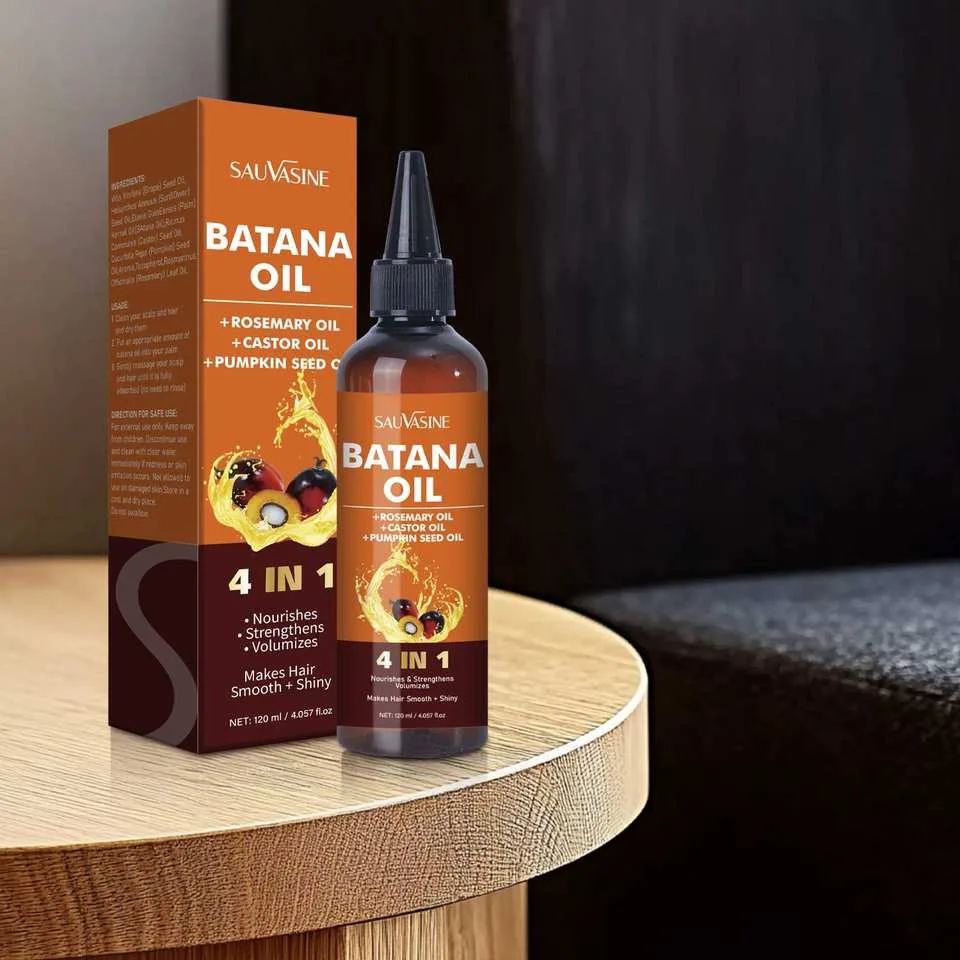
This guide uses the LANTHOME Batana 4-in-1 Nourishing Hair Oil — 120ml as a concrete starting reference. It explains how to turn that reference into a useful sourcing conversation, a consistent sample review, and an approval record. The questions below are buyer guidance. They do not establish a final formula, packaging specification, commercial offer, or product performance result.
What the current Batana hair oil reference tells you
The product page identifies a 120ml hair oil under model SWX-243 and reference 1601400734554. It presents the product for nourishing and moisturizing hair care and lists grape seed, sunflower seed, Batana, castor, and pumpkin seed oils in its description. It also invites discussion of formula, fragrance, and packaging for private-label, OEM, and ODM projects.
Those details help identify the candidate. They do not reveal ingredient percentages, the complete final INCI list, the order of ingredients on an approved label, or the supporting evidence for a finished product claim. Keep the page URL and model in your brief so that everyone discusses the same reference. Request the current specification before turning catalog wording into launch artwork.
The phrase “4-in-1” is part of the reference name. Ask what it means for the selected version and which uses or attributes support that wording. Do not create four promised results by interpreting the name yourself. A clear product name should describe a confirmed product direction, while the detailed label remains tied to the approved specification.
Define the use format before discussing an ingredient story
Write a short description of the intended routine. Will your brand evaluate a small finishing step on hair lengths, a pre-wash direction, or another use agreed with the product team? These are possible brief directions, not confirmed instructions for this reference. The final application method must come from the selected formula and its reviewed directions.
This distinction matters when comparing samples. A candidate reviewed as a finishing oil should be assessed in that context, while a different intended use needs its own questions. Record where the product is applied, the desired application experience, and how it fits alongside shampoo and conditioner. Ask the team to resolve the use format before arranging a broad comparison of unrelated products.
Choose one audience and one channel for the first brief
A salon buyer, an online haircare brand, and a retail gift-set business may describe different priorities. Your own audience and channel determine which questions deserve attention. For example, a salon discussion might focus on how a stylist explains the routine, while an online launch needs clear product photographs and directions that make sense without a demonstration.
Choose the channel you will actually launch in first. Explain the customer routine, the intended price position as your own planning target, and the role of the oil within the range. Avoid asking one product to answer every possible haircare need. A focused starting brief makes it easier to decide which observations belong in sample feedback and which ideas can wait for a later range extension.
Separate ingredient preferences from confirmed formula facts
Use two columns in your working document. One records information supplied for the selected reference; the other records preferences you want to discuss. The visible page mentions the five oils listed above, but any additional ingredient request belongs in the preference column until the team confirms feasibility and supplies updated information.
The same approach applies to fragrance and marketing terms. If your brand wants a particular fragrance direction or an ingredient exclusion, state it as a requirement for review. Ask which changes would create a new sample version and what documentation would need updating. Do not describe an unreviewed preference as a property of the catalog reference, and do not infer a formula composition from the appearance of the oil.
Build a brief that the product team can answer
Include enough information to identify the reference and explain the decision you want to make. A long presentation with no priorities can be harder to answer than a concise brief with a clear product role. The following structure keeps the first discussion practical.
| Brief field | What to write | What needs confirmation |
|---|---|---|
| Reference | Product 1601400734554, model SWX-243 | Current sample version and specification |
| Routine | Your proposed role for the oil | Approved application and directions |
| Sensory target | Desired spread, finish, and fragrance | Which options can be evaluated |
| Packaging | Proposed container and dispensing preference | Formula and pack suitability |
| Market | Destination country and sales channel | Product-specific information and review scope |
| Commercial scope | Your planning quantity and launch window | Project quotation and agreed timing |
Send the brief through the sample request page. Treat your quantity and date as planning information, rather than assuming that submitting them confirms an order or production slot.
Compare samples under consistent conditions
Give each candidate a sample identifier, version, and received date. Ask for the intended directions before conducting a routine evaluation. Within your review group, keep the application method and observation questions consistent so that the notes describe comparable experiences. A sample comparison is a project decision tool; it is not a substitute for technical testing or substantiation.
Record what you observe in plain language. “The sample was difficult to spread at the amount used” is more useful than “bad formula.” Add the amount or method from the approved review instructions and describe the context. If an observation changes when the evaluator uses a different amount, record that difference instead of combining it into a single unexplained score.
Use a hair oil sample scorecard
Your scorecard should explain the reason for each rating. Numbers without observations make it difficult to identify the next revision. Review the following areas and decide which matter most for your planned routine.
| Review area | Observation to record | Useful follow-up question |
|---|---|---|
| Dispensing | How easily the sample leaves the pack | Which closure fits the selected oil? |
| Spread | How it distributes during the reviewed application | Does the use instruction need clarification? |
| Finish | Appearance and feel after the agreed routine | Which finish direction can be discussed? |
| Fragrance | Your preference at the reviewed application amount | What alternative directions are available? |
| Handling | Cap, label, and bottle use in the intended setting | Which pack details need a separate review? |
Keep a written reason beside each priority. If your most important criterion is a particular finish, do not allow a preferred bottle color to conceal an unresolved sample question.
Give feedback that identifies the requested change
Use a four-part feedback sentence: sample reference, observation, requested change, and priority. A clearly labeled example might read: “For sample A, the fragrance feels stronger than our chosen reference during the agreed routine; please discuss a quieter fragrance direction; medium priority.” This is an example of feedback structure, not a description of the LANTHOME product.
Where possible, separate formula questions from pack questions. If the dispenser makes it difficult to control the amount, ask whether the issue should be reviewed through the closure, the directions, or the product itself. Send one consolidated feedback document from your team. Conflicting comments from several reviewers are easier to resolve when someone identifies which preference represents the actual brand decision.
Review the bottle and closure as a working combination
An attractive bottle is only one part of the packaging brief. Explain the setting in which customers will handle it and how they should dispense the product. Bottle, cap, pump, or applicator options need discussion with the team for the selected formula; a concept image does not establish which options are suitable.
Ask how the proposed combination will be evaluated for filling, closure function, product contact, handling, and transport. Obtain the agreed review scope and results for that combination before approving artwork. If you change the container or closure after sample selection, record the change and ask which checks must be repeated. A previously reviewed pack should not silently become a different production specification.
Treat 120ml as the reference size, not an automatic range decision
The visible product reference states 120ml. Your project can begin with that information while still asking which presentation options can be discussed. Any alternative fill size, bottle dimension, or set configuration requires confirmation. Do not design several pack sizes around an assumed availability that has not been agreed.
Consider the first launch as a customer decision: one clear product role, one explainable presentation, and a set of directions suited to that role. If a smaller or larger format is important to your plan, identify why. Discuss what would change in the quote, artwork, pack review, and sample process. This makes the size question part of the project brief instead of a last-minute artwork correction.
Write the ingredient story around the approved product
A useful ingredient story explains why a buyer chose a product direction without replacing the product description with unsupported promises. For this reference, Batana is one of the oils mentioned on the page. The page does not provide percentages or establish that the formula is pure Batana oil. Use the final supplied ingredient information when describing the composition.
Keep labels, website copy, and sales materials consistent. If the approved product is a blend, avoid copy that presents it as a single-ingredient oil. Ask which nourishing or moisturizing wording can be used for the selected version and what support is available. More expansive claims need separate review; a product name or botanical image does not provide evidence for them.
Plan the product page before the photography session
Prepare the page fields your customer will need: an accurate product name, the confirmed format and size, reviewed directions, ingredient information, and clear pack photographs. Identify which questions the page should answer before someone reaches the cart or inquiry form. This helps the photographer capture useful views rather than producing attractive images that omit important details.
Use concept images during development only with the right context. The cover of this guide is a packaging illustration; it does not establish the final pack. Once your own pack is approved, plan photographs that show the actual label and closure. Keep the reference image, development mockup, and final product photography in separate folders so they do not become interchangeable during a website update.
Ask for product-specific documentation
Prepare a document request tied to the formula, market, and packaging version being considered. Ask for the complete ingredient information, product specification, directions, and available testing or supporting records relevant to the project. The appropriate review depends on the selected product and destination market, so describe your market rather than requesting a generic promise of compliance.
Track each item as supplied, awaiting clarification, or requiring further review. Record who needs to review it and which decision depends on it. This is more useful than collecting documents without checking whether they describe the chosen sample. If a record refers to a different formula or pack version, resolve that mismatch before treating it as evidence for the product you intend to launch.
Make the quotation match the approved scope
When requesting a quotation, identify the product reference, selected sample version, proposed packaging, artwork status, destination, and your planning quantity. Ask what is included and what still depends on confirmation. Pricing, minimum quantities, sample arrangements, and timing are project-specific commercial questions; this guide supplies no fixed values for them.
Compare quotations against the same scope. A difference in container, decoration, included services, or shipping basis can make headline numbers difficult to compare. Write unresolved assumptions beside the quote and request clarification. Update the comparison if the selected formula or pack changes. A quote for an earlier concept should not be treated as approval of the revised product.
Keep formula and packaging approvals together
Maintain one approval record containing the selected formula identifier, sample version, ingredient information, pack specification, artwork proof, reviewed directions, and agreed commercial scope. Add dates and the person responsible for each decision. These are recommended project records, not a description of an existing production agreement.
Before giving final approval, check that each item refers to the same product configuration. If the label proof shows a different fill size from the quote, or the directions describe a different use format from the sample review, resolve the conflict in writing. Keep later changes visible. A clear record reduces the chance that an old sample comment or superseded mockup is mistaken for the approved instruction.
Use a short launch readiness review
Bring the commercial, product, and marketing decisions into one final review. The purpose is to identify incomplete handoffs before your team prepares inventory and customer-facing material. Review the following questions with the appropriate project contacts.
- Does the final name describe the selected product and confirmed use format?
- Do the specification, ingredient information, and sample record identify the same version?
- Has the selected formula and packaging combination completed its agreed review?
- Are the directions and proposed claims reviewed for the intended market?
- Do the quote, artwork, pack size, and project schedule describe the same scope?
- Are the final photographs and product page based on the approved presentation?
If a question remains open, name the decision owner and the next action. A planned launch date should help organize the work, rather than make an unresolved specification disappear.
Frequently asked questions
Is this reference pure Batana oil?
The current page describes a botanical oil blend and mentions grape seed, sunflower seed, Batana, castor, and pumpkin seed oils. It does not establish a pure Batana composition or percentages. Request the complete current ingredient information for the version you want to evaluate, then use that information for the final label and product description.
What does “4-in-1” mean for the project?
It is part of the visible reference name. Ask the team to clarify the intended meaning and supporting product information for the selected version. Do not turn the phrase into four claims or four use instructions without confirmation. Your final name and directions should reflect the agreed product specification.
Can the fragrance or packaging be changed?
The page invites discussion of formula, fragrance, and packaging options. Share the changes you want to explore and ask which are feasible for your project. A discussion of options does not guarantee a particular change, pack, quantity, or timeline. Confirm the revised sample and related documents before approving it.
What are the MOQ and production lead time?
This guide provides no fixed MOQ or lead time. Ask for project-specific terms using the selected reference, formula version, packaging, artwork status, and planning quantity. Keep the confirmed commercial information with the approval record so the team can distinguish an initial estimate from the agreed scope.
What should I send with a sample request?
Include reference 1601400734554 and model SWX-243, your target market, the proposed product role, sensory preferences, and packaging direction. Explain which questions the sample review should answer. Use the LANTHOME sample form to begin the discussion, and agree separately on any confidential technical information that needs exchanging.
Related Links
- Batana 4-in-1 Nourishing Hair Oil — 120ml- Review the botanical hair oil reference used throughout this buyer guide.
- Private Label Hair Oil Products- Compare available hair oil product references for your collection.
- Private Label Haircare- Explore a ready-to-brand product direction for your project.
- Semi Custom Haircare- Discuss proposed changes to a selected product base.
- Custom Haircare Development- Prepare a detailed brief for an original product direction.
- Request Haircare Samples- Submit the preferences and references for your sample discussion.
- About LANTHOME- Find the company identity and project contact information.