
In this guide
A private-label buyer should treat “Copper Peptide Shampoo” as a catalog identity, not as proof of a specific copper peptide, inclusion level or hair result. Before packaging design begins, connect the exact sample to its current ingredient list, formula revision, intended directions, package proposal and evidence file. That configuration-level record prevents an attractive ingredient story from moving faster than the facts that support it.
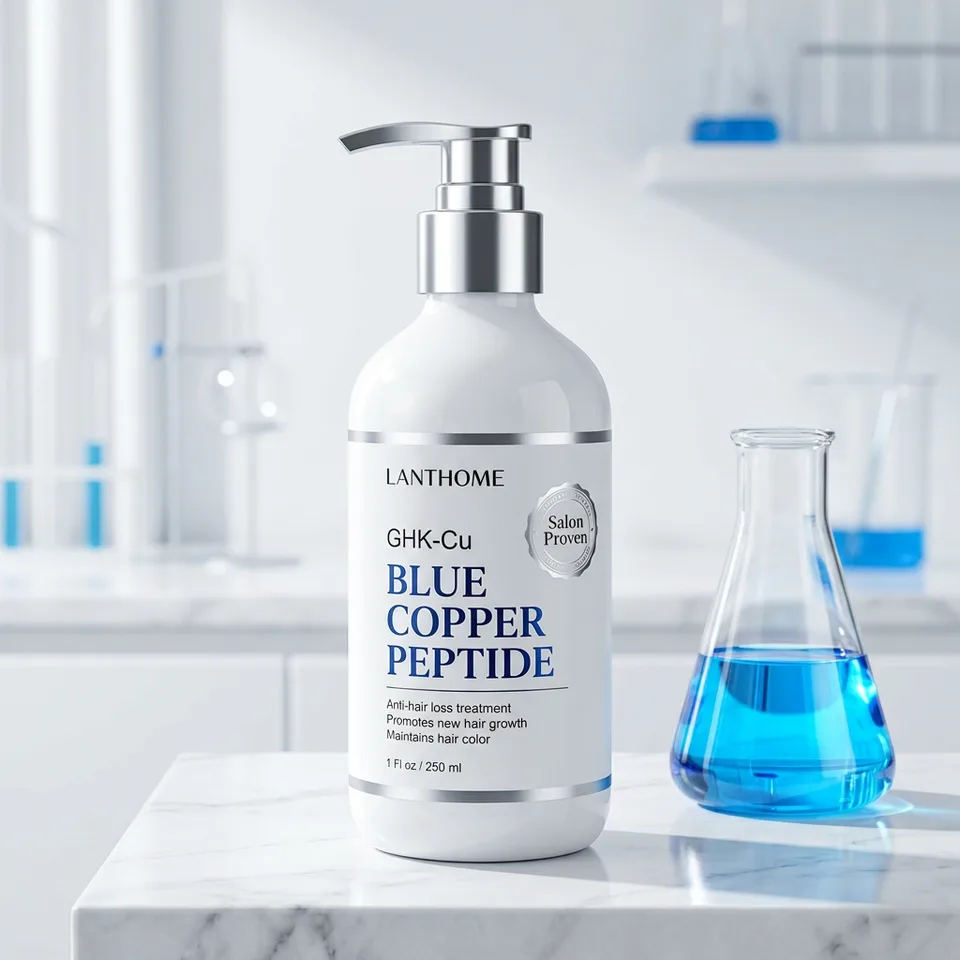
LANTHOME lists Copper Peptide Shampoo, reference 1601608259190, model ps77. The current page identifies it as a shampoo and lists Private Label / OEM / ODM customization. It invites buyers to discuss formula, product specifications, packaging, branding, samples and quantity. The page does not publish a complete INCI list, identify a copper peptide, state an inclusion level, provide directions, disclose the current package specification or supply finished-product efficacy evidence. It also does not publish MOQ, price, capacity or lead time.
The correct next step is therefore a verification brief. It should distinguish what the catalog says, what a supplier document may later confirm, what a brand wants to communicate and what evidence is required in the target market. This guide provides that workflow without assuming an ingredient, a benefit or a commercial term that the product page does not establish.
Product Facts and Confirmation Points
- Catalog identity: LANTHOME Copper Peptide Shampoo, reference 1601608259190, model ps77.
- Format: Shampoo.
- Customization: Private Label / OEM / ODM is listed.
- Project invitation: Buyers are asked to discuss the current formula, product specification, packaging, branding, samples and quantity.
- Ingredient gap: The complete current INCI and the identity of any copper-containing material are not published.
- Use gap: Application amount, frequency, contact time, rinse directions, storage and warnings are not published.
- Evidence gap: No finished-product performance result or claim substantiation is published on the page.
- Package gap: Fill, bottle, closure, materials, dimensions, decoration area and compatibility status require confirmation.
- Commercial gap: MOQ, price, capacity and lead time require a current project quotation.
Record these as two groups. The first four are catalog-stated facts. The remaining items are confirmation questions. Keeping the groups separate helps writers, designers and buyers avoid turning a product name into an unsupported ingredient or performance statement.
Which Development Route Fits the Project?
Compare both routes using the same dimensions: formula evidence, copy freedom, sample work, artwork timing and release gate. Neither route promises a particular ingredient or result.
Route A: Verify the Current Catalog Formula
- Formula evidence: Request the current INCI, formula revision and supplier specification linked to model ps77.
- Copy freedom: Use only wording supported for that exact formula and target market.
- Sample work: Evaluate an identified sample against written directions and agreed sensory criteria.
- Artwork timing: Hold ingredient callouts until identity, nomenclature and evidence are reviewed.
- Release gate: Approve only when formula, sample, copy and package records share one revision.
This route is efficient when the current formula fits the brand brief. Efficiency does not remove the need to verify the name. Ask what raw material, if any, supports “copper peptide,” how it appears in the complete INCI and which documents apply to the proposed finished product. A raw-material brochure can inform a review, but it is not automatically evidence for every statement about a rinse-off shampoo.
Route B: Develop a Revised Formula and Claim Brief
- Formula evidence: Define desired ingredient constraints and request a proposed formula revision for review.
- Copy freedom: Treat every benefit phrase as provisional until the finished configuration supports it.
- Sample work: Compare identified revisions using the same wash protocol and decision criteria.
- Artwork timing: Use placeholder copy; do not print a final front-panel claim during formula iteration.
- Release gate: Freeze the approved formula before final compatibility, label and artwork review.
This route fits a buyer who needs a different brief, but the buyer should describe the desired consumer experience rather than prescribe unverified performance. Record prohibited ingredients, fragrance direction, color preferences and target use context as project requirements. The supplier must confirm feasibility, current specification and documentation.
How to Build the Claims-Ready Brief
1. Freeze the catalog identity
Start with reference 1601608259190, model ps77, source URL and check date. Save the exact catalog name and mark it “catalog-stated.” Do not shorten the product to a generic copper treatment in internal systems because that would obscure both its rinse-off format and its unresolved ingredient details.
Assign one configuration ID to the proposed formula, sample and package. If the formula or package changes, update the revision rather than overwriting the previous record. This makes later claim and compatibility decisions traceable.
2. Request the current formula documents
Ask for the complete INCI for the exact sample, the formula revision, current product specification and any relevant raw-material documentation. The public name alone does not identify a copper peptide. The INCI and supplier records should show what is actually present and how it must be declared.
Do not infer concentration, bioavailability or performance. If a trade name appears in a document, map it to the finished-product ingredient declaration and keep the raw-material information distinct from finished-product evidence.
3. Build a claim evidence matrix
Create one row for every proposed phrase. Useful columns are exact wording, placement, implied meaning, evidence owner, evidence source, formula revision, target market, review status and expiry or recheck trigger. Include imagery and product-name implications, not only explicit sentences.
Classify each row as catalog-stated, supplier-confirmed, brand-selected, needs-confirmation or rejected. “Copper Peptide Shampoo” can remain a catalog identity during sourcing, while front-panel consumer language stays pending until the ingredient and evidence review is complete.
4. Separate ingredient presence from product performance
An ingredient record answers what is present. A finished-product claim asks what the exact product does under defined conditions. These are related but not interchangeable. Rinse-off use, formula interactions, directions and test design can all affect what a brand may reasonably communicate.
Avoid converting ingredient associations into promises such as growth, repair, prevention or treatment. Medical or drug-like language introduces a different risk and must not be assumed from this page. Ask the responsible regulatory reviewer to assess every proposed claim for the target market.
5. Define the intended wash experience
Write measurable sample questions without promising a consumer result. Record cleansing feel, foam character, spread, rinse speed, wet combing impression, after-rinse feel, fragrance strength and residue perception. Define hair type, water conditions, amount method and evaluator instructions for internal comparison.
These observations are development inputs, not automatically public claims. Use the same protocol across sample revisions so that feedback is comparable. Record deviations instead of averaging incompatible evaluations.
6. Confirm directions and warnings
Request the supplier’s current proposed directions, contact time if any, rinse instruction, frequency guidance, storage and warnings for the exact formula. Do not invent an application amount or leave-on interval. A shampoo format does not establish the appropriate wording for a particular formula.
Check that directions are consistent across specification, sample label, artwork and website. If a claim depends on a particular use pattern, the evidence review must use the same conditions.
7. Lock the package proposal
Request fill, bottle and closure codes, materials, dimensions, decoration area, secondary pack and sample configuration. Confirm whether the current formula has been evaluated with the proposed components. A visual mockup cannot establish compatibility or fill behavior.
Record pump or cap function, leakage observations and label adhesion during the project’s own review. Ask what further compatibility or stability evidence is available and applicable. Do not announce testing that has not been provided and reviewed.
8. Draft artwork in evidence layers
Layer one contains verified identity and required information. Layer two contains brand-selected design language. Layer three contains claims awaiting approval. Keep pending wording visibly marked in the artwork tracker so that it cannot reach production by accident.
Use the approved INCI exactly as required for the target label. Recheck spelling, order and nomenclature against the released formula record. The front panel, back panel, product page and sales sheet should describe the same configuration.
9. Review the target market
State every intended country or region, sales channel and label language. The same phrase can be interpreted differently across markets. Have the responsible qualified reviewer determine required information, permitted wording and evidence expectations.
Do not copy a competitor’s claim or assume that an online listing proves acceptability. Retain the review outcome, reviewer, date and formula version. Add a new review when market scope or wording changes.
10. Release or hold the configuration
Use a clear decision: proceed, revise or hold. Proceed means the sample, formula revision, package, directions, artwork and approved claim matrix agree. Revise identifies the exact mismatch. Hold lists the missing evidence or supplier confirmation.
Set reopening triggers: formula revision, ingredient supplier change, package change, directions change, new target market, new public claim or new evidence. Release control is what keeps a claims-ready brief accurate after the first approval.
Keep the Product Name in Its Proper Role
The name helps a buyer locate a catalog item and begin a discussion. It does not answer which copper-containing ingredient is present, at what level, or what a finished shampoo can substantiate. A strong brief preserves the name while turning every implied detail into a documented question.
This distinction also improves procurement. Instead of requesting “the copper peptide shampoo” in a message, request reference 1601608259190, model ps77, the current formula revision, an identified sample and the associated package proposal. That wording reduces the chance that a later sample or quotation is attached to the wrong record.
Hypothetical Buyer Review
Consider a hypothetical brand team that wants to place “copper peptide repair” on the front panel. The sourcing record contains only the catalog page, while the designer has no INCI, formula revision or evidence file. The team pauses artwork and converts the phrase into two questions: what ingredient supports the catalog name, and what evidence supports the proposed finished-product wording in the target market?
The supplier returns documents for an identified sample. Regulatory review may approve, revise or reject the wording; the outcome is not assumed here. The artwork tracker records the decision and the product cannot advance until its formula, package and label share one revision.
This scenario illustrates a workflow. It is not an actual customer case, ingredient confirmation, test result, MOQ, price, capacity or lead time.
Buyer FAQ
Does the product name prove a specific copper peptide is in the formula?
No. The public page does not publish the complete INCI or identify a particular copper peptide. Request the current ingredient list and formula documents for the exact sample before making an ingredient statement.
Link the returned documents to the sample code and formula revision. A document for another revision should remain reference material, not proof for the configuration under review.
Can raw-material information support a finished-shampoo claim?
It can be part of an evidence file, but it does not automatically substantiate every statement about the finished rinse-off product. Review formula identity, intended use, wording, evidence relevance and target-market requirements together.
Record what the document actually evaluates, who supplied it and which revision it covers. Ask the responsible reviewer whether additional finished-product evidence is needed.
When should the package design begin?
Concept design can begin with placeholders, but final ingredient callouts, directions and package dimensions should wait for the verified formula and component proposal. Keep pending claims clearly marked until approval.
The production file should be released only after the approved copy matrix, ingredient declaration, directions and component drawing agree with the same configuration record.
What should a sample evaluation measure?
Use consistent internal criteria such as cleansing feel, foam, spread, rinse, wet combing impression, after-rinse feel, fragrance and residue perception. These observations guide development and are not automatically consumer claims.
Record the method, sample code, evaluator conditions and deviations. Repeat the same protocol for each revision so the team can compare like with like.
Does the page publish MOQ, price or lead time?
No. Ask for current quantities, pricing and timing for the exact confirmed configuration. Do not transfer commercial terms from another product or project, because formula, fill, components and destination can materially change a quotation.
Include the formula revision, fill, package and destination in the request. If any of those fields changes, obtain an updated quotation instead of assuming the earlier terms still apply.
What to Send in Your Inquiry
- Product reference 1601608259190 and model ps77.
- Target countries, channels and label languages.
- Request for current INCI, formula revision and product specification.
- Question asking what documentation supports the catalog ingredient identity.
- Desired wash experience and prohibited or preferred formulation constraints.
- Request for directions, storage and warnings for the exact sample.
- Fill, component, decoration and secondary-pack requirements.
- Proposed wording placed in a claim evidence matrix for review.
- Request for current quantity, pricing and timing after configuration confirmation.
Send the brief through the LANTHOME contact form or request an identified formula through the sample request form. Review How It Works before selecting a development pathway.
Related Links
- Copper Peptide Shampoo ps77 - Review the exact catalog identity and confirmation prompts.
- Shampoo Collection - Compare shampoo references without transferring formula facts.
- Private Label Caffeine Shampoo: Compare Liquid and Bar Formats - Compare shampoo formats without transferring formula or performance facts.
- Private Label Biotin Shampoo: Bottle or Bar Brief - Review how format, package and claim questions stay configuration-specific.
- How It Works - Review private-label, semi-custom and custom pathways.
- Request Haircare Samples - Request an identified sample and configuration.
- Contact LANTHOME - Send formula, claim, package and commercial questions.