
In this guide
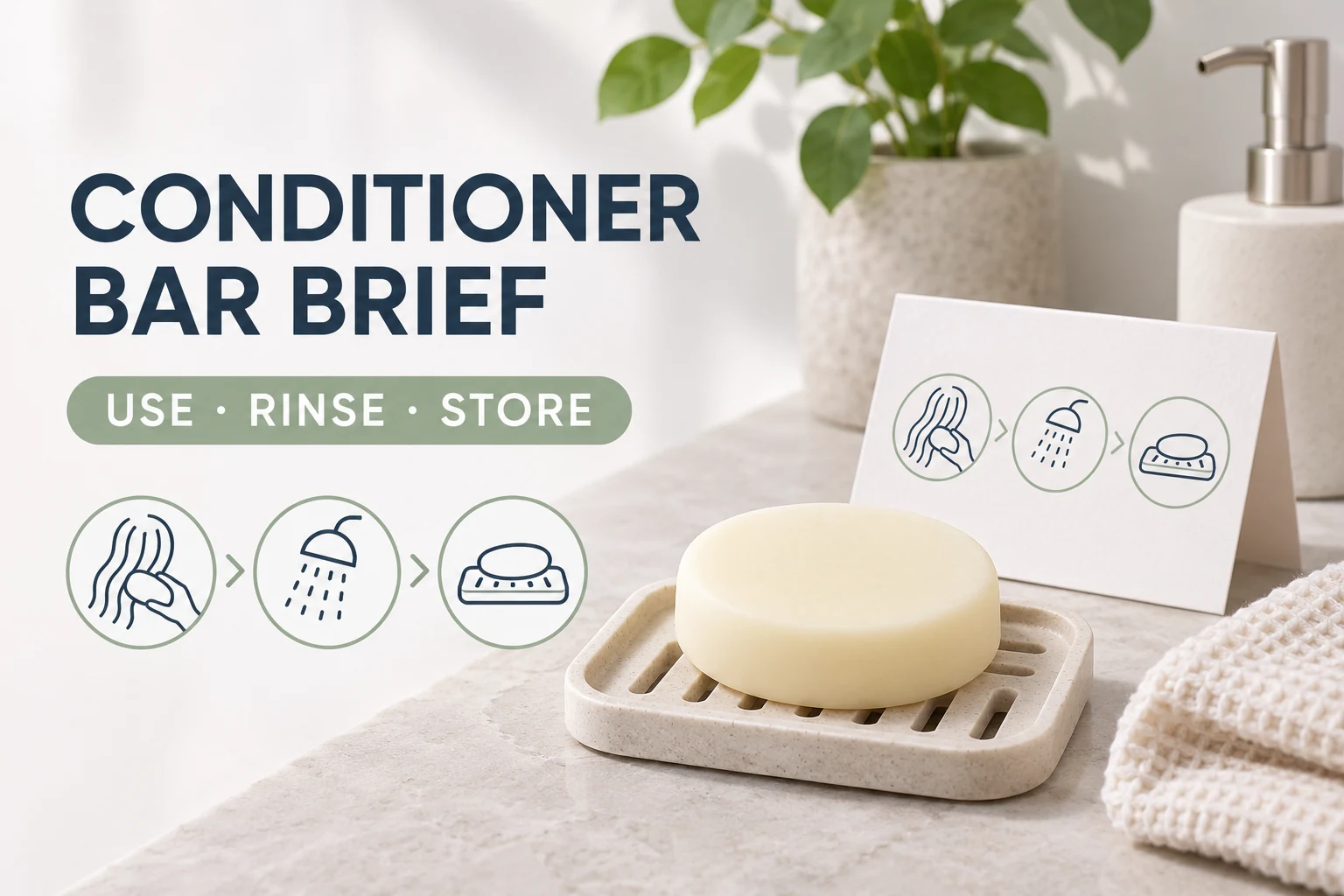
A private label conditioner bar sample should not be evaluated until the buyer has supplier-confirmed directions for application, rinse steps and between-use storage. The product format alone cannot tell reviewers whether to apply the bar directly or through the hands, how much to use, where to apply it, or how to keep it after wet use. Build the sample brief around one exact reference, one direction version and one package proposal.
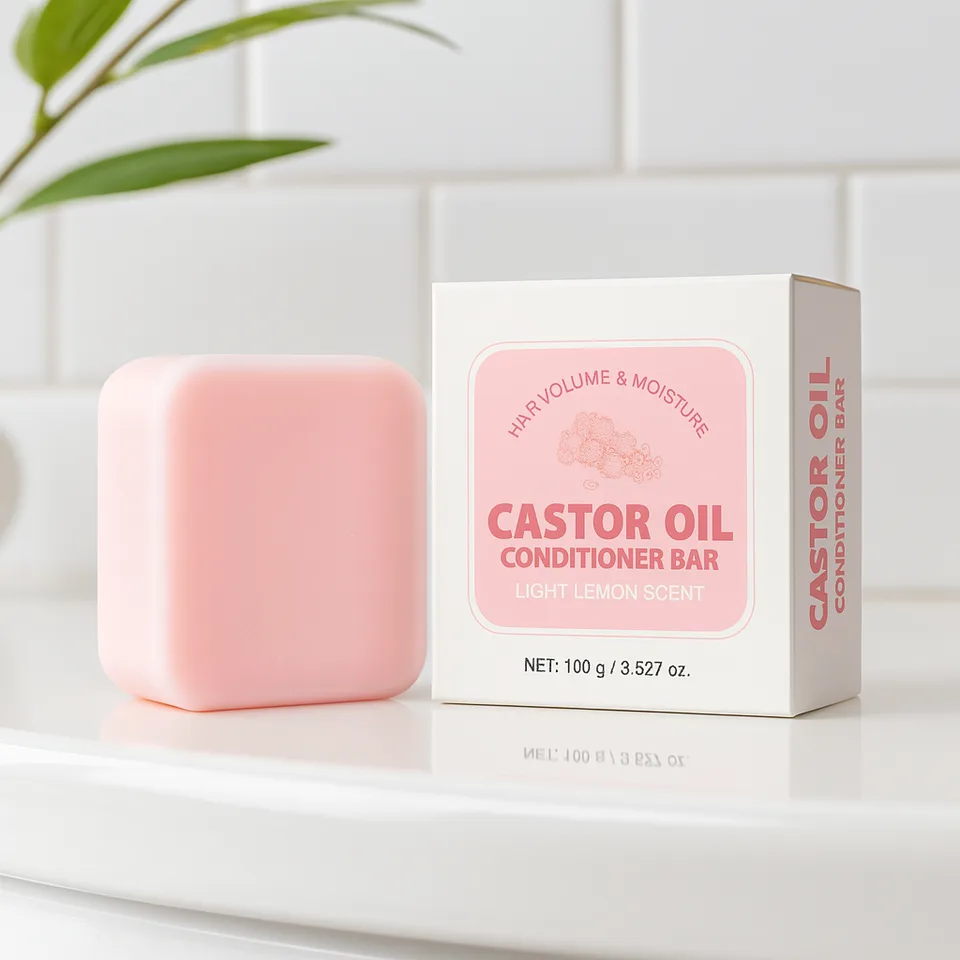
LANTHOME lists Castor Conditioner Bar, reference 1601539782758, model FP-B033, as a Conditioner Bar available for Private Label / OEM / ODM enquiries. The page asks buyers to define rinse-out or leave-in use, application amount, detangling expectations and the packaging format to evaluate. It also instructs buyers to confirm the current specification, ingredient list, packaging, quantities and timing. The page does not publish the complete INCI list, net weight, final directions, measured results, storage instructions, final package or commercial terms.
This guide treats the sample as a product-and-instruction system. It does not assume that “Castor” confirms ingredient identity or amount, that the bar is suitable for a particular routine, or that a photographed tray, carton or wrap is included. The aim is to give procurement, product and content teams one traceable method for requesting information, running a fair review and turning the result into an actionable supplier discussion.
Product Facts and Confirmation Points
- **Catalog identity:** The page identifies Castor Conditioner Bar, reference 1601539782758, model FP-B033. Use all three identifiers on the inquiry, sample label, review form and decision record.
- **Format:** The catalog states Conditioner Bar. It does not publish net weight, dimensions, hardness, use life, application amount or final directions.
- **Routine question:** The page asks the buyer to define rinse-out or leave-in use. This is a briefing prompt, not confirmation that both methods apply. Request directions for the exact sample and target market.
- **Review inputs:** Application amount, detangling expectations and packaging are listed discussion points. They do not establish results, claims or included components.
- **Ingredient gap:** “Castor” appears in the product name, but the page does not publish the complete INCI list, ingredient identity, origin, amount or substantiation for a benefit claim.
- **Package gap:** The page invites packaging discussion but does not identify the final primary wrap, carton, tray, travel container or between-use storage component.
- **Commercial gap:** MOQ, price, capacity and lead time are not published. Ask for current terms tied to the exact formula, bar size, package and quantity rather than copying assumptions from another project.
Keep the catalog record, supplied sample record and approved production record separate. The catalog record identifies the source. The sample record must identify the actual formula or sample revision, bar dimensions or net content, directions and temporary pack. The approval record must point to the accepted formula, final package, artwork and applicable evidence. A favorable review of one sample cannot approve a later revision automatically.
Which Direction Route Is Being Evaluated?
Do not ask reviewers to improvise between rinse-out and leave-in use. Compare the routes only as briefing options that require supplier confirmation. If only one route is supported for FP-B033, test that route and remove the unsupported alternative from the review.
Option 1: Supplier-Confirmed Rinse-Out Route
- **Routine position:** Confirm when the bar is used in relation to shampoo, whether hair should be fully wet and which hair areas the directions cover.
- **Application method:** Ask whether product is transferred through the hands, moved along the hair or applied by another confirmed method. Record the method exactly instead of assuming a number of passes.
- **Amount record:** Use the supplier-confirmed amount guidance. If guidance is descriptive rather than numeric, document how the reviewer followed it without turning observations into a universal dose.
- **Rinse step:** Confirm contact sequence and rinse instructions for the exact sample. Reviewers should follow the supplied version and record deviations.
- **Storage step:** Request approved between-use handling and storage information for the proposed package. Do not infer that a pictured dish or open shelf is suitable.
- **Evidence needed:** Request the current specification, complete ingredient information, direction version, package proposal, storage information and support for intended claims.
A rinse-out route can be reviewed when the exact instructions clearly describe application and rinse steps. The team may record handling, direction clarity and observed bar condition, but those records are not proof of detangling performance, use life, stability or compatibility with a future package. Keep sample observations separate from public claims.
Option 2: Alternative Routine Only If Specifically Confirmed
- **Routine position:** Ask whether an alternative or leave-in method is actually supported for FP-B033. If it is not confirmed, do not include it in testing or consumer copy.
- **Application method:** Request the exact application area, sequence and amount guidance. “Use less” is not an adequate controlled direction unless the supplier supplies an applicable method.
- **Amount record:** Design a record that captures the confirmed method and reviewer compliance. Do not convert a solid bar interaction into assumed grams or liquid volume.
- **Finish step:** Ask what happens after application and whether rinsing is omitted, delayed or required. The answer must come from current product information rather than format conventions.
- **Storage step:** The same between-use package and wet-hand questions remain. Alternative hair use does not remove the need to protect and identify the bar.
- **Evidence needed:** Require a separately identified direction version and applicable support. Do not treat a marketing phrase, image or reviewer preference as authorization for another use route.
An alternative route should enter the project only when current documentation supports it. If the supplier later changes the direction, formula or bar specification, the team should create a new review record. The purpose of comparison is to clarify the decision, not to imply that every conditioner bar can be used in more than one way.
Build a Repeatable Conditioner Bar Sample Review
1. Write one routine question before requesting the sample
Start with a concrete buyer question: “Can this exact conditioner bar be explained and handled clearly in our intended wash routine?” Name the target routine stage, user context and channel. Avoid starting with a claim such as “detangles instantly” because the catalog does not provide evidence for that result. A good question tells the supplier which directions and package information are needed.
Then state what the project is not deciding yet. The first review may address direction clarity, application control and package interaction without approving claims, artwork or commercial terms. This boundary prevents sensory enthusiasm from becoming an unsupported public promise.
2. Request an identified sample and document set
Ask for FP-B033 by reference and model, then request the sample or formula revision, current specification, full ingredient information, bar size or net content, confirmed directions and applicable storage information. Ask whether any image shows the final package or only a catalog presentation. If the sample arrives in temporary protection, record that separately from the intended retail pack.
The Private Label Shampoo Bar first-purchase guide provides a related framework for first-use education and storage questions, but it does not establish formula or direction equivalence for this conditioner bar. Use it as an information-design reference, not product evidence.
3. Convert directions into a reviewer sequence
Turn the confirmed directions into a short sequence without changing their meaning. The record can include starting hair condition in non-medical terms, wetting context, application area, transfer method, amount method, contact sequence, rinse step and between-use handling. Keep the direction version and sample identifier visible on every form.
Do not add steps because they seem normal for another bar. If a key detail is missing, pause and ask the supplier. A review that fills gaps by consensus tests the reviewer's invention, not the supplied product instructions.
4. Define amount without inventing a universal number
Solid formats tempt teams to count passes, seconds or hand rubs. Those measures can be useful only when they correspond to confirmed instructions or a clearly documented internal observation method. Record the chosen method, hair context and any deviation. Do not translate passes into grams, compare them with liquid conditioner volume or advertise a number of uses without applicable evidence.
For internal consistency, reviewers can use the same form and direction version. Consistency improves interpretation, but it does not turn a small internal exercise into validated consumer research. Keep identities and observations traceable, and ask what additional evidence is required for any intended public statement.
5. Observe handling separately from hair outcomes
Create two groups of fields. Handling fields can cover grip with wet hands, clarity of application method, ability to follow the amount guidance, bar condition during the defined review and interaction with the supplied temporary or proposed package. Hair-observation fields should use neutral language aligned with the project question and must not become claims automatically.
This separation matters because a packaging problem may be solvable without changing the formula, while an unclear direction may require instruction revision. A single overall score hides those different next actions. Ask reviewers for a short reason tied to a specific step.
6. Review the wet bar and package as one system
Confirm what should happen immediately after use and before the next use. Ask whether excess surface water should be handled in a particular way, how the bar should be placed or enclosed, and which component is included in the proposed retail configuration. Do not promise faster drying, longer life, travel suitability or hygiene benefits unless the exact system and evidence support the wording.
Inspect label and instruction space as part of the package review. A compact solid format may still need product identity, directions, storage wording, warnings, ingredient declaration and market-required information. If the primary pack cannot carry the hierarchy clearly, discuss an outer component or connected digital content without hiding mandatory information.
7. Audit ingredient and performance language
Create a list of every planned phrase for the name, front panel, product page, sales presentation and FAQ. Mark “Conditioner Bar,” reference number and model as catalog identity. Mark the presence, identity and role of castor-related material as pending until the current ingredient information is reviewed. Mark detangling, softness, breakage, growth or duration statements as claims that need applicable support.
Remove or hold unsupported language before artwork development. Reviewer notes such as “easy to glide” or “felt smooth” describe one controlled observation; they are not automatically substantiation. Ask the supplier what documentation can be supplied for the exact formula, directions and package, then complete target-market review through the appropriate process.
8. Turn feedback into go, revise or hold
“Go” should mean the exact sample and direction version meet the defined review purpose and have enough information for the next stage. “Revise” should name a specific change, such as clearer application wording, a different storage component or improved artwork hierarchy. “Hold” should identify a dependency such as missing INCI, unconfirmed use route, incomplete package specification or unsupported intended claim.
Record the decision date, reviewers, sample identifier, direction version, package reference and open commercial questions. Avoid choosing by majority vote with no rationale. A traceable decision lets product, design, sourcing and customer-support teams work from the same version.
Plan the Consumer Information Hierarchy
A conditioner bar may be unfamiliar to part of the target audience, so the product page and packaging should answer the first-use questions in a visible order. Start with product identity and confirmed routine role. Then state the approved application and rinse sequence, amount guidance, storage information, warnings and ingredient declaration. Add supported positioning only after those essentials are clear.
Use matching language across the primary pack, outer pack, product page, FAQ and customer-support script. If the directions change, update every dependent surface and retain the revision history. Do not let a short social caption become the only source of a required use or storage instruction.
For international projects, tell the supplier the target country or region and sales channel. This guide does not determine compliance. The buyer should arrange the applicable review of labeling, claims, directions and required information for the final product and market.
Hypothetical Review Example
Consider a hypothetical brand that wants a conditioner bar as a range extension beside liquid wash-care products. The team states one purpose: determine whether the confirmed rinse-out directions and proposed storage system can be explained consistently. It requests FP-B033, the current formula or sample identifier, ingredient information, directions and a package proposal. It does not assume a leave-in route.
Reviewers receive the same instructions and record application method, amount method, rinse compliance, wet-hand handling and package interaction. The design team drafts a first-use hierarchy but holds castor and detangling claims pending evidence. Sourcing requests current pricing and timing only after the product and package proposal are defined. The team selects “revise” if storage wording is unclear and “hold” if the use route cannot be confirmed.
This is a planning example, not an actual customer case, result or endorsement. Its value is the sequence: define the question, identify the sample, confirm directions, observe consistently, resolve information gaps and then discuss commercialization.
Frequently Asked Questions
Does “Conditioner Bar” confirm rinse-out use?
No. The catalog identifies the format but asks the buyer to define rinse-out or leave-in use. That prompt does not confirm either route for the exact sample. Request the current directions for FP-B033 and test only the supported method. Keep the direction version attached to the sample and approval record.
Does “Castor” confirm the ingredient list or percentage?
No. “Castor” is part of the catalog name, but the page does not publish a complete INCI list, ingredient identity, source or percentage. Ask for current ingredient information for the exact proposal. Do not infer a benefit, origin or amount from the title or imagery.
Should reviewers count passes on the hair?
Only if that method is supported by the confirmed directions or is clearly labeled as an internal observation method. Record application area, hair context and deviations. Do not convert passes into weight, promise a universal dose or estimate the number of uses without applicable evidence.
Is a draining tray automatically part of the package?
No. The page invites packaging discussion but does not identify included components. Ask for the proposed primary and secondary pack, between-use storage component, label area and any transport or first-use protection. A catalog photo or generated concept image is not the final package specification.
Can favorable sample feedback be used as a detangling claim?
Not automatically. Internal feedback can guide development, but it is not necessarily claim substantiation. Define the intended wording and request applicable support for the exact formula, use directions and package. Keep reviewer observations separate from approved artwork and public copy.
What to Send in Your Inquiry
- **Product reference:** Castor Conditioner Bar, reference 1601539782758, model FP-B033.
- **Routine question:** State the intended wash-care stage and ask which rinse-out or alternative route is supported for the exact sample.
- **Direction inputs:** Request application area, transfer method, amount guidance, rinse sequence and between-use handling.
- **Sample identity:** Ask for the formula or sample revision, bar size or net content and document dates.
- **Package brief:** Describe primary and secondary pack preferences, storage component questions, label area and target channel.
- **Market context:** Name target country or region, audience context and sales channel for the applicable review.
- **Documents and claims:** Request current specification, complete ingredient information, confirmed directions, warnings, storage information and support for intended claims.
- **Commercial questions:** Ask for current customization route, quantity options, price and timing for the defined formula and package.
Send the traceable brief through the LANTHOME contact form or organize the sample through the sample request form. The How It Works page helps distinguish private label, semi-custom and custom pathways before you request current terms.
Related Links
- Castor Conditioner Bar · FP-B033- Review the exact conditioner bar reference used in this sample brief.
- Conditioner Collection- Compare current conditioner references without assuming formula or direction equivalence.
- Rice Water Conditioner · LANTHOME-02- Review a separate liquid conditioner reference when defining range roles.
- Private Label Shampoo Bar: Plan First-Purchase Information- Use a related solid-format guide to plan first-use education and storage questions.
- How It Works- Review private label, semi-custom and custom development pathways.
- Request Haircare Samples- Organize one traceable sample request around the defined routine question.
- Contact LANTHOME- Send the model, market, package and documentation requirements.