
In this guide
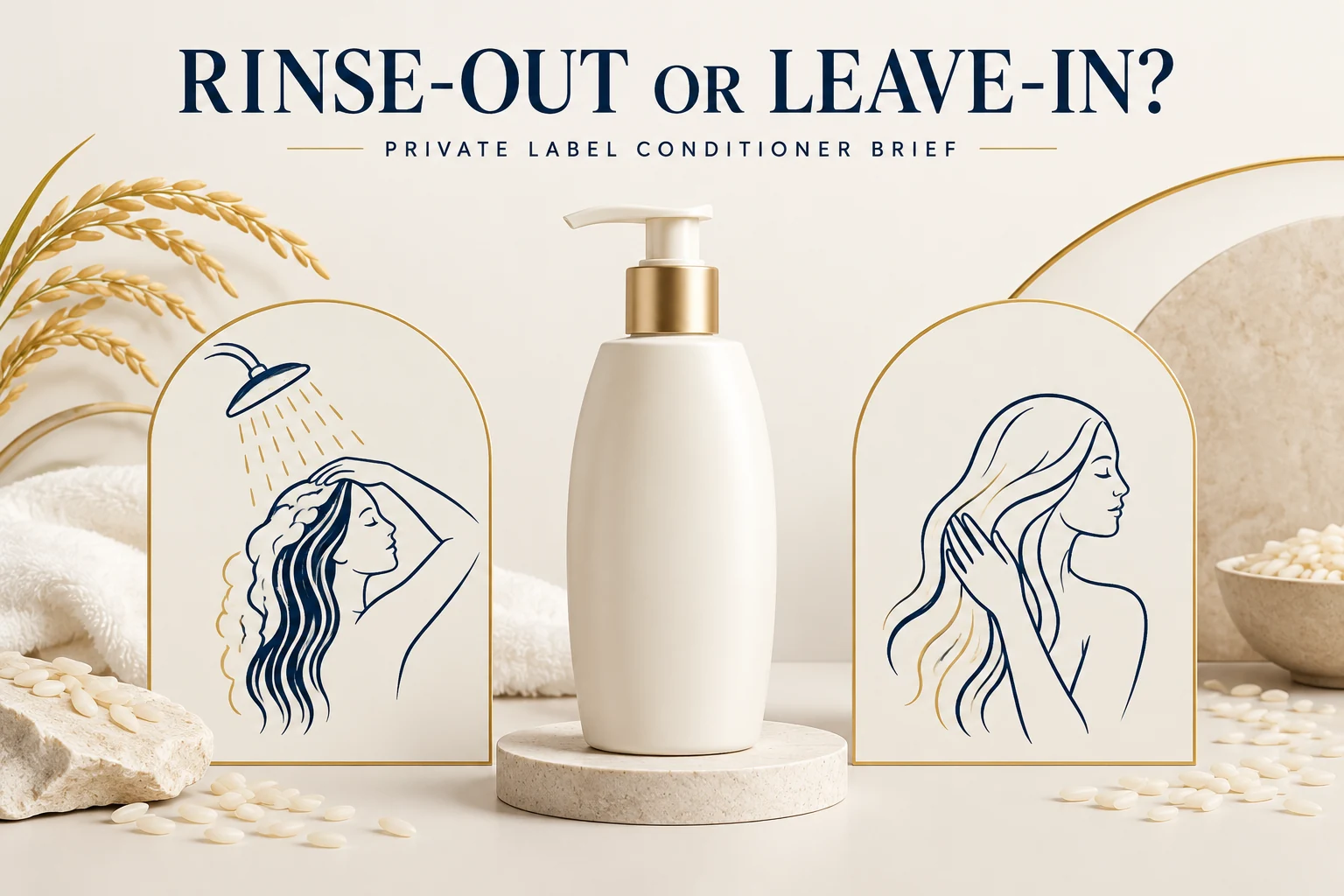
Decide whether a private label rice water conditioner belongs in a rinse-out or leave-in routine before requesting samples. The choice changes the directions, application amount, packaging interaction, review conditions and information the buyer must confirm. Do not infer the route from the product name. Use the current sample specification and supplier-confirmed directions, then test one clearly defined routine at a time.
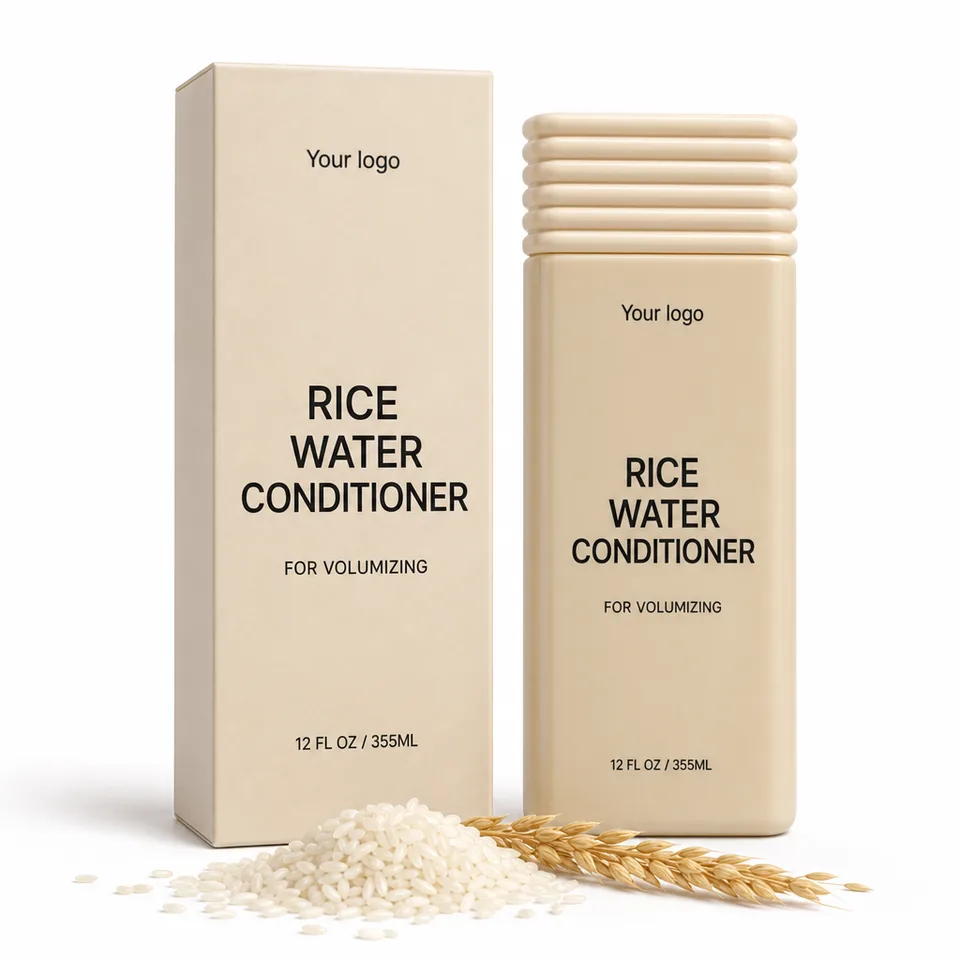
LANTHOME lists Rice Water Conditioner, reference 1601923218417, model FAI-ATYX0380, as a Conditioner format for Private Label / OEM / ODM enquiries. The page tells buyers to define rinse-out or leave-in use, application amount, detangling expectations and the packaging format to be evaluated. It also says to confirm the current specification, ingredient list, packaging, quantities and timing. It does not publish final directions, a full INCI list, ingredient amounts, fill size, package or performance evidence.
This article converts those catalog prompts into a buyer decision process. It does not state that the current reference can be supplied for both routine types. It helps a brand ask whether one route is available, identify the documents needed, and keep sample observations separate from marketing claims.
Product Facts and Confirmation Points
- **Catalog identity:** The live page names Rice Water Conditioner, reference 1601923218417, and model FAI-ATYX0380. Use both identifiers in the inquiry and sample record.
- **Catalog format:** The product is listed as Conditioner. The page does not establish whether the exact current sample is rinse-out, leave-in or available in both routes.
- **Routine decision:** Buyers are asked to define rinse-out or leave-in use and application amount. These details need confirmation for the exact proposed formula.
- **Evaluation direction:** The page mentions detangling expectations and packaging format as discussion topics. It does not publish a measured detangling result.
- **Service scope:** The reference is open to Private Label / OEM / ODM enquiries. Confirm the applicable development pathway and the extent of formula, packaging and artwork customization.
- **Evidence gap:** The complete ingredient list, rice-water ingredient identity or amount, test results and approved claims are not stated on the page.
- **Commercial gap:** Price, MOQ, capacity and lead time are not published. Request current project-specific terms rather than assuming standard values.
Treat catalog identity, project specification and final approved claims as separate records. The name “Rice Water Conditioner” identifies a reference; it does not by itself establish composition, origin, percentage or outcome.
Which Routine Should the Buyer Evaluate?
Use the same decision dimensions for both planning routes. The supplier must confirm which route actually applies to the proposed sample.
Option 1: Rinse-Out Conditioner Route
- **Routine position:** The product follows the confirmed wash step and is removed according to approved directions. Confirm application area, amount, contact time and rinse instructions.
- **Sample conditions:** Reviewers need the same hair-wash context and directions. Record deviations rather than averaging unlike routines.
- **Package interaction:** Evaluate dispensing with wet hands and the package position in the intended use environment, using the actual proposed component.
- **Information burden:** The label needs clear application and rinse directions, warnings and other required information for the target market.
- **Evidence needed:** Request the current specification, ingredient list, directions and support for proposed claims. Internal observations do not prove performance.
This route may fit a brand brief built around a defined wash sequence. It should not be chosen merely because “conditioner” is familiar. The current formula, directions and packaging proposal must support the route.
Option 2: Leave-In Conditioner Route
- **Routine position:** The product remains in the hair under the confirmed use method. Confirm whether this route is available for the selected reference and obtain exact directions.
- **Sample conditions:** Reviewers need consistent starting conditions, amount method, application area and any approved follow-on styling steps.
- **Package interaction:** Evaluate amount control, closure handling and storage for the actual proposed component. Do not assume a pump, tube or spray is available.
- **Information burden:** Directions must state how and where the product is applied and what happens next. The label cannot rely on the product name to explain the routine.
- **Evidence needed:** Request the same formula, ingredient and claim documents required for any final product. A leave-in idea does not establish a benefit.
This route may fit a brand that wants the conditioner positioned within a post-wash routine, but only if the supplier confirms the appropriate formula and directions. Do not test a rinse-out sample as leave-in to simulate the concept.
The Conditioner Collection provides same-site category context. The existing Caffeine Conditioner daily-care range guide focuses on assortment architecture. This guide focuses on choosing and documenting the routine before sample evaluation.
How to Build the Sample Brief
1. Define the customer task
Write one sentence describing who uses the conditioner, where it sits in the routine and what the sample round must help the team decide. Keep the statement neutral. “Evaluate a conditioner after shampoo under confirmed rinse-out directions” is clearer than “create a deeply repairing product.”
Add the target market and sales channel. Ecommerce, salon and retail shelf contexts may require different explanation, package imagery and support, but the final directions still come from the approved specification.
The output is a target question with proceed, revise and hold conditions. If the team cannot state the question, it is too early to request several unrelated samples.
2. Confirm which routine is available
Ask whether model FAI-ATYX0380 is currently proposed as rinse-out or leave-in. If the brand wants both routes compared, ask whether they require different formulas or references. Do not create a two-route comparison by using one sample outside its directions.
Request the current specification, complete ingredient list, directions, warnings and sample identifier. Record the document date or version. If the supplier proposes an alternative reference for the second route, keep its identity and evidence separate.
The next action is a route matrix showing the exact sample, confirmed use method and unanswered questions for each option.
3. Set an amount method
The page asks buyers to define application amount, but it does not publish one. Use the supplier-confirmed method for the exact sample. Avoid vague instructions such as “use as needed” during an internal comparison unless that is the approved direction and reviewers have a consistent interpretation.
Record how amount is controlled by the package. A pump count, measured mass, visual reference or another method must reflect the actual component and instructions. Do not invent a pump count before the pump is confirmed.
The output is a review form that links amount method, package configuration and routine. If any one changes, start a new comparison record.
4. Define detangling expectations carefully
The product page asks buyers to define detangling expectations. Turn that into a review question, not a claim. Specify when reviewers observe combing or handling, what tool and method are used, and how comments are recorded.
Do not present a small internal review as proof of reduced breakage, repair or another performance outcome. Descriptive observations can guide development. Consumer-facing claims need applicable evidence for the final product and target market.
The next action is a neutral observation field such as “describe the combing experience under the confirmed routine” plus a space for conditions and deviations.
5. Review formula and package together
Ask which bottle, tube, jar, pump or closure options belong to the current proposal. The live page does not specify the final package. Request component identifiers, dimensions, decoration area and available compatibility information for the project stage.
For a rinse-out route, review handling in the intended wet-use context only when safe and consistent with the approved directions. For a leave-in route, review amount control and closure cleanliness under the intended post-wash sequence. These are package-handling observations, not claims of formula performance.
Photograph and label each internal sample if the team’s process allows it. Include sample identity and review date. Do not use an unlabeled gallery image as final package approval.
6. Build one observation form
Use common fields across all samples: product and package identity, directions followed, starting condition, amount method, application area, texture observation, distribution, rinse or leave-in step, detangling observation, fragrance, package handling, information gaps and next action.
Write descriptions before scores. “Reviewer could not identify the intended amount from the draft directions” gives the supplier and content team a defined issue. A score without a definition does not.
Record deviations. If one reviewer changes the contact time or adds another product, that record should not be compared as if the conditions matched.
7. Check the information hierarchy
List the information needed for the target market: product identity, net contents, directions, warnings, ingredient declaration, responsible-party details, traceability and approved claims. Qualified market review is required for the final product; this list is a planning aid.
Place the confirmed content on preliminary dielines only after package dimensions and decoration areas are available. Check readability at actual size and on a mobile product page. A routine that cannot be explained clearly may need revised directions or packaging before artwork proceeds.
The next action is an information inventory with source, approval status, placement and owner for each item.
8. Decide proceed, revise or hold
Proceed when the exact sample, routine and package answer the current question and required inputs exist for the next stage. Revise when a specific formula, package or instruction issue needs another round. Hold when directions, ingredients, package information or evidence are too incomplete.
Document the reason and next action. “Proceed with rinse-out” should identify the exact sample and package. “Revise amount directions” should name the missing or confusing input. “Hold” should list the document or commercial confirmation required.
Worked Example: A Two-Route Shortlist
Consider a hypothetical online brand evaluating one conditioner position. It selects FAI-ATYX0380 as a reference because the live page identifies Rice Water Conditioner in the Conditioner category. The team has not approved a formula, ingredient story, package, directions or claim.
The buyer asks the supplier which routine the current reference supports. It also asks whether a separate leave-in route is available. Each proposed sample receives its own identifier, directions and document set. The brand does not use a rinse-out sample as a leave-in test.
For the rinse-out route, the team records the confirmed wash sequence, amount method, application area, contact time and rinse step. For the leave-in route, it records the confirmed post-wash condition, amount method, application area and follow-on step. Both use common fields for texture, distribution, detangling observation, fragrance, package handling and information gaps.
The buyer compares whether each routine fits the intended customer task and channel. It does not declare one route superior. If the two options use different formulas or packages, the difference is shown in the decision record.
The content team checks whether directions can be communicated on-pack and online. The evidence owner checks ingredient and claim support. The commercial team requests current quantity, price and timing. No stream assumes that another stream has approved its inputs.
The outcome may be proceed, revise or hold. This example is not a customer case and does not report a result for FAI-ATYX0380. It shows how to keep a routine decision traceable.
Questions to Resolve Before Artwork
Is the conditioner rinse-out or leave-in?
Confirm this for the exact proposed sample. The page asks buyers to define the route but does not publish final directions. Do not write both uses on the package unless the final specification and market review support them.
What does “rice water” establish?
It establishes the catalog name of the reference. It does not disclose the complete ingredient list, ingredient identity, origin, amount or performance. Request current formula documents and support for any proposed ingredient wording.
Which package should be evaluated?
Choose after defining the routine and amount method. Request current component options and technical information. The live page does not confirm a bottle, pump, tube, jar or fill size for the final project.
How should detangling feedback be recorded?
Use a shared method, defined timing, identified tool and descriptive observations under the confirmed routine. Keep internal feedback separate from public claims. Record any change in conditions.
Frequently Asked Questions
Can one conditioner sample be tested both ways?
Only if the current directions specifically support both routes. Do not leave a rinse-out formula in the hair or rinse a leave-in formula merely to create a comparison. Ask the supplier which route applies and request a separate reference when necessary.
Does the page confirm a rice-derived ingredient?
The product is named Rice Water Conditioner, but the page does not publish a full INCI list. Request current ingredient information for the exact sample before making composition, origin or amount statements.
Is a pump required for a leave-in route?
No package is confirmed on the page. Choose a component after defining formula, amount method, application and channel needs. Evaluate the actual filled package rather than assuming a pump is automatically suitable.
Can sample observations support detangling claims?
Internal observations can guide development, but they do not automatically substantiate consumer-facing claims. Claims require applicable evidence and target-market review for the final formula and directions.
What makes the review comparable?
Use identified samples, confirmed directions, the same routine conditions, a defined amount method and common observation fields. Record deviations and formula or package differences rather than combining unlike results.
What to Send in Your Inquiry
Use the LANTHOME project inquiry or sample request form with these inputs:
- **Product reference:** Rice Water Conditioner, reference 1601923218417, model FAI-ATYX0380.
- **Target market and channel:** Country or region, audience context and intended sales channel.
- **Routine question:** Rinse-out, leave-in or a request for two separately confirmed routes.
- **Sample details:** Formula or sample identifier, package configuration and the decision the sample should answer.
- **Documents requested:** Current specification, ingredient list, directions, warnings and package information.
- **Review method:** Amount method, application area, detangling observation and feedback format.
- **Commercial questions:** Customization route, artwork inputs, quantity options, pricing and timing for the current proposal.
Related Links
- Rice Water Conditioner · FAI-ATYX0380- Review the exact conditioner reference used in this routine brief.
- Conditioner Collection- Browse current conditioner references and formats.
- Rice Water Conditioner Bar · RB-A004- Compare a different format without assuming formula equivalence.
- Private Label Caffeine Conditioner: Build a Daily-Care Range- Review assortment and daily-care positioning questions.
- How It Works- Review private label, semi-custom and custom project pathways.
- Request Haircare Samples- Organize a sample request around a defined routine question.
- Contact LANTHOME- Send the product reference, target market and confirmation list.