
In this guide
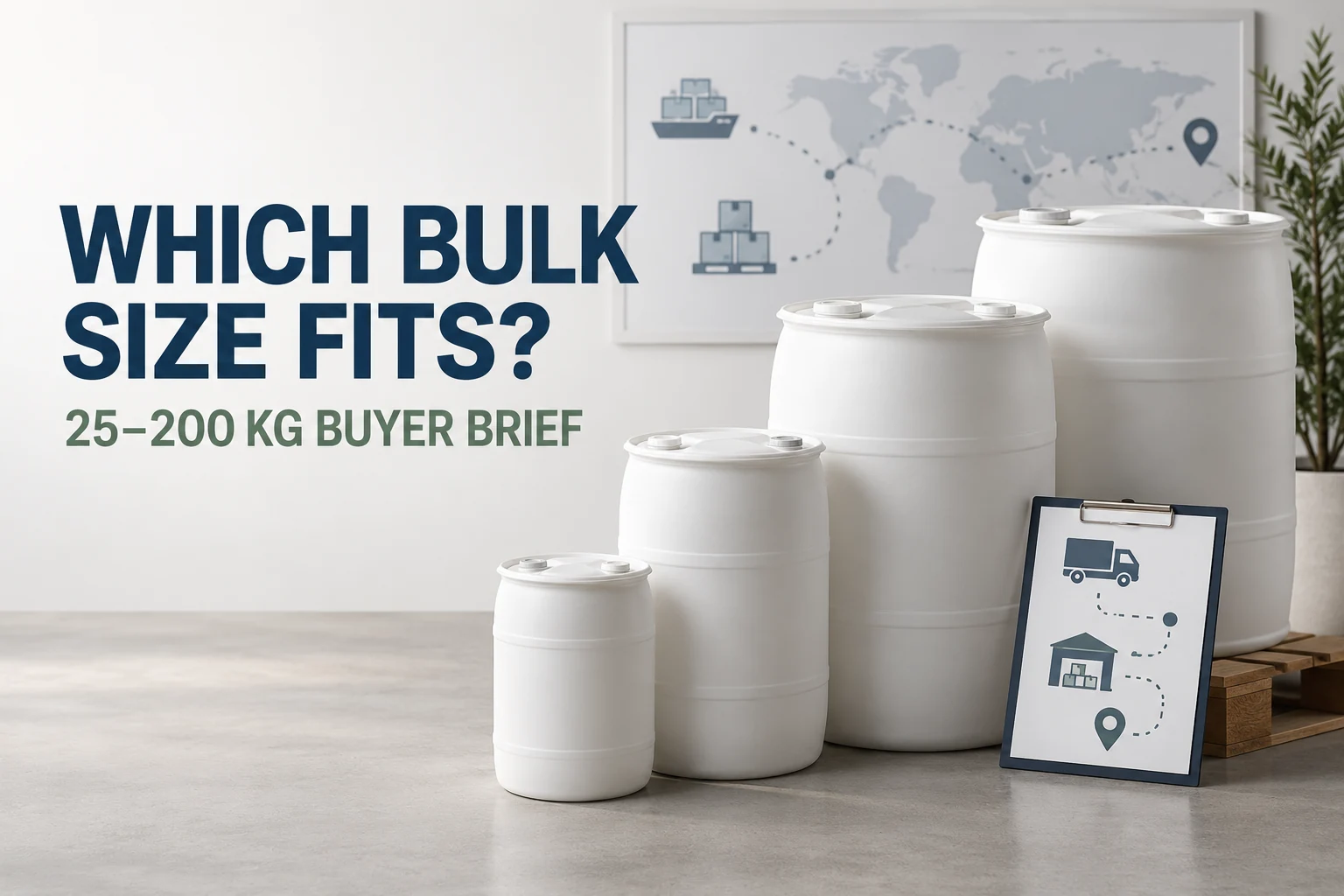
Choose a bulk barrel size only after mapping the amount your operation can receive, identify, store, transfer and use within its controlled process. LANTHOME lists 25 kg, 50 kg, 100 kg, 150 kg and 200 kg barrel formats for this reference, but those options are not a recommendation or a minimum order. A useful brief connects one listed size to your pilot plan, handling equipment, inventory controls and current supplier documentation.
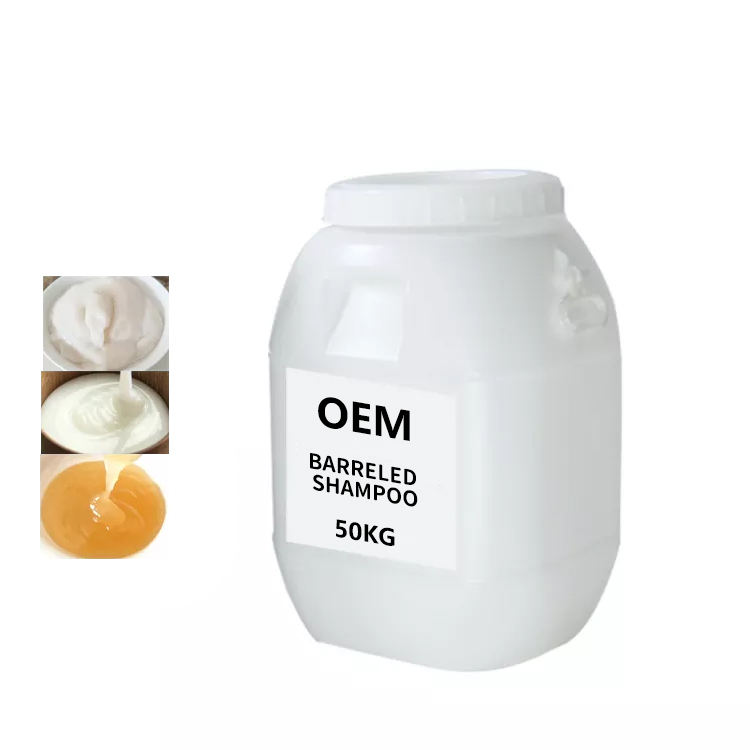
The live catalog identifies LANTHOME Bulk Collagen Shampoo & Conditioner, reference 1600686812355 and model CY172-ying20221118, as commercial bulk shampoo and conditioner in a bulk cream haircare format. It lists 25 kg, 50 kg, 100 kg, 150 kg and 200 kg barrel formats and accepts Private Label / OEM / ODM enquiries. The page asks buyers to confirm the current specification, ingredient list, packaging, quantities and timing. It does not publish the complete INCI lists, final use directions, barrel construction, closure, unit dimensions, pallet pattern, transfer method, price, MOQ, capacity or lead time.
This guide turns the catalog choices into a procurement conversation. It does not calculate how much product your business should buy, assume that shampoo and conditioner share a formula, or treat a listed barrel weight as evidence of availability. The goal is to define the receiving and use system clearly enough that the supplier can confirm the applicable product, pack and commercial proposal.
Product Facts and Confirmation Points
- **Catalog identity:** The page names LANTHOME Bulk Collagen Shampoo & Conditioner, reference 1600686812355, model CY172-ying20221118. Put the reference and model on the inquiry, sample record and any later specification comparison.
- **Listed formats:** The page lists 25 kg, 50 kg, 100 kg, 150 kg and 200 kg barrel formats. Confirm which sizes are currently offered for the exact shampoo and conditioner proposal; do not convert the list into an assumed MOQ or availability promise.
- **Product description:** The catalog calls the product commercial bulk shampoo and conditioner and describes the format as bulk cream haircare. Confirm whether the quotation contains two separately identified products, and request the current specification for each.
- **Customization scope:** Private Label / OEM / ODM enquiries are supported. Ask which development route applies to the formula, bulk pack, labeling and any later retail-pack filling work.
- **Formula gap:** “Collagen” appears in the catalog name, but the page does not publish a complete ingredient list, ingredient identity, source, amount or claim substantiation. Treat ingredient and benefit language as pending until current documents support it.
- **Package gap:** “Barrel” is the listed pack direction. The page does not publish the barrel material, liner, lid, opening, tamper evidence, dimensions, tare weight or compatibility documentation. Request the actual component proposal.
- **Commercial gap:** Current price, MOQ, capacity, lead time, freight configuration and payment terms are not stated. Request them for the exact products, barrel sizes and delivery destination after the technical brief is defined.
Keep four records separate. The catalog record shows what was listed when the source was checked. The product specification identifies the exact shampoo or conditioner supplied. The package specification identifies the exact barrel and closure. The purchase record states quantity and commercial terms. A product name or photograph cannot substitute for these controlled records.
Which Listed Barrel Route Fits the Project?
The useful comparison is not “small is flexible” versus “large is economical.” Those conclusions depend on real costs and operations that the catalog does not provide. Compare the listed routes against the same receiving, storage, transfer, traceability and forecasting questions.
Option 1: Review the 25 kg or 50 kg Listed Formats
- **Receiving task:** Confirm that the receiving team can safely accept the proposed unit and has a documented way to check product identity, lot information, seal condition and delivered quantity.
- **Storage plan:** Map where unopened and opened units would be stored under the supplier-confirmed conditions. Record space, segregation and identification needs without inventing a shelf life.
- **Transfer plan:** Describe how the operation expects to open and transfer product. Ask what opening, closure and compatible transfer information applies; do not assume hand pouring, a pump or a liner from the catalog image.
- **Inventory logic:** Use a real forecast and process yield to estimate how a candidate size would move through the operation. The listed weight alone does not establish a suitable reorder point or usable period after opening.
- **Evidence request:** Ask for the current shampoo and conditioner specifications, separate ingredient lists, barrel specification, labeling details, storage information and any applicable package-compatibility evidence.
The 25 kg or 50 kg route may be worth discussing when the buyer wants to limit the amount committed to one identified unit during a controlled pilot or has constrained receiving equipment. That is a planning possibility, not proof that either size is available, cheaper, easier to handle or more suitable for the formula. The supplier and buyer must confirm the actual package and operating conditions.
Option 2: Review the 100 kg, 150 kg or 200 kg Listed Formats
- **Receiving task:** Confirm dock, movement and placement requirements for the proposed unit. Request dimensions and gross handling information before deciding that existing equipment is suitable.
- **Storage plan:** Check whether the location can keep the unit identified, protected and accessible while following confirmed storage conditions. Include opened-unit controls in the brief.
- **Transfer plan:** Define the connection or opening questions, expected transfer frequency and the receiving vessel or filling process. Ask for applicable component and compatibility information rather than selecting equipment by appearance.
- **Inventory logic:** Link the candidate size to a documented consumption forecast, production schedule and lot-control method. A larger listed weight does not prove a lower total cost, reduced waste or better continuity.
- **Evidence request:** Request the same product and package documents used for smaller units, plus the information needed to review movement, dispensing, resealing and transport configuration for the exact proposed barrel.
The 100 kg, 150 kg or 200 kg route may be worth discussing when a buyer has a defined, repeatable bulk-use process and can control the unit through receipt, storage and transfer. The decision should not rest on a generic volume discount assumption. Obtain current commercial terms and calculate the project using the actual quotation, freight basis, handling requirements and expected consumption.
Build the Bulk-Pack Decision Before Requesting a Quote
1. Separate the shampoo and conditioner requirements
Write two product lines in the brief even if the commercial concept presents them as a pair. For each, record the intended role in the wash-care routine, model or sample identifier, required current specification, ingredient document and confirmed directions. Ask whether the same listed barrel choices apply to both products. Do not assume equal demand, identical texture, the same transfer behavior or one shared approval record.
This separation also improves forecasting. A brand may expect shampoo and conditioner to move at different rates, but that expectation must be based on its own channel and operations rather than a universal ratio. Give the supplier a candidate size for each line and explain the operational reason. If the plan is still exploratory, state that the size is for feasibility review rather than a purchase commitment.
2. Convert the forecast into a range, not a promise
Start with the buyer's documented production or filling plan. Identify the intended review period, expected output range, planned loss allowances under the buyer's own process and the amount already available in inventory. Record which numbers are estimates and who owns them. Avoid presenting a single optimistic sales forecast as certain demand.
The output of this step is a candidate usage range for shampoo and conditioner. Compare that range with the listed barrel weights only as an input to discussion. Ask the supplier how net contents are defined and documented for the proposed unit. Do not divide a barrel weight by an assumed retail fill and call the result guaranteed output; actual process yield and fill control belong to the buyer's validated operation.
3. Map receipt from vehicle to storage position
Describe the real path: delivery point, inspection position, internal movement, storage location and access for later transfer. Note doorways, floor or rack constraints, lifting or movement equipment and staff responsibilities that require formal review. This is an operational brief, not a safety approval. The buyer should use qualified internal or external personnel to determine safe handling.
Ask the supplier for the proposed unit dimensions, gross weight information, pallet or transport configuration as applicable, label position and seal details. A catalog photograph cannot confirm any of those properties. If the information is not yet available, mark the size decision “hold” rather than buying first and solving movement later.
4. Define identity and lot-control checkpoints
State what the receiving team must be able to verify before acceptance: product name, shampoo or conditioner identity, model or project code, lot or batch reference, net-content declaration, document match and visible package condition. Ask which identifiers appear on the supplied unit and associated paperwork. Keep internal relabeling rules separate from the supplier's original label.
Then map how identity remains attached during storage and transfer. If material moves to another controlled vessel, the buyer needs a traceable process appropriate to its operation. This guide does not establish that process or regulatory compliance. It highlights the information dependency: a barrel size is unsuitable if the operation cannot keep the exact product and lot identifiable through use.
5. Write the opening and transfer questions
Do not specify a pump, tap, liner, follower plate or manual method until the actual barrel and product proposal are known. Instead, explain the receiving vessel or filling operation, expected transfer frequency, acceptable contact controls and how the unit would be closed between uses. Ask for the barrel opening and closure reference, material information and any supplier guidance relevant to the exact proposal.
The team should also ask how a sample can represent the expected bulk proposal. A small evaluation sample can support sensory and process questions, but it does not automatically prove behavior in the final barrel, transfer equipment or production environment. Record what the sample can and cannot resolve, then request package-system evidence where needed.
6. Review storage and opened-unit instructions
Request current storage instructions and any confirmed information that applies after opening. Do not invent a temperature range, shelf life or opened-unit period. Compare the confirmed information with the buyer's storage environment and expected consumption schedule. If the planned unit would remain open longer than the applicable information supports, revise the plan or request another size discussion.
Also plan segregation and housekeeping questions. Shampoo and conditioner should remain separately identified, and multiple lots should not become interchangeable simply because the product name looks similar. Any consolidation, transfer or handling procedure must be reviewed under the buyer's own quality system and applicable requirements.
7. Compare total project inputs with the actual quotation
Once the technical proposal is clear, request current quantity options, price, packaging charges, freight basis, lead time and other applicable terms. Add the buyer's receiving, storage, movement, transfer, testing and inventory inputs. A unit price alone cannot establish total project value. Conversely, a smaller unit is not automatically more expensive in the context of a pilot if it avoids unplanned operational changes.
Keep calculations outside public marketing copy unless they are supported and appropriate to share. The purpose is an internal decision that can be traced to a dated quotation and a defined operating plan. If a commercial term changes, update the calculation instead of preserving an outdated “best size” conclusion.
8. Record go, revise or hold for each product and size
Use a short decision record for each shampoo-size and conditioner-size combination under review. “Go” means the exact product, package and required information are suitable for the next procurement stage. “Revise” identifies a specific change, such as another listed size or different receiving arrangement. “Hold” names missing information such as dimensions, package specification, storage instructions or current terms.
The decision record should include the date, catalog reference, exact proposal identifiers, candidate barrel weight, document revisions, operational owner and open questions. It should not claim that the formula, package or commercial terms are approved beyond the scope of the recorded review.
A Hypothetical Buyer Review
Consider a hypothetical brand evaluating commercial bulk shampoo and conditioner for a controlled filling program. The team does not begin by ordering the largest listed format. It writes separate forecasts for shampoo and conditioner, maps its receiving route, and identifies which unit dimensions and movement information it needs. It asks whether 25 kg and 50 kg are currently available for a pilot discussion and whether larger listed formats can be reviewed for a later repeat process.
The buyer requests current specifications, separate ingredient lists, confirmed directions, barrel details, storage information and commercial options for the defined proposal. It records that the product page lists five barrel weights but does not treat them as an MOQ. The team uses “hold” for any option without a documented transfer plan and “revise” when the forecast does not match the intended consumption period. Only after those questions are resolved does procurement compare the dated quotations.
This example is a planning method, not an actual customer case, test result, price or recommendation. Its value is the sequence: separate the products, define demand uncertainty, confirm the package, review operations, obtain current terms and retain a traceable decision.
Frequently Asked Questions
Does the 25–200 kg list mean every size is currently available?
No. The live page lists 25 kg, 50 kg, 100 kg, 150 kg and 200 kg barrel formats, but current availability is not published. Ask which sizes apply to the exact shampoo and conditioner proposal and delivery plan. Record the answer with the quotation date instead of turning a catalog list into a standing supply promise.
Is the smallest listed barrel automatically the right pilot size?
No. A pilot size must fit the questions being tested and the buyer's receiving, storage and transfer controls. A smaller listed weight may still be unsuitable if the package cannot be handled or identified correctly. Define the pilot objective, ask for the exact package specification and review current commercial terms before choosing.
Can the barrel weight be converted directly into retail units?
It can support an internal estimate only when the buyer uses its defined fill target and validated process assumptions. The catalog does not publish process yield or guaranteed retail output. Keep theoretical conversion separate from actual filling records, losses and quality controls, and do not market an estimated unit count as a confirmed result.
Does “Collagen” confirm the shampoo and conditioner ingredients?
No. “Collagen” appears in the catalog name, but the page does not publish complete INCI lists, ingredient identity, source, amount or claim support. Request the current ingredient information for each exact product proposal. Review any intended ingredient or benefit wording against applicable evidence before artwork or public copy is approved.
What package details should be requested before selecting transfer equipment?
Request the proposed barrel material and construction, opening and closure reference, dimensions, applicable gross handling information, seal or tamper features, labeling position, storage information and relevant compatibility guidance. Then have qualified personnel review the transfer method for the actual product and operation. Do not select equipment from a generic catalog image.
What to Send in Your Bulk Project Inquiry
- **Product reference:** LANTHOME Bulk Collagen Shampoo & Conditioner, reference 1600686812355, model CY172-ying20221118.
- **Separate product lines:** Identify shampoo and conditioner requirements separately, including intended routine and current sample or specification questions.
- **Candidate sizes:** Name the listed barrel weights you want reviewed and explain whether the request is for pilot feasibility or repeat supply planning.
- **Forecast basis:** Provide a realistic usage range and review period while marking estimates clearly.
- **Receiving context:** Describe delivery destination, movement constraints, storage environment and information needed for operational review.
- **Transfer context:** Explain the receiving vessel or filling process and ask for the exact barrel opening, closure and package information.
- **Documents and claims:** Request current specifications, complete ingredient information, confirmed directions, storage information and support for any intended claims.
- **Commercial request:** Ask for current quantity options, price, freight basis, lead time and other terms for the defined products, sizes and destination.
Use the LANTHOME contact form for a project discussion or organize evaluation details through the sample request form. The How It Works page helps distinguish private label, semi-custom and custom project pathways before you request terms.
Related Links
- LANTHOME Bulk Collagen Shampoo & Conditioner · CY172-ying20221118- Review the exact commercial bulk reference and listed barrel formats used in this brief.
- Shampoo Collection- Compare current shampoo references without assuming formula or bulk-pack equivalence.
- Conditioner Collection- Review conditioner references as a separate product line for range planning.
- Private Label Protein Hair Mask: A Sample Evaluation Guide- See how a controlled sample record separates observations from approval evidence.
- How It Works- Review the available private label, semi-custom and custom project pathways.
- Request Haircare Samples- Organize a traceable evaluation request before a bulk-pack decision.
- Contact LANTHOME- Send the product reference, candidate sizes, destination and documentation questions.