
In this guide
A private label beard balm with a named scent should be evaluated through two controlled decisions: whether the balm fits the intended grooming routine and whether the sandalwood-vanilla description matches an approved fragrance reference. Keep formula handling, package interaction and scent review separate, then reconcile them before artwork. A pleasant sample alone does not confirm ingredients, “organic” status, nourishing or soothing performance, fragrance consistency or public claims.
LANTHOME lists Sandalwood Vanilla Beard Balm, reference 1601999056254, model FAI-001713b, as a Beard balm available for Private Label / OEM / ODM enquiries. The page says sandalwood and vanilla scent are stated in the source title and lists an organic ingredient attribute plus nourishing and soothing functions. It asks buyers to confirm the current formula, fragrance, packaging, quantities and timing. The page does not publish a complete INCI list, fragrance composition, organic standard or scope, net content, directions, claim evidence, final package or commercial terms.
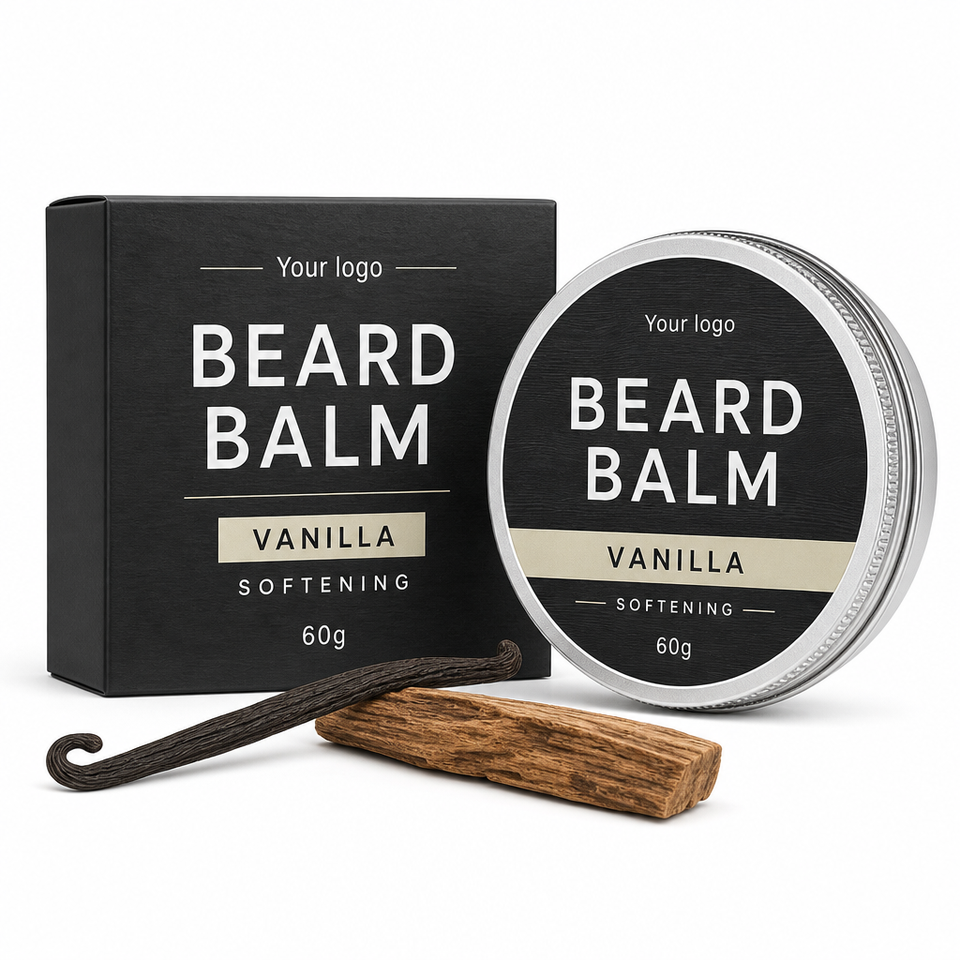
This guide treats the catalog wording as a starting identity, not a finished substantiation file. It also treats the generated cover image and catalog photography as visual references, not approved packaging. Buyers should request the exact sample, formula revision, fragrance reference and package proposal before deciding how the product will be named, explained or sold.
Product Facts and Confirmation Points
- Catalog identity: The page identifies LANTHOME Sandalwood Vanilla Beard Balm, reference 1601999056254, model FAI-001713b. Use the reference and model on the inquiry, sample label and review record.
- Format: The stated product format is Beard balm. The page does not publish net content, texture specification, application amount, use frequency, removal method or final directions.
- Scent statement: Sandalwood and vanilla scent are stated in the source title. Confirm the applicable fragrance reference, description, version and intended wording for the exact proposal.
- Attribute statement: An organic ingredient attribute is listed, but the page does not identify the ingredient, standard, certification scope, percentage, chain of custody or wording that may be supported.
- Function statements: Nourishing and soothing are listed functions. These are catalog statements, not verified finished-product outcomes or automatically approved claims.
- Service scope: The page states Private Label / OEM / ODM. Formula, fragrance, packaging and quantity still require a project-specific discussion.
- Package and commercial gaps: The final container, closure, decoration, secondary pack, compatibility, MOQ, price, capacity and lead time are not published.
Separate four records. The catalog record identifies the source. The formula record identifies the actual balm revision and complete ingredient information. The fragrance record identifies the approved scent reference and description. The package record identifies the container and artwork. The final approval should point to all four rather than relying on a name or photograph.
Which Positioning Route Should Lead?
The two routes below can coexist, but one should lead the brief. A scent-led route starts with the sandalwood-vanilla experience and gift or collection story. A routine-led route starts with the grooming task, application directions and package handling. Compare both through the same dimensions before selecting the primary product-page hierarchy.
Option 1: Scent-Led Positioning
- Primary question: Can the approved fragrance reference be described consistently as sandalwood and vanilla for the intended audience and channel?
- Sample method: Evaluate scent on the identified balm sample and, if supplied, against a controlled fragrance reference rather than memory or an unrelated product.
- Package role: Review whether the proposed container and closure preserve product identity and allow the scent story to appear without displacing directions or required information.
- Evidence needed: Current formula and fragrance identifiers, applicable ingredient information, approved descriptors and support for any origin, natural or organic wording.
- Change risk: A fragrance adjustment can alter the consumer description even when the balm format and package look unchanged.
- Best fit: Collections where scent naming is a major navigation, merchandising or gifting cue, subject to confirmed documentation and market review.
This route can create a clear story, but it is vulnerable to expectation drift. “Sandalwood” and “vanilla” may be interpreted as ingredient, fragrance or sensory descriptors. The supplier and buyer should agree what the words mean for the exact proposal and which documents control them. Do not add “natural,” “essential oil,” “aromatherapy” or origin language without applicable support.
Option 2: Routine-Led Positioning
- Primary question: Can the identified balm be explained clearly within the intended beard-grooming sequence using supplier-confirmed directions?
- Sample method: Record access, amount method, warming or spreading step only if confirmed, application area, finish observations and cleanup under one direction version.
- Package role: Review opening, closing, product access, label readability and product protection as functions of the proposed container, not assumptions from the image.
- Evidence needed: Formula specification, complete ingredient list, confirmed directions, package specification and support for any grooming or feel statement.
- Change risk: A formula, fill or container change can affect handling even if the sandalwood-vanilla name remains the same.
- Best fit: Assortments organized around grooming steps, application formats or professional routines rather than fragrance families.
This route makes the user task visible, but it should not create unsupported performance claims. Internal notes such as “easy to spread” or “comfortable finish” describe a controlled observation under stated conditions; they are not automatically advertising evidence. Scent remains a specification even when it is not the lead story.
Build a Traceable Beard Balm Sample Review
1. Define one buyer decision before the sample arrives
Write an answerable question: “Can this exact balm sample support our intended grooming routine and an approved sandalwood-vanilla scent description?” State the target country or region, channel, audience context and whether the product belongs to a scent family, a grooming-step range or both. Avoid beginning with nourishing, soothing or organic claims because the page does not provide the evidence needed to approve them.
Define the first gate. It may assess sample identity, direction clarity, package interaction and scent-reference alignment. It should not approve final claims, artwork, production quantity or timing unless the current specifications and commercial proposal are also available.
2. Request the exact formula and fragrance reference
Ask for reference 1601999056254 and model FAI-001713b, then request the balm formula or sample revision, complete ingredient information, sample date and direction version. Ask whether the sandalwood-vanilla wording describes a fragrance, listed ingredients, or another source convention. Request the fragrance reference or approval method used for the proposal.
Do not assume the fragrance reference establishes ingredient identity. A sensory description and an INCI declaration answer different questions. Keep the formula identifier and fragrance identifier together in the sample record so later adjustments can be traced to the correct component.
3. Clarify the organic attribute before using it
Ask which ingredient or material the listed organic attribute applies to, what standard or documentation is relevant, which supply-chain stage it covers and what wording is proposed for the target market. If the answer is incomplete, mark the term as pending and keep it out of artwork and sales copy.
Do not convert “organic ingredient attribute listed” into “organic beard balm,” a percentage or a certification claim. A product-level statement may have different requirements from an ingredient-level attribute. The buyer should arrange the applicable review for the final formula, documentation and wording.
4. Lock confirmed directions and handling fields
Request the exact application method, area, amount guidance, frequency, finish step, storage information and warnings for the sample. If the supplier confirms warming, rubbing or combing steps, record them accurately; do not add them because they seem typical for a balm. Missing details should become supplier questions.
Build neutral handling fields: ease of opening, ability to access a consistent amount under the confirmed method, spread sequence, label readability, closure action and cleanup. Record room conditions or other relevant context when it affects interpretation, but do not turn a small internal review into validated performance data.
5. Review scent with controlled language
Give reviewers the same identified sample and a short vocabulary sheet. Ask whether the supplied sample aligns with the approved reference and proposed description, not whether sandalwood or vanilla is universally appealing. Record intensity, balance and persistence only as internal observations under the defined method unless the project has applicable evidence for public wording.
Avoid leading questions. If the sample is labeled “rich vanilla,” reviewers may echo the label. A blind or coded internal check can reduce naming bias, but it still does not establish ingredient origin, composition or market-wide preference. Record the method and its limits.
6. Treat the balm and container as one use system
Confirm the actual sample container and the intended retail package. Review access, closure, product protection, label area and storage wording together. Ask whether the pictured tin or jar is part of the proposal or merely a source image. Do not claim portability, leak resistance, recyclability or compatibility without applicable specifications and evidence.
The label hierarchy should preserve product identity, directions, warnings, ingredient declaration, net content and target-market information. The scent story can be prominent, but it should not make the functional instructions difficult to find. If the package changes, repeat the relevant handling and artwork review.
7. Separate observations from nourishing and soothing claims
Create three columns in the internal record: observed sample notes, proposed marketing wording and evidence status. A reviewer can note handling or sensory impressions, but those notes do not automatically support “nourishing,” “soothing,” skin comfort, beard condition or other outcomes. Define the exact claim and ask what evidence applies to the finished formula and directions.
Use the same discipline for comparisons. Do not call the balm superior to wax, oil or cream unless an applicable comparison supports the statement. The Private Label Beard Grooming Kit component guide can help map a balm within a broader kit, but it does not prove the balm’s formula, scent, package or performance.
8. Record a product, scent and package decision
At the review meeting, issue three decisions. The product decision covers the identified formula and confirmed directions. The scent decision covers the fragrance reference and approved descriptor. The package decision covers the exact container, decoration and information hierarchy. Then create a parent project decision that states which combination may proceed.
“Go” means suitable for the next defined stage, not final production approval. “Revise” should name the formula, fragrance, directions, package or copy change. “Hold” should identify missing ingredient information, unsupported organic wording, unresolved claim evidence or an undefined commercial term. Preserve dates and reviewers.
Turn Scent into Change Control
A scent name becomes useful operationally when it points to an approved reference and version. Put the fragrance identifier on the formula brief, sample request, evaluation record and change log. If a supplier proposes a substitute or adjustment, the team can decide whether sensory review, formula review, artwork review or all three must be repeated.
Do not rely on color, supplier nickname or memory as the only control. A “sandalwood vanilla” description may cover different balances or materials across projects. The buyer should confirm how the exact proposal is identified and what documentation accompanies it.
For assortment planning, decide whether future variants will be organized by scent family, grooming task, format or audience. That decision affects navigation and packaging architecture, but it does not establish formula similarity. Each variant still needs its own traceable product and evidence record.
Hypothetical Buyer Example
Consider a hypothetical grooming brand planning one beard balm for an online gift set and individual sale. The team requests FAI-001713b, the exact sample formula, complete ingredient information, fragrance reference, confirmed directions and a container proposal. It records the organic, nourishing and soothing statements as pending rather than copying them into the brief.
One review group follows the confirmed application sequence and records package handling. A second controlled task compares the sample with the supplied fragrance reference and proposed sandalwood-vanilla description. The design team drafts both a scent-led and routine-led hierarchy, but it holds organic and performance wording until evidence review is complete.
If the balm handling is acceptable but the fragrance reference is not yet controlled, the product decision can be “go to packaging refinement” while the scent and parent launch decisions remain “hold.” This is a planning example, not an actual customer case, result or endorsement.
Frequently Asked Questions
Does the name confirm sandalwood and vanilla ingredients?
No. The page says sandalwood and vanilla scent are stated in the source title, but it does not publish a complete ingredient list or fragrance composition. Ask whether the terms are scent descriptors, listed ingredients or another convention for the exact proposal. Do not infer origin, percentage, natural status or benefit from the name.
Can the product be called an organic beard balm?
Not from the page alone. It lists an organic ingredient attribute but does not identify the ingredient, standard, scope, percentage or supporting document. Request the current evidence and proposed wording, then arrange the applicable review for the final formula and target market before using a product-level organic claim.
Should reviewers score how long the scent lasts?
Only as a clearly defined internal observation if the method and limits are recorded. A small sample review does not automatically support a public duration claim. If persistence wording is planned, define the exact claim and ask what applicable evidence is available for the finished formula, use method and package.
Is the container shown in the catalog the final package?
No. The page asks buyers to confirm packaging and does not identify the final container specification. Ask for the exact material, dimensions, fill, closure, decoration and secondary pack proposal. Review product access and label space with that package; do not infer included components or performance from photography.
Do nourishing and soothing catalog statements prove performance?
No. They identify source-page positioning, not verified finished-product results. Define the intended wording and request applicable support tied to the exact formula, directions and target market. Keep internal sensory observations separate from approved claims and consumer-facing copy.
What to Send in Your Inquiry
- Product identity: Reference 1601999056254 and model FAI-001713b.
- Positioning route: State whether scent, grooming routine or both will lead the product hierarchy.
- Formula record: Request the current sample identifier, specification and complete ingredient information.
- Fragrance record: Request the sandalwood-vanilla reference, version, description and change-control method.
- Directions: Request confirmed amount, application, frequency, finish, storage and warning information.
- Package brief: Describe preferred container, closure, decoration, secondary pack, label area and sales channel.
- Claims and attributes: List proposed organic, nourishing, soothing and scent wording and request applicable support.
- Commercial questions: Ask for current customization route, quantities, price and timing for the defined formula, fragrance and package.
Send the traceable request through the LANTHOME contact form or organize the identified sample through the sample request form. Review How It Works before selecting a private-label, semi-custom or custom development path.
Related Links
- Sandalwood Vanilla Beard Balm · FAI-001713b- Review the exact catalog reference used for this scent-specification workflow.
- Beard Care Collection- Compare current grooming references without assuming formula or fragrance equivalence.
- Private Label Beard Grooming Kit: Define the Component List- Map a balm into a controlled multi-item kit record.
- Private Label Matte Hair Clay: From Sample to Launch- Compare another balm-like styling format while keeping evidence separate.
- How It Works- Review the available private-label, semi-custom and custom pathways.
- Request Haircare Samples- Organize one identified beard-balm sample and review brief.
- Contact LANTHOME- Send the formula, scent, package, market and document requirements.