
In this guide
A 30 mL private label leave-in conditioner should not be called a sample, travel size or retail mini until the buyer defines its commercial role, use period and packaging requirements. Start by confirming the exact formula and directions, estimate how the supplier-confirmed amount and frequency relate to the fill, and then choose a role. The same 30 mL format can create very different customer expectations depending on how it is sold and explained.
LANTHOME lists Rice Water Leave-In Conditioner, reference 1601923461291, model FAI-ATYX4974, in a 30 mL format. The page lists leave-in conditioner as the format, moisturizing as a function, and an herbal ingredient attribute and herbal scent. It offers Private Label / OEM / ODM discussions and asks buyers to confirm the current formula, fragrance, packaging, quantities and timing. It does not identify the 30 mL commercial role, complete INCI, directions, usage period, package specification, evidence or commercial terms.
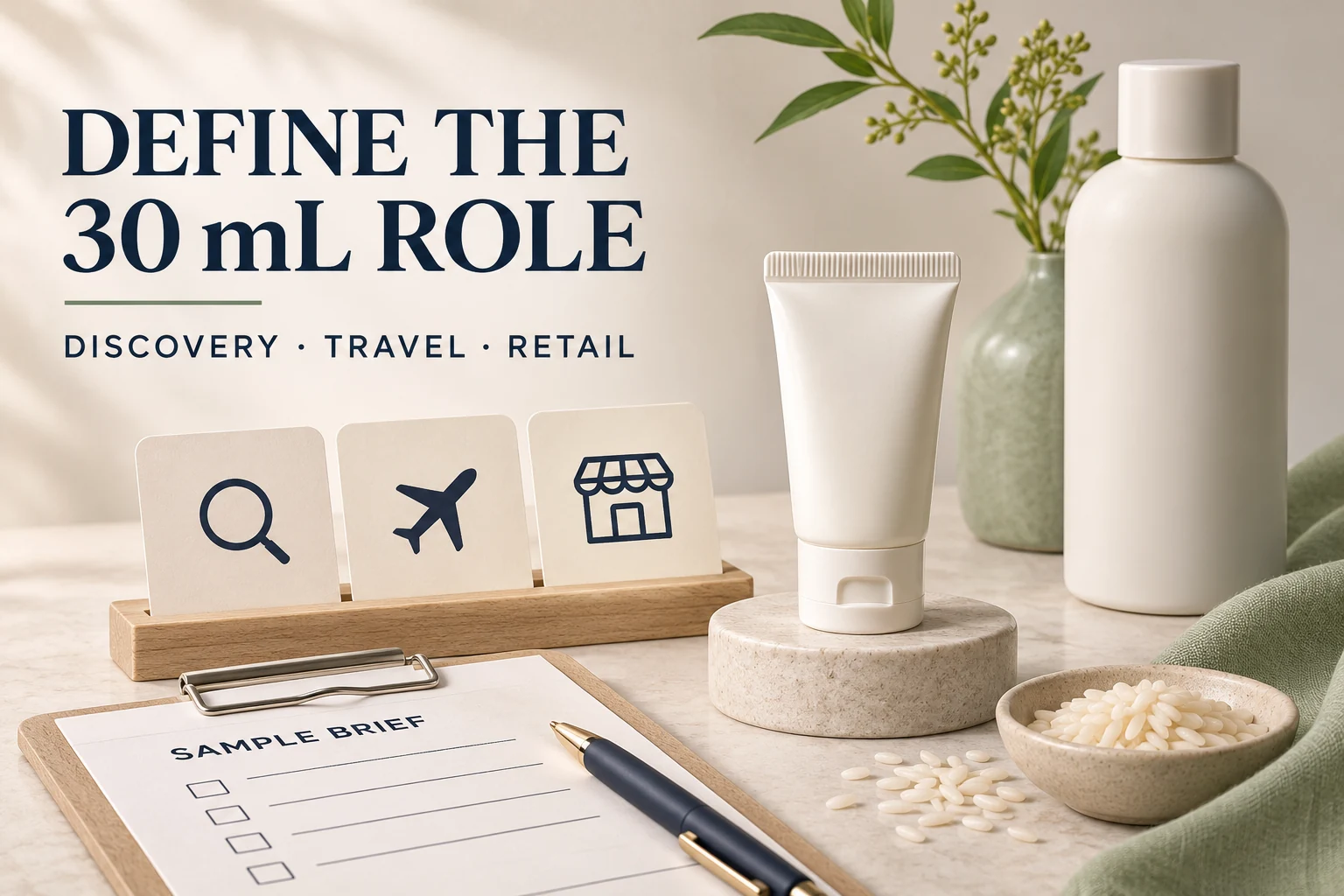
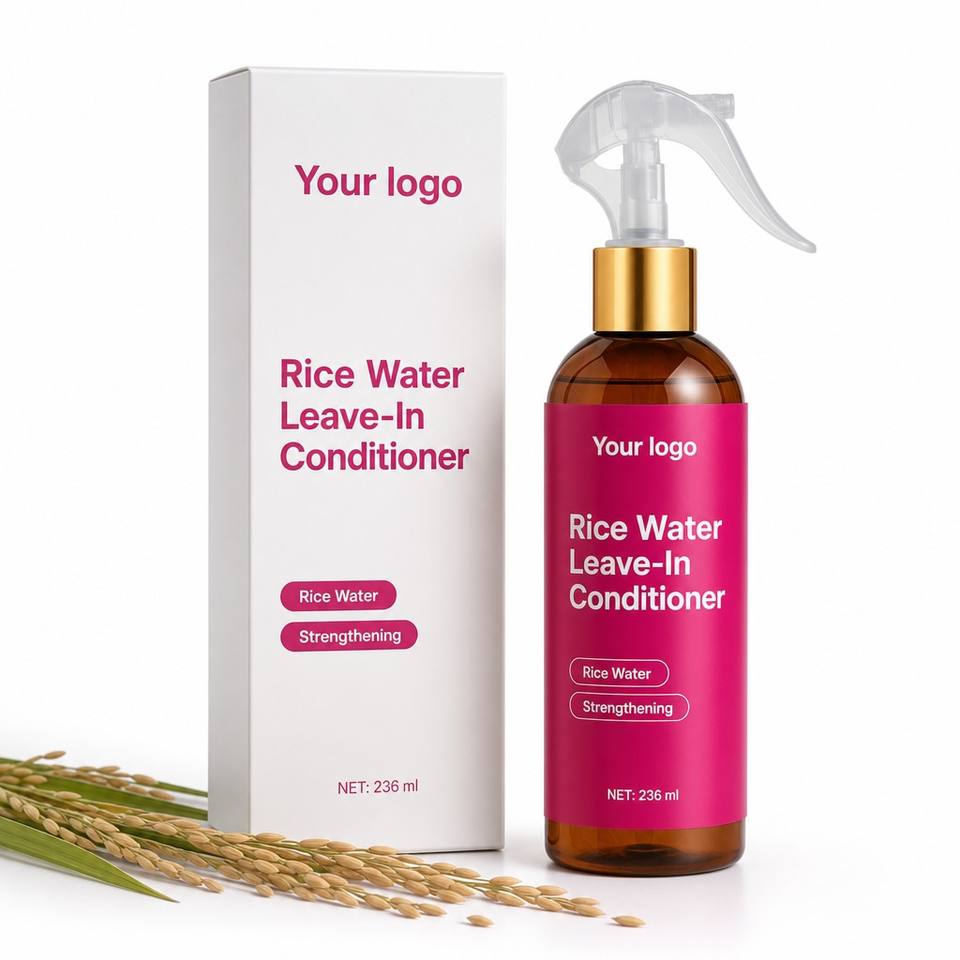
This guide treats 30 mL as a verified catalog size and everything else as a project decision. “Rice water,” “herbal,” “moisturizing,” “travel” and “trial” can each create claims or expectations that need separate confirmation. The generated cover and catalog photography are planning references, not approved packaging.
Product Facts and Confirmation Points
- Catalog identity: LANTHOME Rice Water Leave-In Conditioner, reference 1601923461291, model FAI-ATYX4974.
- Listed format: A 30 mL leave-in conditioner. The page does not define whether it is a discovery sample, travel format, retail mini, kit component or another role.
- Function statement: Moisturizing is listed as a function. The page does not publish the exact claim wording or finished-product evidence.
- Attribute and scent: An herbal ingredient attribute and herbal scent are listed. The ingredient identity, fragrance composition, source and support are not published.
- Directions gap: Amount, application area, wet-or-dry condition, frequency, styling sequence, storage and warnings are not published.
- Package gap: Container, closure, dispensing method, decoration, label area, compatibility and secondary pack are not specified.
- Commercial gap: MOQ, price, capacity and lead time are not published for the defined formula-package combination.
Keep five records connected: catalog reference, formula revision, direction version, package component codes and artwork revision. A role decision should name all five. A small bottle can look like a sample even when the project intends a paid retail mini; the label, directions, package quality and channel context must make that role clear.
Which 30 mL Route Fits the Project?
Three routes are possible, but only two should be compared at once during a decision meeting. The comparison below uses discovery and paid retail as the main alternatives. A travel-oriented route can borrow questions from both, but the buyer should confirm applicable packaging, labeling and channel requirements rather than assuming size alone makes the product travel-ready.
Option 1: Discovery or Sampling Route
- Primary job: Introduce the identified leave-in formula and collect useful feedback under confirmed directions.
- Customer promise: Enough product for the stated evaluation method only if the confirmed amount, frequency and fill support that statement.
- Package priority: Clear identity, secure closure, usable dispensing and instructions within the selected distribution method.
- Evidence needed: Formula and direction records, package compatibility, accurate ingredient information and support for any evaluation claim.
- Channel question: Is the unit supplied alone, with an order, in a kit or through another documented program?
- Decision risk: Calling 30 mL a “trial” without defining the intended number or period of uses can create an unsupported expectation.
A discovery route should produce structured feedback rather than vague impressions. Decide what the buyer wants to learn: application clarity, dispensing, scent alignment, finish observations or routine fit. Do not promise a result or duration that the catalog does not establish. If the unit is not for resale, the project still needs correct identity and applicable information.
Option 2: Paid Retail Mini Route
- Primary job: Function as a complete purchasable product with a clear place in the range.
- Customer promise: A defined leave-in routine and product identity, not merely a smaller version of an unconfirmed full-size item.
- Package priority: Retail-ready component quality, readable information, dispensing control, decoration and any secondary-pack requirements.
- Evidence needed: Final formula, directions, claims support, package specification, artwork and target-market review.
- Channel question: Is the unit an entry product, add-on, kit component or permanent compact SKU?
- Decision risk: A mini can confuse price, value and usage expectations if its role is not distinguished from a free sample.
A paid mini deserves the same specification discipline as a larger product. Do not reduce directions or required information simply because label space is limited. If the container cannot support the necessary hierarchy, consider a secondary pack, leaflet or a different component after applicable review.
Build a 30 mL Role and Sample Review
1. Define one role before requesting packaging
Write an answerable question: “Can FAI-ATYX4974 in the proposed 30 mL package support our chosen discovery or retail role under confirmed directions?” Add the target country or region, channel, audience, whether the unit is sold, and how it relates to the rest of the range.
Avoid beginning with a bottle style. A premium-looking component cannot decide whether the unit is a sample or product. The role controls the information hierarchy, review method, package expectations and commercial questions.
2. Confirm the formula and ingredient record
Request reference 1601923461291, model FAI-ATYX4974, the sample code, formula revision, complete ingredient information and current specification. Ask what “rice water” and the herbal attribute mean in the exact proposal. Do not infer a rice-derived ingredient identity, percentage, origin or benefit from the product name.
Keep the listed moisturizing function in the claim matrix as catalog wording until the exact proposed statement and evidence are reviewed. Ingredient identity, scent description and performance claims are different records and should not be bundled into one approval.
3. Lock the directions before estimating the role
Ask for the confirmed amount method, application area, hair condition, frequency, sequence, storage and warnings. “Leave-in” indicates that rinsing is not part of the stated format, but it does not supply the rest of the instructions. Do not invent a number of pumps, drops or uses.
Only after directions are confirmed can the buyer estimate whether 30 mL aligns with a discovery period, compact retail routine or kit use. Any usage-period statement should be based on defined inputs and appropriately reviewed, not a generic volume assumption.
4. Define the dispensing unit
Request the proposed container, closure, orifice or pump, component materials, dimensions, fill, decoration area and supplier codes. Review the identified formula in that component. A 30 mL fill can behave differently across droppers, pumps, nozzles, flip tops or tubes, so the package must not be described before it is selected.
Record neutral fields: opening, closing, ability to access product under the confirmed method, label readability and cleanup. These are internal observations, not automatic claims such as precise dose, leak-proof, travel-safe or mess-free.
5. Design the information hierarchy for a small pack
List the content required for the target market and channel, then map it to the primary container and any secondary pack. Protect product identity, directions, warnings, ingredient declaration, net content and traceability information as applicable. Marketing copy must not crowd out essential information.
For discovery units, explain what the unit is and how feedback should be collected. For paid minis, ensure the presentation does not resemble an unmarked giveaway. If the pack cannot carry the content legibly, revise the component or information system rather than shrinking text without review.
6. Separate scent, ingredient and moisturizing reviews
The page lists herbal scent, an herbal ingredient attribute and moisturizing function, but they answer different questions. Request the applicable fragrance reference and description. Request the ingredient declaration and support for the attribute. Define the moisturizing wording and ask what finished-product evidence applies.
Do not convert “herbal” into natural, organic, botanical or essential-oil wording. Do not assume rice water is the source of moisturizing performance. Keep each proposed phrase tied to the exact formula and evidence status.
7. Compare economics only after the configuration is defined
Ask for quantities, price and timing only for the selected formula, component, decoration, secondary pack and role. A discovery unit may have different packing and distribution needs from a paid retail mini. Generic catalog economics cannot resolve that difference.
The buyer should also decide how the 30 mL unit relates to any larger SKU, kit or reorder path. That is range architecture, not proof that a larger version exists or shares the same formula. Confirm every SKU separately.
8. Issue a role decision and change rule
Approve the role, formula, directions, package and copy separately, then issue one parent decision for the combination. “Proceed” means ready for the next named stage. “Revise” names the changed field. “Hold” identifies missing formula, directions, component, evidence or commercial terms.
Define changes that reopen review. A new closure may reopen dispensing and compatibility. A formula revision may reopen directions, claims and package interaction. A shift from free discovery unit to paid retail product may reopen artwork, information and commercial review even when the bottle remains 30 mL.
Plan the 30 mL Unit Within the Range
A compact leave-in can sit beside a full-size conditioner, inside a routine kit or as a standalone entry item, but the catalog page does not confirm any of those structures. Map the intended customer journey without inventing adjacent SKUs. State what happens before and after this leave-in step and which product page or instruction explains the sequence.
The Private Label Rice Water Conditioner routine guide helps frame a rinse-off conditioner within a routine. Use it as a contrast, not as evidence for this leave-in formula. Rinse-off and leave-in directions, package needs and claims cannot be transferred automatically.
If a buyer wants both formats, create separate formula, direction, package and copy records. Shared “rice water” naming may support navigation, but it does not establish identical ingredients, concentration, scent or performance.
Hypothetical Buyer Example
Consider a hypothetical brand deciding between a free discovery unit and a paid online mini. The team requests FAI-ATYX4974, complete ingredient information, current directions and two 30 mL component proposals. It records rice water, herbal and moisturizing wording as pending until documentation and copy review are complete.
For the discovery route, the team defines one feedback task under confirmed directions. For the paid-mini route, it maps retail information, decoration and a reorder path. Both routes use the same formula revision, allowing package and role differences to be compared without mixing formula changes.
If directions are still incomplete, neither route receives a usage-period statement. The team may continue component screening, but the parent decision remains on hold. This is a planning example, not an actual customer case, result or commercial offer.
Frequently Asked Questions
Does 30 mL automatically make this a sample size?
No. The page confirms the listed volume but does not define the commercial role. A buyer may consider discovery, travel, retail mini or kit use only after confirming directions, package, labeling, channel and commercial terms. The role should be stated explicitly in the project brief.
Can the unit be described as travel-size?
Not from volume alone. Confirm the exact container, closure, transport expectations, target market and channel requirements. Do not claim leak resistance, portability or travel compliance without applicable specifications and review for the finished package.
Does “rice water” establish the ingredient list or benefit?
No. It is part of the product name, while the page does not publish the complete INCI, ingredient identity, level, origin or evidence. Request the current formula information and review every proposed rice-water statement against the exact product and target market.
How many uses should a 30 mL bottle provide?
The page does not state an amount, frequency or number of uses. Confirm the directions and dispensing component first. Any usage estimate should show its inputs and limits and should not be presented as a guaranteed count without appropriate support.
Can the moisturizing function be copied into artwork?
Not automatically. It is catalog wording, not a finished claim approval. Define the exact moisturizing statement, request evidence tied to the current formula and directions, and complete the applicable target-market review before approving artwork.
What to Send in Your Inquiry
- Product identity: Reference 1601923461291 and model FAI-ATYX4974.
- 30 mL role: State discovery, paid retail mini, kit component, travel-oriented or another proposed role.
- Formula request: Ask for sample code, formula revision, specification and complete ingredient information.
- Directions: Request amount method, application area, hair condition, frequency, sequence, storage and warnings.
- Package brief: Define container, closure or dispenser, decoration, secondary pack, label area and channel.
- Claims: List exact rice-water, herbal, scent and moisturizing wording for evidence review.
- Range context: Explain adjacent products or reorder path without assuming catalog equivalence.
- Commercial questions: Request current quantities, pricing and timing for the defined configuration.
Send the identified brief through the LANTHOME contact form or organize a controlled sample through the sample request form. Review How It Works before selecting a development pathway.
Related Links
- LANTHOME Rice Water Leave-In Conditioner- Review the exact 30 mL reference used for this role decision.
- Conditioner Collection- Compare current conditioner formats without assuming formula equivalence.
- Private Label Rice Water Conditioner: Define the Routine- Contrast a rinse-off routine with this leave-in format.
- Private Label Castor Conditioner Bar: Define Use, Rinse and Storage- Review how another conditioner format changes instructions and packaging.
- How It Works- Review private-label, semi-custom and custom pathways.
- Request Haircare Samples- Request the identified formula and 30 mL package proposal.
- Contact LANTHOME- Send role, formula, directions, package and commercial questions.