
In this guide
Choose between 30 mL and 100 mL only after defining the job of each SKU. The smaller format can support discovery, compact use or a kit, while the larger format can support a primary routine—but those are planning routes, not facts established by volume. Confirm the same formula, directions, dispensing system, target channel and evidence first; then compare customer task, information needs and range economics for each size.
LANTHOME lists Organic Caffeine Hair Treatment Oil, reference 1600854540029, model LBQ8638-ze20230428, in 30 mL and 100 mL formats. The page identifies a hair treatment oil for home use, lists refreshing as the function, and lists herbal, organic and custom ingredient attributes. It also offers Private Label / OEM / ODM discussions. The page does not publish a complete INCI, caffeine identity or level, directions, package specification, finished-product evidence, price, MOQ, capacity or lead time.
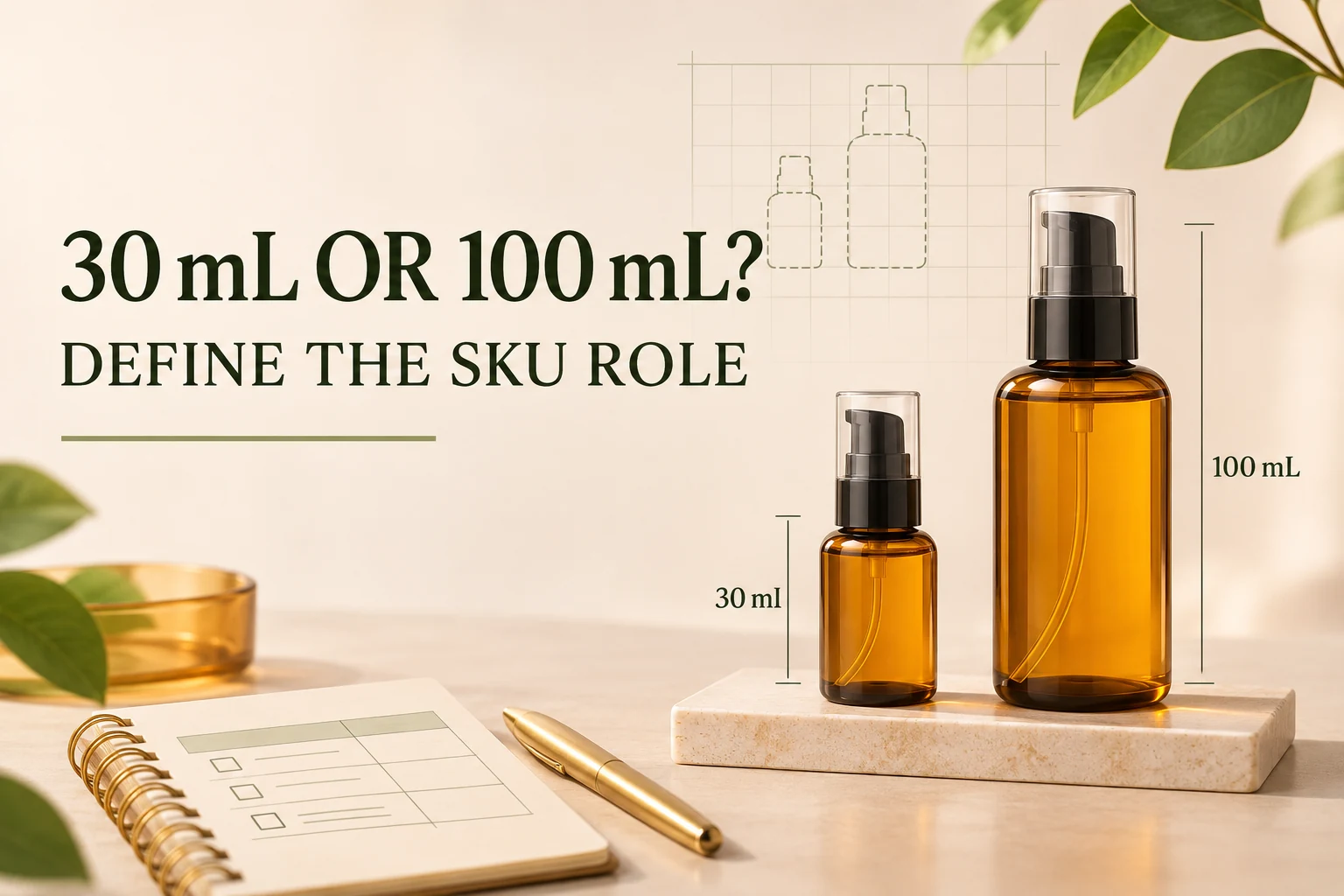
This guide therefore treats the two volumes as verified catalog formats and the role of each size as a buyer decision. Product naming and listed attributes are not substitutes for formulation records or claim approval. Generated cover bottles are conceptual size cues, not the actual catalog package.
Product Facts and Fields to Confirm
- Catalog identity: LANTHOME Organic Caffeine Hair Treatment Oil, reference 1600854540029, model LBQ8638-ze20230428.
- Listed formats: 30 mL and 100 mL hair treatment oil. The page does not assign a commercial role to either size.
- Listed use context: Home use. The page does not publish application amount, area, sequence, frequency, storage or warnings.
- Listed function: Refreshing. Exact consumer wording and supporting evidence are not published.
- Listed attributes: Herbal, organic and custom. The exact ingredients, definitions, certification basis and permitted artwork wording require confirmation.
- Package gap: Container, closure, dispensing output, component materials, decoration area and compatibility are not specified.
- Commercial gap: MOQ, price, production capacity and lead time are not stated for a defined formula-package-size combination.
Build one controlled record for each proposed SKU: product reference, formula revision, fill, component codes, directions version, claim matrix, artwork revision and target market. If 30 mL and 100 mL use the same formula, record that equivalence with current project documentation rather than assuming it from the shared product page. If they use different packages, evaluate each formula-package system separately.
Which Size Route Fits the Range?
The useful comparison is not “small versus large.” It is “entry or compact role versus primary routine role,” using the same decision dimensions. A buyer may ultimately choose one size, both sizes or neither. The following routes are general planning options; they do not prove that a catalog format is travel-ready, sample-ready or retail-ready.
Route A: 30 mL Entry or Compact SKU
- Proposed role: Discovery unit, paid mini, kit component or compact standalone product, subject to confirmation.
- Customer task: Introduce the exact oil and its confirmed directions without creating an unsupported duration promise.
- Information priority: Clear identity, directions and required information within limited label space.
- Package question: Can the selected dispenser deliver the formula consistently enough for the approved instructions and customer handling?
- Evidence question: Which formula, ingredient, function and package statements apply to this exact 30 mL configuration?
- Range risk: The unit may be mistaken for a free sample if its paid or kit role is not made explicit.
Do not call the 30 mL format “trial size” until the evaluation task and directions are defined. Do not call it “travel size” based on volume alone. Transport expectations, closure performance, target-market rules and channel presentation require separate review. A compact fill does not establish the number of applications because the page does not publish an amount or frequency.
Route B: 100 mL Primary Routine SKU
- Proposed role: Main retail format for a defined routine, subject to confirmation.
- Customer task: Support the selected use pattern with complete directions and a clear place in the range.
- Information priority: Full product identity, directions, ingredient declaration, warnings and traceability as applicable.
- Package question: Does the selected 100 mL component remain usable, clean and compatible through the intended period under confirmed conditions?
- Evidence question: Which statements are supported for the final formula, package and directions rather than copied from catalog wording?
- Range risk: A larger fill can imply value or longevity that has not been demonstrated or defined.
The 100 mL route should not automatically inherit a “full size” label. It becomes the primary SKU only when the brand gives it that role and confirms the supporting configuration. If a 30 mL unit exists beside it, state how the two differ in purchase occasion and presentation without implying different performance unless evidence supports that difference.
Build the Size Decision Before Sampling
1. Write one target customer task
Start with a sentence that can be tested: “We need a compact entry oil for an online discovery set,” or “We need a primary hair-oil SKU for the confirmed routine.” Add target market, channel, audience, whether the unit is sold alone or in a kit, and its relationship to current products. Avoid beginning with a bottle image or an assumed price tier.
This task creates a decision boundary. A 30 mL unit for a paid set needs different presentation from a no-charge evaluation unit. A 100 mL product for salon backbar discussion would need different evidence and handling questions from a home-use retail proposal; the current page only lists home use, so any other context must be specifically confirmed.
2. Confirm what “caffeine hair treatment oil” means
Request the current sample code, formula revision, specification and complete ingredient information for reference 1600854540029. Ask how caffeine is identified in the formula and what documentation supports any proposed caffeine wording. Do not infer concentration, source, penetration, scalp effect or hair-growth benefit from the name.
Separate four items in the review: product name, ingredient declaration, attribute wording and performance claim. A name can identify the catalog item without proving a result. The listed herbal and organic attributes do not establish a complete organic formula, certification, percentage or permitted target-market claim. “Custom” describes an attribute on the source page but does not define the scope of customization.
3. Lock directions before comparing usage
Ask for application area, amount method, hair or scalp condition, frequency, sequence, rinse status, storage and warnings. The page calls the item hair treatment oil but does not publish these instructions. Do not create a drop count, pump count or treatment duration.
Once directions are confirmed, the buyer can model how each fill fits the proposed task. Label any calculation as an estimate with visible inputs. A volume divided by an assumed amount is not a consumer promise, and a modeled usage period is not established performance evidence.
4. Specify both dispensing systems
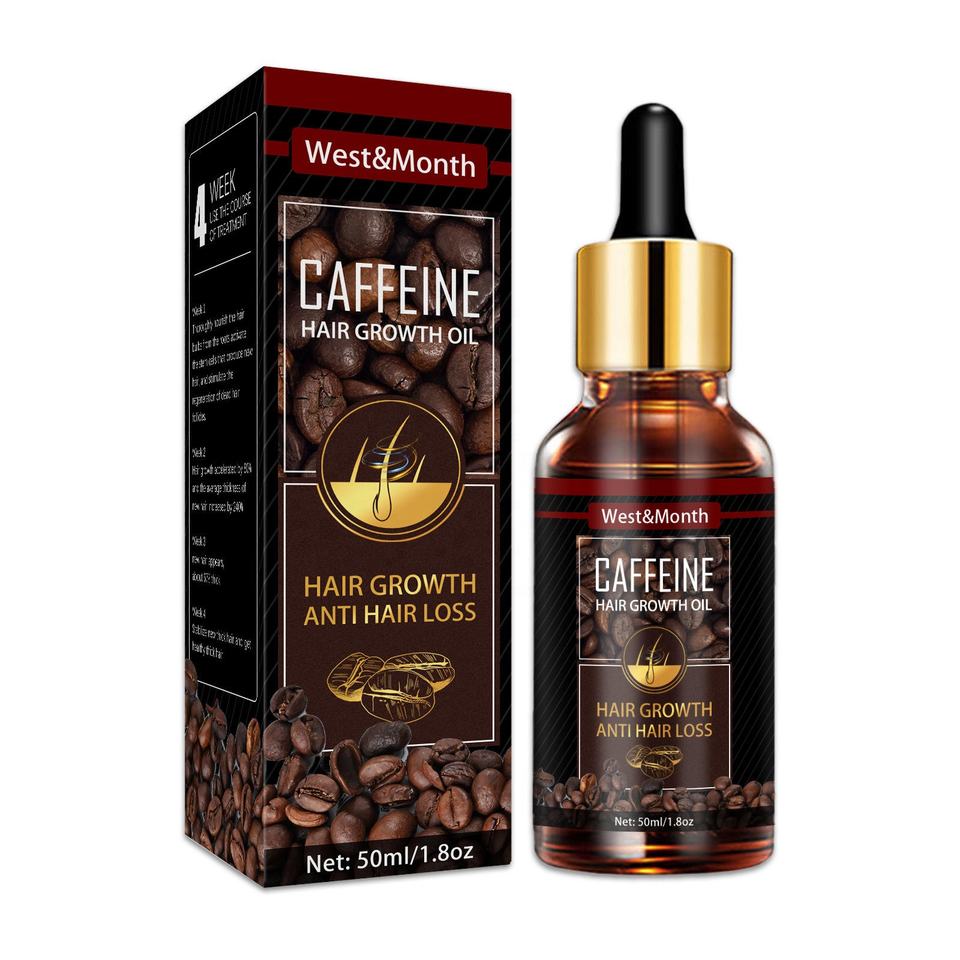
Request the proposed 30 mL and 100 mL containers, closures or pumps, orifice details, materials, dimensions, fill tolerances, decoration areas and supplier codes. Review the identified formula in each selected component. The catalog images show a product presentation, but the page does not publish a final package specification for your project.
Use a common observation sheet for both sizes: opening and closing, dispensing under the confirmed method, product access, cleanup, label legibility and component condition. Record observations neutrally. Terms such as precise dose, leak-proof, mess-free or travel-safe require appropriate support and should not be inferred from one sample.
5. Map information to available label space
List the information required for the target market and channel, then map it to primary and secondary packaging. Protect product identity, net content, directions, ingredient declaration, warnings and traceability as applicable. Decide whether the 30 mL format needs a carton, insert or another information route; do not simply reduce text until it is unreadable.
Keep the same naming logic across both sizes. If one is an entry SKU and the other is the primary format, make that relationship understandable through product hierarchy rather than unsupported benefit differences. Confirm every net-content statement, artwork dimension and code against the selected component.
6. Create one claim-and-evidence matrix
List every proposed phrase: caffeine, hair treatment oil, refreshing, herbal, organic, home use and any brand-added wording. For each phrase, record whether it is catalog-stated, proposed, supported, restricted, rejected or awaiting review. Attach the exact formula, directions, package and market to the decision.
Do not use one attribute to prove another. “Refreshing” does not prove a cooling ingredient or measured scalp effect. “Herbal” does not prove natural or botanical composition. “Organic” should not move to artwork without confirming the applicable basis and review. If evidence is absent, keep the wording out of approved copy and ask a specific question.
7. Compare the assortment, not isolated samples
For each size, write the proposed role, channel, pack configuration, information system, evaluation objective and next purchase path. Then compare whether the two SKUs solve distinct tasks. If both perform the same task with no clear reason for the difference, a one-size launch may be easier to explain and control. That is a planning conclusion, not a universal recommendation.
The Private Label Argan Hair Oil finish-review guide can help structure neutral observations for another oil reference. Use it as a review-method example, not evidence for this caffeine oil. Formula, package, directions and claims cannot be transferred between products.
8. Request commercial terms for defined configurations
Ask for quantities, pricing and timing only after naming the exact formula revision, fill, component, decoration, secondary pack and testing or documentation requests. A 30 mL unit and a 100 mL unit may have different component and packing requirements. Do not apply one generic term to both unless the supplier confirms it in the current quote.
Compare complete configurations rather than fill volume alone. Include artwork setup, component choices, kit assembly or information materials when relevant. This guide does not provide prices, MOQ, capacity or lead time because the product page does not publish them.
9. Issue separate SKU approvals and a parent range decision
Approve formula, directions, package and copy separately for each size. Then issue a parent decision explaining whether the range uses 30 mL, 100 mL or both. “Proceed” should name the next controlled stage. “Revise” should identify the field that changed. “Hold” should list the missing information.
Define change rules. A closure change can reopen dispensing and compatibility. A formula revision can reopen ingredient, direction, claim and package review. Changing a 30 mL unit from free evaluation to paid retail can reopen labeling, presentation and commercial review even when the component remains unchanged.
A Hypothetical Two-Size Review
Consider a hypothetical brand planning an online entry set and a standalone hair-oil SKU. The team requests LBQ8638-ze20230428, complete ingredient information, current directions and one proposed component for each listed fill. It records caffeine, refreshing, herbal and organic wording as pending until documents and copy review are complete.
For 30 mL, the team defines an entry-set role and checks whether the required information can be presented clearly. For 100 mL, it defines a primary routine role and reviews usability across the confirmed use pattern. Both samples use the same documented formula revision so that the size and package comparison is not confused by formula changes.
If formula equivalence or directions are not confirmed, the parent range decision remains on hold. The team can continue gathering component information, but it does not publish a usage period, performance difference or organic claim. This is a planning example, not an actual customer case, result, formula or commercial offer.
Buyer FAQ
Is 30 mL automatically a sample and 100 mL automatically full size?
No. The page verifies two listed volumes but assigns no commercial role. Define whether each unit is sold, included in a kit, used for discovery or positioned as a primary SKU. Directions, packaging, labeling, channel and current commercial terms should support that role.
Can both sizes use the same formula and claims?
Possibly, but do not assume it. Request the formula revision and documentation for each configuration. Even with the same bulk formula, different dispensers or directions may change package interaction, user handling and the exact evidence review needed for finished copy.
Does the word “caffeine” support a hair-growth claim?
No. The catalog name does not establish concentration, delivery, clinical evidence or a growth outcome. Confirm the ingredient identity and proposed wording for the exact formula, then review claims against applicable evidence and target-market requirements. Avoid medical or treatment promises that are not supported.
Can “organic” be copied from the page into artwork?
Not automatically. It is a source-listed attribute, while the page does not publish a certification basis, percentage, ingredient scope or approved claim wording. Ask what the attribute means for the proposed formula and retain the term as pending until evidence and market review are complete.
Which size should a new brand request first?
Request the size that matches the clearest customer task, or request both under the same formula revision when the decision specifically concerns role and package. If the directions, formula or package options are still undefined, resolve those inputs before interpreting sample differences.
What to Send in Your Inquiry
- Product identity: Reference 1600854540029 and model LBQ8638-ze20230428.
- Proposed size role: State what 30 mL, 100 mL or both should do in the range.
- Target context: Give the market, channel, audience and whether each unit is sold alone or in a kit.
- Formula request: Ask for sample code, revision, specification and complete ingredient information.
- Directions: Request application area, amount method, frequency, sequence, storage and warnings.
- Package brief: Define container, closure or dispenser, decoration, secondary pack and label-space needs for each size.
- Claim list: Provide exact caffeine, refreshing, herbal, organic and brand-added wording for evidence review.
- Commercial request: Ask for current quantities, price and timing for each fully defined configuration.
Send the identified brief through the LANTHOME contact form or organize controlled samples through the sample request form. Review How It Works before choosing a private-label, semi-custom or custom pathway.
Related Links
- LANTHOME Organic Caffeine Hair Treatment Oil- Review the exact 30 mL and 100 mL catalog reference used in this size decision.
- Hair Oil Collection- Compare current hair-oil references without assuming formula or claim equivalence.
- Private Label Argan Hair Oil: Plan a Finish-Focused Review- Use a neutral observation structure for another oil reference.
- Private Label Rice Water Leave-In Conditioner: Define the 30 mL Role- Review how a compact fill changes role and information decisions in another format.
- How It Works- Review private-label, semi-custom and custom pathways.
- Request Haircare Samples- Request the identified formula and proposed package configurations.
- Contact LANTHOME- Send size roles, formula, directions, package, claims and commercial questions.